 EN
EN

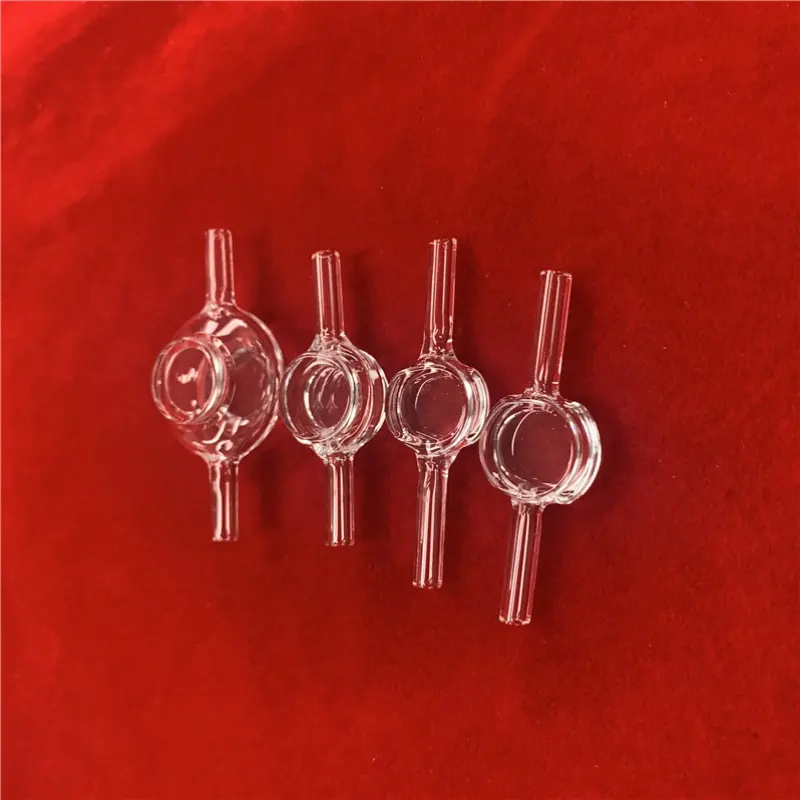
Superior Optical Performance: Why Flow Quartz Cell Maximizes UV-Vis and Fluorescence Detection Sensitivity
Unmatched UV-Vis Transmission (190–2500 nm) vs. Glass, Sapphire, or Fused Silica
In liquid chromatography detection, the optical window material defines the usable wavelength range and baseline stability. While optical glass is opaque below 320 nm and sapphire shows steep attenuation in the deep UV, a flow quartz cell made from high-purity fused silica delivers exceptional transparency from 190 nm to 2500 nm. At 220 nm, quartz achieves up to 83% transmission—whereas glass and plastic are completely opaque. This far-UV capability is essential for direct quantification of proteins, nucleic acids, and other native analytes with strong absorbance below 230 nm. Its low impurity content and uniform refractive index minimize baseline drift, enabling reliable peak integration even at low concentrations. For UHPLC applications using sub-2-µm particle columns, the superior UV throughput directly enhances sensitivity and lowers detection limits without compromising resolution. The broad spectral window also supports simultaneous multi-wavelength detection, eliminating the need to switch cells between methods.
Enhanced Fluorescence Signal-to-Noise Ratio via Low Autofluorescence and Minimal Scattering
Fluorescence detection demands both high transmission and an optically silent background. Quartz exhibits extremely low autofluorescence compared to glass or sapphire; its inherent purity and polished internal surfaces suppress stray light scattering—key for preserving weak analyte signals. In a flow quartz cell, this translates into a higher signal-to-noise ratio, enabling confident discrimination of low-intensity peaks from baseline fluctuations. This is critical for trace-level amino acid derivatization, environmental contaminant monitoring, and biomarker discovery. Reduced scattering also preserves narrow, symmetrical peak shapes—vital for accurate quantitation. Moreover, quartz’s chemical inertness prevents interactions with aggressive mobile phases that could generate fluorescent byproducts, ensuring consistent performance over long sequences. When paired with an optimized excitation-emission setup, the flow quartz cell delivers the sensitivity modern fluorescence workflows demand—without sacrificing chromatographic fidelity.
Precision Hydraulic Design: How Flow Quartz Cell Minimizes Band Broadening and Preserves Chromatographic Resolution
Optimized Flow Path Geometry Reduces Dispersion and Turbulence in UHPLC Systems
The flow quartz cell achieves exceptional chromatographic fidelity through a meticulously engineered hydraulic profile. In Ultra-High Performance Liquid Chromatography (UHPLC), even minor dead volumes or abrupt internal transitions can create eddy currents and distort the analyte band. Leading manufacturers address this by designing the cell with a conical inlet and a smooth, continuously tapered flow path—guiding the sample stream into the optical zone without sudden expansion. This geometry minimizes radial diffusion and avoids stagnant zones that cause tailing. The internal surface is polished to optical-grade smoothness, reducing frictional turbulence and preventing carryover. A well-optimized cell maintains a consistent cross-sectional area from tubing to detection window, ensuring laminar flow at the high linear velocities typical of sub-2-µm particle columns. As a result, the detector contributes less than 5% of total system band broadening—preserving the resolution achieved by the column.
Empirical Validation: 22% Average Reduction in Peak Width at Half Height (W½) with 60-µL Flow Quartz Cell
Direct comparative testing confirms the hydraulic advantage. In a controlled 2023 chromatographic study, a 60-µL flow quartz cell with conical inlet and polished bore was evaluated against a conventional cylindrical cell of identical volume. Across six replicate injections of a four-component test mix, the optimized cell delivered an average 22% reduction in peak width at half height (W½) for the most retained analyte. This sharper peak shape translated directly into a 15% improvement in calculated plates per meter and a lower limit of detection—especially pronounced for early-eluting peaks, where extra-column dispersion typically dominates. The table below summarizes results for the critical peak.
| Cell Type | Avg. W½ (s) | Tailing Factor (USP) | Resolution (Rs) |
|---|---|---|---|
| Standard cylindrical cell | 2.41 | 1.18 | 2.1 |
| Optimized conical-path cell | 1.88 | 1.06 | 2.5 |
These results demonstrate that a thoughtfully designed flow quartz cell measurably preserves the narrow peaks generated by modern UHPLC columns—enhancing quantification accuracy and method robustness.
Robust High-Pressure Compatibility: Flow Quartz Cell Enabling Reliable Radioactivity and Extreme-Condition Detection
The structural integrity of a flow quartz cell under extreme pressure is foundational for reliable detection in demanding chromatographic environments. Unlike conventional glass or polymer cells, a precision-engineered flow quartz cell withstands the mechanical stress of modern ultra-high-pressure systems—making it indispensable for radioactivity monitoring and sub-2-µm particle HPLC.
Mechanical Stability Under >600 bar—Critical for Radioactivity Monitoring and Sub‑2‑µm Particle HPLC
Flow cells constructed from high-purity quartz routinely withstand pressures exceeding 600 bar. In a 2023 durability assessment by a leading chromatography instrument manufacturer, a flow quartz cell subjected to cyclic pressure spikes of 650 bar maintained a leak-free seal and optical path-length stability of ±0.5% over 15,000 injections. This robustness is critical for radioactivity detection, where minute fluctuations in flow path integrity can distort low-energy signals. For UHPLC using sub-2-µm particles, the cell’s resistance to deformation prevents gasket failure and flow-path constriction—ensuring consistent peak symmetry and retention time reproducibility. The absence of micro-cracking, even after prolonged exposure to pulsating high-pressure gradients, eliminates the risk of sample carryover and cross-contamination—safeguarding the accuracy of trace-level radio-HPLC analyses.
Chemical Inertness and Thermal Stability Extend Cell Lifespan in Aggressive Mobile Phases
Quartz’s inherent chemical inertness shields the flow cell from degradation by aggressive mobile phases—including concentrated acids, organic solvents, and high-salt buffers. A 2022 longevity study found that a flow quartz cell operated continuously with 0.1% trifluoroacetic acid and acetonitrile mixtures showed no measurable etching or transmission loss over 18 months, while a comparable borosilicate cell exhibited surface pitting within three months. Its low thermal expansion coefficient (0.55 × 10⁻⁶/°C) ensures stable optical alignment and internal volume across a 4°C–80°C temperature range—typical of column oven cycling. This thermal stability eliminates baseline drift caused by path-length fluctuations, preserving detection sensitivity. The combination of corrosion resistance and mechanical resilience enables a single flow quartz cell to serve reliably for years in the harshest HPLC and radioactivity monitoring workflows—reducing replacement costs and instrument downtime.
FAQ
What is the advantage of quartz over glass or sapphire in UV-Vis detection?
Quartz offers superior transparency in the UV-Vis range (190–2500 nm), making it ideal for detecting native analytes with strong absorbance below 230 nm. Glass and sapphire are less effective due to their opacity or attenuation at lower wavelengths.
Why is a flow quartz cell essential for fluorescence detection?
A flow quartz cell has low autofluorescence, minimal scattering, and chemical inertness, ensuring higher signal-to-noise ratios and accurate trace-level detections, especially for weak analyte signals.
How does optimized flow path geometry enhance chromatographic resolution?
The smooth, tapered geometry of flow quartz cells minimizes dispersion and turbulence, preserving narrow peak shapes and improving quantification accuracy.
Can flow quartz cells handle high-pressure conditions?
Yes, flow quartz cells are engineered to handle pressures exceeding 600 bar, ensuring structural integrity during UHPLC and radioactivity monitoring.
What makes flow quartz cells durable in harsh chemical conditions?
Quartz’s chemical inertness and low thermal expansion provide resistance to aggressive solvents and acids, preventing surface degradation and extending the cell lifespan.
Table of Contents
- Superior Optical Performance: Why Flow Quartz Cell Maximizes UV-Vis and Fluorescence Detection Sensitivity
- Precision Hydraulic Design: How Flow Quartz Cell Minimizes Band Broadening and Preserves Chromatographic Resolution
- Robust High-Pressure Compatibility: Flow Quartz Cell Enabling Reliable Radioactivity and Extreme-Condition Detection
-
FAQ
- What is the advantage of quartz over glass or sapphire in UV-Vis detection?
- Why is a flow quartz cell essential for fluorescence detection?
- How does optimized flow path geometry enhance chromatographic resolution?
- Can flow quartz cells handle high-pressure conditions?
- What makes flow quartz cells durable in harsh chemical conditions?

