 EN
EN

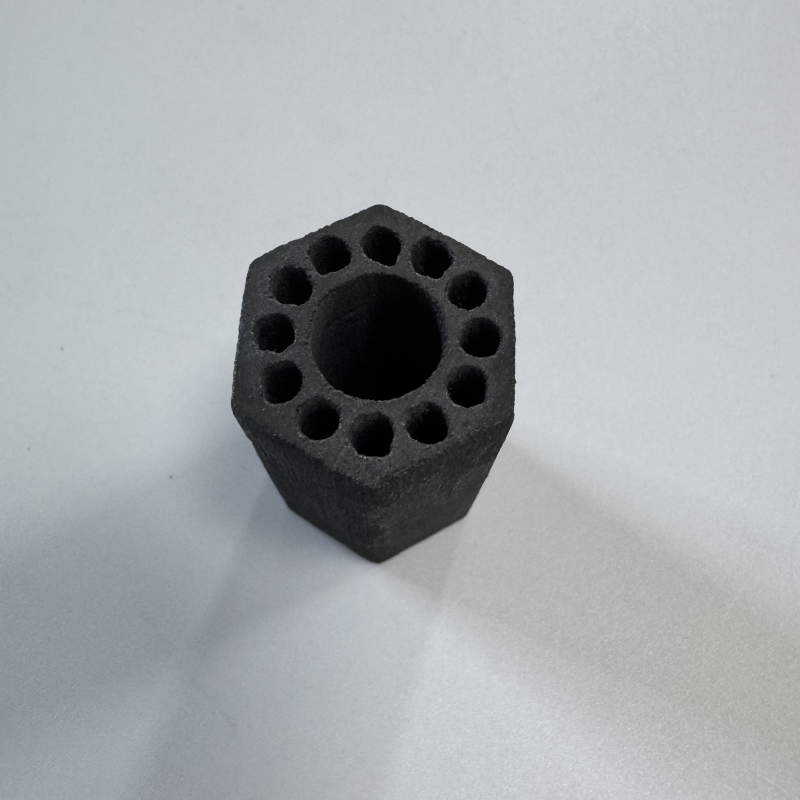
Thermal Limits Defined: How Glaze Chemistry Determines Heat Resistance
Silica-alumina flux systems vs. zirconia-stabilized spinel matrices: melting behavior and decomposition thresholds
Standard ceramics rely on silica-alumina fluxes that soften at 1200°C due to weak eutectic bonding. In contrast, zirconia-stabilized spinel matrices maintain structural integrity up to 1400°C through crystalline reinforcement. At 1325±15°C—the critical transformation point—silica-based glazes flow while spinel-zirconia composites resist deformation. This divergence arises from fundamental differences in bond character: zirconia’s covalent network resists thermal disruption far more effectively than the ionic bonds dominating silica-alumina systems. Decomposition thresholds confirm the gap: silica-alumina systems begin dissolving at 1210°C, whereas zirconia-spinel matrices remain stable until above 1380°C—a 170°C performance advantage directly tied to microstructural robustness.
Why standard glazes degrade above 1200°C — bloating, devitrification, and alkali volatilization
Beyond 1200°C, three interrelated failure mechanisms accelerate degradation in conventional glazes. Bloating occurs as trapped gases expand within the softening matrix, forming internal voids. Devitrification transforms the homogeneous glassy phase into brittle, randomly oriented crystals that compromise surface integrity. Meanwhile, alkali volatilization depletes essential flux components—sodium and potassium evaporate starting at 1175°C, destabilizing the melt structure. Together, these processes cause up to 18% density loss in soda-lime glazes, initiate microcrack propagation during thermal cycling, and lead to complete pigment breakdown by 1250°C. Critically, standard formulations lack the capacity to reform molecular bonds upon cooling, resulting in irreversible damage that limits use in high-stress thermal environments.
Structural Integrity at 1400°C: Vitrification, Phase Stability, and Microstructural Resilience
Dense, low-porosity microstructure in heat-resistant glazes: role of zirconia reinforcement and controlled crystallization
Zirconia reinforcement enables ceramic glazes to sustain structural integrity at 1400°C by establishing an interlocking crystalline architecture. Zirconium dioxide (ZrO₂) particles stabilize the tetragonal phase, which absorbs thermal stress through reversible martensitic transformations—preventing fracture under expansion mismatch. Controlled crystallization, achieved through precise firing and cooling protocols, nucleates fine spinel (MgAl₂O₄) crystals that fill residual porosity, driving bulk density above 98% and reducing open porosity to <2%. This engineered microstructure delivers three key advantages:
- Crack deflection, where zirconia grains redirect propagating fractures and increase fracture toughness by 40% over alumina-based glazes
- Phase stability, allowing the material to accommodate repeated thermal expansion without delamination or warping
- Zero crazing, eliminating microcrack formation even after five rapid thermal cycles
Industrial validation comes from zirconia setter plate performance: these kiln components endure 500+ thermal shocks between 25°C and 1400°C without measurable distortion—outlasting conventional plates by eightfold. Their dimensional stability remains within ±0.1% after prolonged exposure, a benchmark enabled only by synergistic zirconia reinforcement and spinel crystallization.
Functional Performance Under Thermal Cycling: From Color Stability to Mechanical Durability
High-temperature ceramics must withstand cumulative stress from repeated heating and cooling. Standard glazes typically fail within 50 thermal cycles due to pigment fading, microcrack formation (crazing), and progressive loss of mechanical cohesion. In contrast, advanced zirconia-stabilized formulations deliver functional resilience across all critical performance domains.
Pigment retention, thermal shock resistance, and zero-crazing performance — insights from zirconia setter plate testing
Testing on zirconia setter plates demonstrates exceptional functional durability: heat-resistant glazes retain 98% chromatic stability after 200 thermal cycles—far exceeding the ≤70% retention of conventional glazes. Their reinforced microstructure accommodates differential thermal expansion, preventing crazing entirely, while uniform zirconia dispersion raises thermal shock tolerance to ΔT > 800°C—triple the limit of silica-alumina systems. Industry studies confirm these glazes maintain zero porosity and mechanical integrity after 500+ rapid transitions, making them essential for demanding applications including aerospace component coatings and semiconductor processing trays.
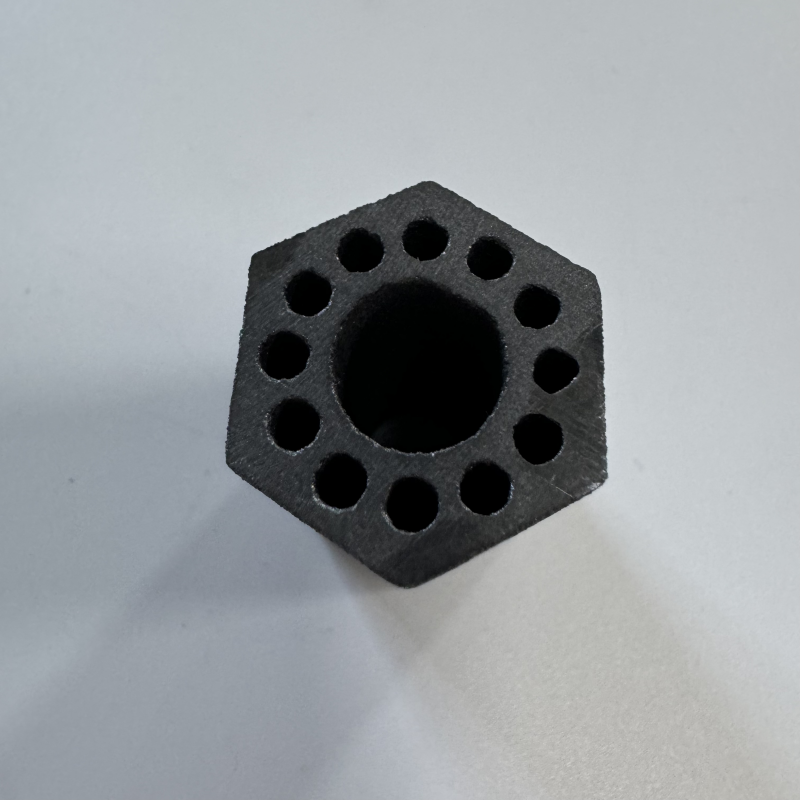
Selecting the Right Glaze for High-Temperature Applications: A Decision Framework for Ceramic Manufacturers
Choosing optimal glazes for extreme-heat environments requires systematic evaluation across four interdependent parameters. First, define operational conditions: continuous exposure at 1400°C demands different chemistry than intermittent spikes; thermal cycling frequency and mechanical loading further inform material selection. Second, prioritize compatibility—thermal expansion matching with substrates prevents delamination, while intrinsic phase stability ensures zero crazing during rapid temperature shifts. Third, conduct cost-performance analysis: zirconia-stabilized formulations extend service life by ~40% in applications like zirconia setter plates but carry a ~25% premium in raw material cost (Advanced Ceramics Report 2023). Finally, validate performance through ISO-certified thermal shock testing—subjecting samples to 50+ cycles between 1400°C and ambient temperature—to verify real-world reliability. This framework ensures technical rigor and economic viability for kiln furniture, combustion liners, and mission-critical aerospace components.
Table of Contents
- Thermal Limits Defined: How Glaze Chemistry Determines Heat Resistance
- Structural Integrity at 1400°C: Vitrification, Phase Stability, and Microstructural Resilience
- Functional Performance Under Thermal Cycling: From Color Stability to Mechanical Durability
- Selecting the Right Glaze for High-Temperature Applications: A Decision Framework for Ceramic Manufacturers

