 EN


Why ceramic aroma tablet is widely used in custom home scent projects
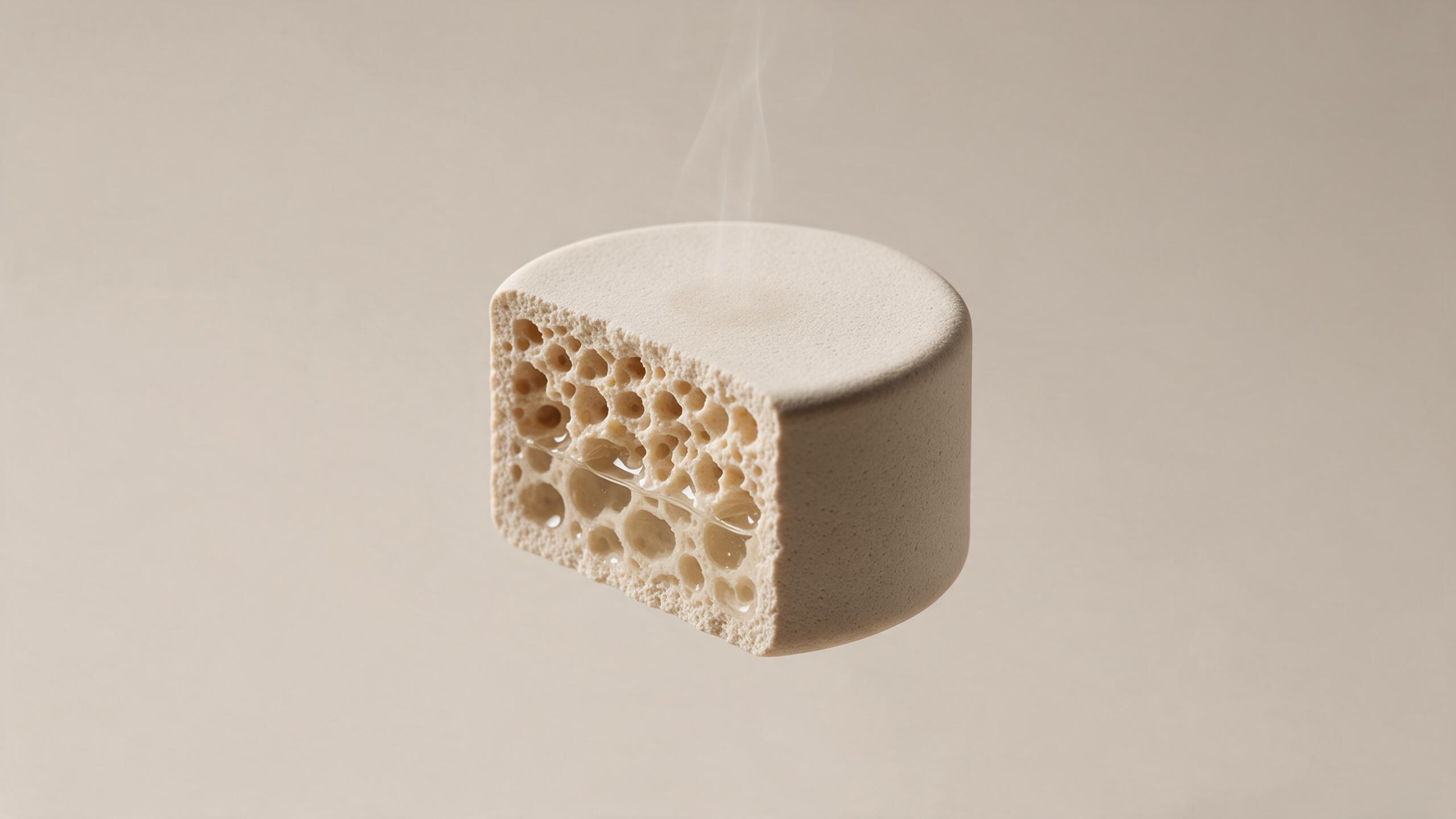
A custom home-scent project has to balance fragrance character, visual identity, handling, and the way scent reaches a room. That is why porous ceramic has become a practical material choice for aroma tablets, hanging scent pieces, drawer inserts, and small passive diffusers. It can take up a fragrance liquid through its connected pore network and then present a broad exposed surface for gradual evaporation. Rather than a powered diffuser, it is a passive material-led format that can fit a package, gift set, or room accessory.
From a material-selection perspective, the useful question is not simply whether porous ceramic absorbs oil. A better question is whether the pore structure, tablet shape, surface treatment, fragrance formula, and user routine work together. Those details determine how a custom piece is filled, displayed, refreshed, and evaluated.
Why porous ceramic suits passive home scent formats
Aroma tablets rely on passive diffusion. After fragrance liquid enters an absorbent body, the liquid gradually moves toward exposed areas and evaporates into surrounding air. In a porous ceramic piece, accessible pores provide places for liquid to reside, while the outer surfaces provide paths for release. This mechanism helps explain why the material is often considered for compact, electricity-free scent applications.
The appeal is also practical for product development. A ceramic aroma diffuser can be designed as a flat tag, a small disc, a relief tile, or a branded ornament. A custom mold can carry a logo, a pattern, or a seasonal motif without changing the basic passive-diffusion principle. A project can therefore combine object design and scent delivery in one component rather than hiding a refill element inside an appliance.
Still, porous ceramic is not a single specification. Open pores, pore-size distribution, wall thickness, fired density, and surface area influence how liquid enters and leaves a tablet. A formulation that feels suitable on one sample may behave differently after the tablet geometry or finishing process changes. Development should treat the ceramic body and fragrance system as a matched pair.
Absorption is useful only when release is controlled
For a fragrance accessory, high uptake alone is not the goal. If a porous ceramic tablet takes in liquid too quickly but releases it unevenly, the user experience may not match the intended use. If uptake is too limited, the scent effect may be faint or short-lived. The aim is a repeatable balance between absorption, surface exposure, and the intended refresh routine.
A gypsum aroma plate and a ceramic tablet should not be treated as automatically interchangeable. Both can be used as passive scent carriers, but their body composition, strength, surface character, and response to liquids can differ. A gypsum aroma plate may suit a certain visual or cost direction, while a fired ceramic piece may better fit another shape, handling requirement, or finishing concept. A sample comparison should use the actual fragrance liquid and intended packaging rather than a generic water test.
It also helps to distinguish a perfume ceramic plate from a powered diffuser. A perfume ceramic plate releases scent through evaporation from an absorbent surface. It does not use heat, mist, airflow, or ultrasonic energy to move fragrance. That difference affects both the expected scent radius and the language used on packaging. Clear positioning avoids promising room coverage that belongs to a different diffusion method.
Four design variables that shape a custom aroma tablet
1. Pore accessibility
The phrase porous ceramic describes a structure, but not every pore necessarily contributes equally in use. Accessible pathways matter because fragrance liquid needs a route into the body and toward the exposed surface. A sealed or heavily coated face may be visually useful, yet it reduces the active area available for uptake or release. Partial glazing can therefore be a design decision as well as a material decision.
2. Geometry and exposed area
A thin tag, rounded tablet, or embossed aroma plate presents a different surface-to-volume relationship. More exposed area can support passive evaporation, while thickness changes how much material is available to hold liquid. Rather than assume that a larger piece performs better, compare prototype shapes under the same fill amount, storage condition, and display setting.
3. Fragrance formula compatibility
Fragrance oils, essential-oil blends, carriers, colorants, and additives may interact differently with a porous ceramic body and its finish. For custom work, check whether the liquid wicks consistently, whether the surface appearance remains acceptable, and whether the package prevents unintended contact with adjacent components. The phrase “works with oils” is too broad for a specification; a defined formula and use case provide a more useful test basis.
4. Handling and packaging
A scented object can transfer liquid before it reaches the customer if the packaging is not planned around it. Consider when the tablet is charged, whether it ships dry or pre-scented, how it is separated from paper inserts, and how users are told to refresh it. A small aroma plate may look simple, but its release performance is tied to these operational choices.
Why custom projects use ceramic aroma diffuser formats
A porous ceramic format offers a useful degree of design freedom. It can be made into a branded tablet, a hanging ornament, a closet accessory, or a drawer scent piece. Because the ceramic itself can be visible, it contributes to the unboxing and display experience instead of acting only as a hidden absorbent part.
For a custom ceramic aroma diffuser, the development conversation should cover more than a reference photo. Share the target tablet dimensions, artwork or logo relief, fragrance liquid type, estimated fill amount, where the item will be placed, desired finish, packaging method, and whether the first order is a sample or production run. This turns a visual concept into a testable brief.
Design also involves a trade-off. A fully decorative coating can protect a look, while an uncoated area supports the working surface of a porous ceramic scent piece. When appearance and active surface cannot both be maximized, decide which faces need to absorb and which faces need to present the brand. That decision should be visible in the drawing or sample notes.
A practical prototype checklist
- Define the fragrance liquid or base fluid used in testing.
- Specify the porous ceramic tablet dimensions, thickness, and decorative features.
- Mark coated, glazed, and active absorbent areas.
- Test liquid uptake, surface appearance, and scent perception in the intended setting.
- Check contact with packaging, labels, ribbon, and adjacent accessories.
- Document the user’s refill or refresh instruction for the finished aroma plate.
For an initial sample, this checklist is more useful than an isolated material claim. It connects the absorbent body to the formula, shape, finishing, and handling conditions that define a consumer scent product.
Choosing the right direction for a home scent project
Porous ceramic is widely used in custom home scent projects because it provides an absorbent, visible, moldable base for passive fragrance release. Its value comes from the way material structure can be coordinated with product styling and a defined liquid system. That does not mean every porous body will fit every fragrance concept. Conditions such as pore accessibility, tablet geometry, surface treatment, formula compatibility, and packaging should be validated together.
If you are comparing a ceramic aroma diffuser, a gypsum aroma plate, or another perfume ceramic plate concept, begin with the actual experience you want users to have: where they will place it, how they will refresh it, and what the product must look like when dry and when scented. With those inputs clarified, a porous ceramic aroma tablet can be developed as a focused, testable component of a custom home-scent collection.

