 EN


Why ozone generator modules are suitable for small scale water treatment projects
Small water projects often need a compact treatment train that can be matched to a defined flow, source-water condition, and installation footprint. In that setting, an ozone generator built around a modular architecture can be a practical starting point. The module should be viewed as one part of a system: it must be paired with appropriate feed gas, injection, contact time, off-gas handling, controls, and downstream monitoring.
From an application-engineering perspective, the useful question is not whether an ozone generator is universally suitable. It is whether the project team can state the water objective, operating flow range, inlet-water variability, available utilities, enclosure conditions, and operator capability. A clear answer to those questions makes a modular approach easier to evaluate.
Why a modular ozone generator fits smaller project scales
Many small systems are developed in stages: a pilot installation, a packaged skid, a seasonal process line, or a retrofit where space is constrained. An ozone module can support that approach because the generation section can be specified separately from the contactor and balance-of-plant equipment. This helps designers review capacity, electrical supply, cooling, and control interfaces without assuming that every site needs a large centralized installation.
A modular ozone generator also makes the project boundary easier to define. The equipment package can identify what it supplies and what the integrator must provide, such as dry feed gas, water-side injection hardware, a contact vessel, drains, ventilation, and interlocks. That division is useful when a small treatment project has several parties responsible for mechanical, electrical, and process work.
For example, a portable ozone generator may be relevant when a team needs to trial a treatment arrangement, service a movable skid, or validate layout constraints before committing to a permanent installation. Portability alone does not establish process suitability. Gas preparation, transfer efficiency, contact conditions, and safety controls still need the same review.
Generation capacity is not the whole design
It is easy to reduce selection to an output number, especially when comparing a 60g ozone generator with smaller or larger units. That number can be a useful starting point, but it is not a complete water-treatment design basis. What matters is how much ozone reaches the water under the actual feed-gas condition, hydraulic loading, injection method, and contactor arrangement.
An ozone generator produces ozone on site because ozone is not normally stored for later use. Its short persistence also means it should not be treated as a downstream residual disinfectant. Small projects therefore benefit from early coordination of generation and contacting rather than treating the ozone module as a stand-alone box.
Start with the project objective. Is the aim to support oxidation, assist odor or color control, address a defined process-water issue, or form one stage within a broader treatment sequence? Then document flow rate, temperature, pH, suspended solids, organic loading, and anticipated operating hours. These conditions influence ozone demand and transfer behavior, so they belong in the same discussion as the output rating of the ozone generator.
Four system interfaces to confirm before selection
1. Feed gas and utility conditions
The performance of an ozone generator is linked to the quality and condition of its feed gas. Confirm whether the project will use air or oxygen, how moisture will be managed, what electrical service is available, and whether cooling requirements can be met. A compact ozone module is easier to integrate when these conditions are written into the specification instead of being left to field assumptions.
2. Injection and contactor layout
Ozone must be transferred into the water and given appropriate contact conditions. Venturi injection, diffusers, sidestream arrangements, and contact tanks can serve different layouts; the right arrangement depends on the water flow and treatment goal. A 60g ozone generator may be physically compact, yet the contactor, piping, mixing, and sample points still require space and engineering attention.
3. Off-gas and installation safety
Not all generated ozone transfers into water. A small water-treatment installation needs a plan for off-gas handling, ventilation, leak response, and interlocks before equipment is installed near occupied areas. This is one reason a system built around an ozone generator should be evaluated as a package rather than as a single rated component.
4. Controls, monitoring, and downstream steps
Small projects can gain clarity from simple but deliberate operating logic: flow permissives, feed-gas alarms, ozone-related interlocks, sample locations, and a shutdown sequence. Since ozone does not maintain a residual through a distribution system, any downstream residual strategy or polishing stage must be evaluated separately. A portable ozone generator used for trials should still have an operating plan that defines start-up, normal operation, and safe shutdown.
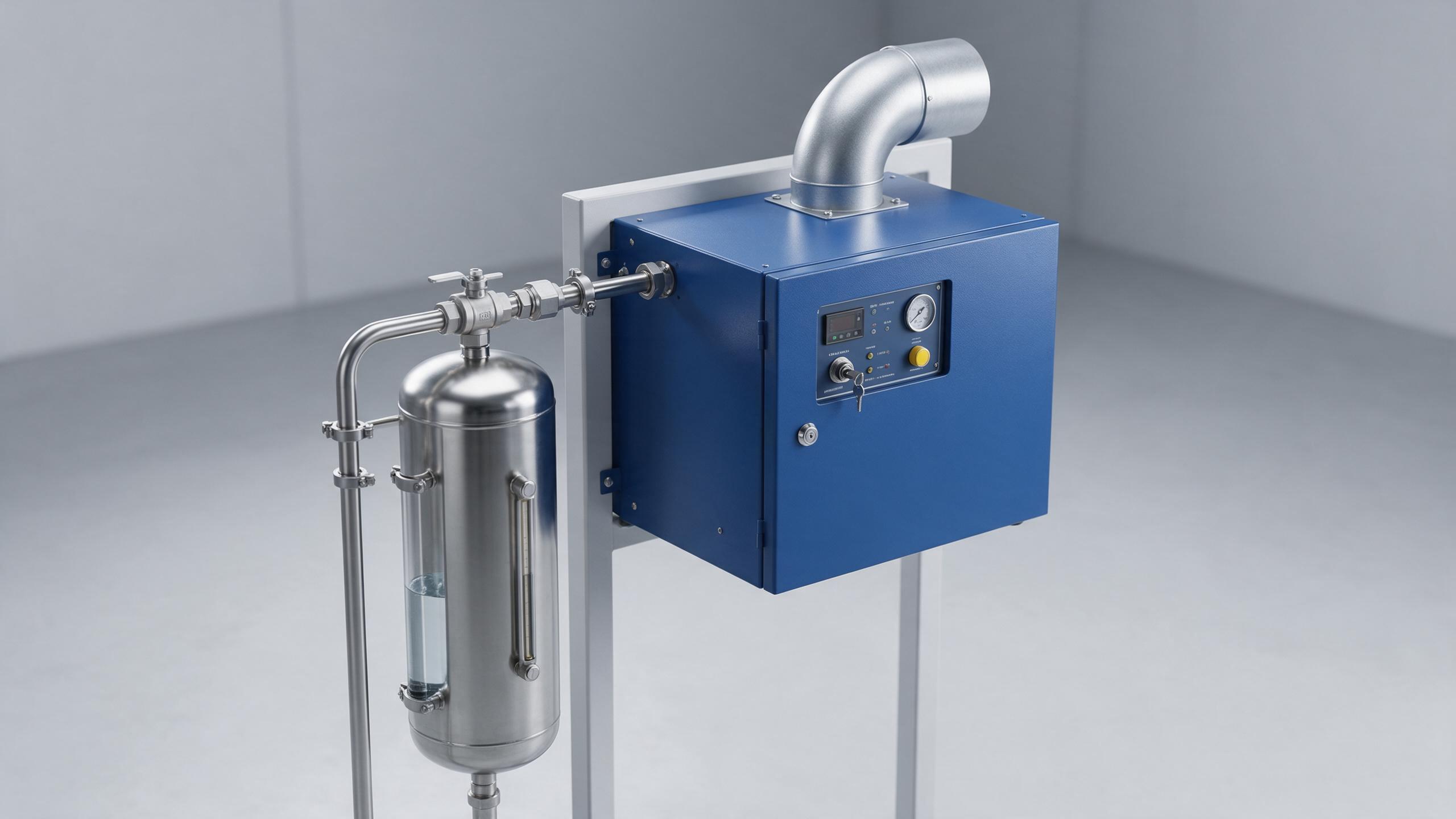
When a portable or 60g configuration may be worth evaluating
A portable ozone generator may suit a project that is testing source-water variability, moving between short-term treatment locations, or building an engineering demonstration. It should be evaluated for enclosure conditions, operator access, transport stability, cable routing, and the same water-side safeguards expected of a fixed unit.
A 60g ozone generator may be a reasonable candidate when the preliminary process calculation indicates that its output range aligns with the defined demand and operating schedule. It is not a substitute for checking transfer, contact, and off-gas design. In the same way, choosing an ozone module for a small skid can simplify assembly, but the package still needs documented interfaces and acceptance criteria.
A practical specification checklist
- State the water source, target treatment function, normal and peak flow, and expected operating hours.
- Specify feed-gas source, moisture control, power supply, cooling, and enclosure limits for the ozone generator.
- Define injection method, contactor volume, sampling points, drains, and material compatibility.
- Include off-gas destruction or handling, ventilation, alarms, and safety interlocks in the package scope.
- For a portable ozone generator or 60g ozone generator, document transport, commissioning, and shut-down requirements rather than relying on the output label alone.
- Ask suppliers to clarify the mechanical and electrical interfaces required around each ozone module.
Conclusion
For small scale water projects, an ozone generator module can be suitable because it supports staged system design, packaged integration, and a clearer division of responsibilities. Its value comes from matching the generation section to the surrounding treatment process. When feed gas, contacting, off-gas control, controls, and downstream requirements are defined early, a modular ozone generator can be assessed on practical engineering conditions rather than on a single output figure.

