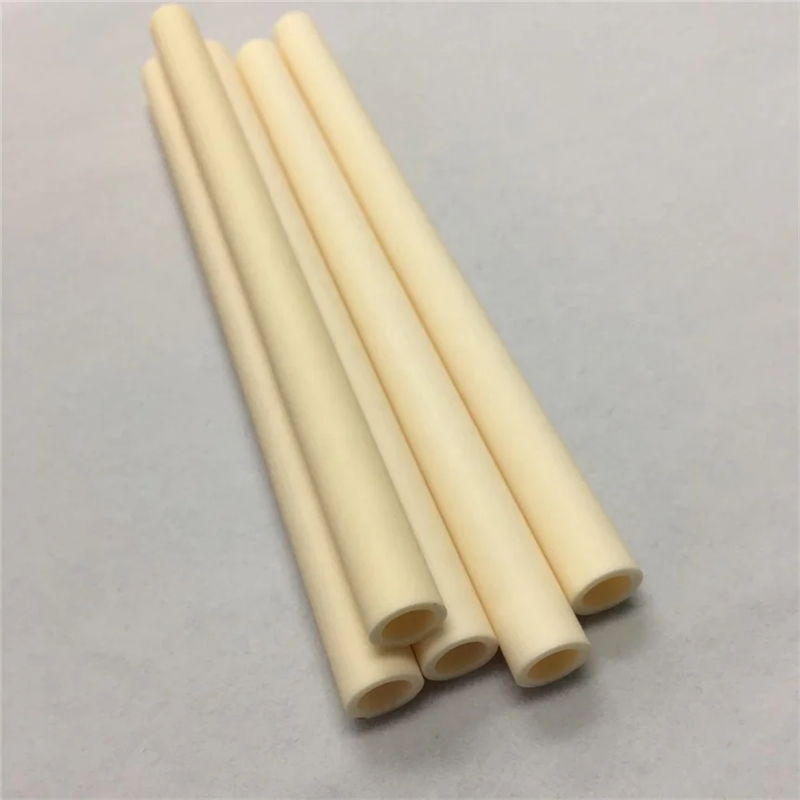
Industrial sensors need to work in some pretty harsh conditions, think molten metal at temperatures around 1,750 degrees Celsius or inside chemical processing plants where things get really intense. For protecting these sensors, ceramic tubes are often used as the primary shield against damage. These tubes are typically made from materials like alumina or zirconia composites which can handle extreme heat without breaking down and won't react chemically with most substances. What makes ceramics stand out compared to metals is their ability to keep their shape even after going through countless heating and cooling cycles. This means less drifting in sensor readings because they don't expand and contract as much as metal would. According to recent research published in 2023 on material durability, switching from stainless steel sheaths to ceramic tubes cut down sensor replacements by about two thirds in glass furnaces alone.
When it comes to handling extreme temperature swings, ceramic tubes beat out most conventional materials hands down, especially when dealing with those fast changes of 200 degrees Celsius per minute or more that really put components under stress and lead to cracks forming. The secret lies partly in their thermal expansion properties too. Take alumina ceramics for instance they expand at around 8.6 micrometers per meter per degree Celsius, way below the 17.3 mark seen in standard 316 stainless steel. This means ceramic parts just don't get as fatigued from all that heating and cooling back and forth. Studies looking into how these materials hold up over time have found something pretty impressive about zirconia based tubes specifically. They've been shown to survive well over 5,000 complete thermal cycles going from scorching hot 1,200 degrees down to room temperature of 25 degrees without showing any signs of wear. That kind of durability makes them perfect candidates for use in industrial settings like kilns and heat treatment furnaces where things are constantly being heated up then cooled down again and again.
In chemical plants and waste incinerators, ceramic tubes withstand harsh conditions including:
Corrosion resistance studies confirm ceramic protection extends sensor life by 3â5 times in petrochemical settings compared to polymer-coated metal sheaths.
Ceramic protection tubes can handle temperatures all the way up to around 1,600 degrees Celsius when running continuously, and some advanced composite versions have been tested beyond 2,000 degrees according to recent studies on high temp materials. Polymers are totally different though they start breaking down once things get above about 300 degrees. Alumina based ceramics expand very little actually less than 1 percent linearly even at 1,200 degrees Celsius. And then there's zirconia which is pretty amazing because it can withstand thermal changes of over 500 degrees per minute without cracking apart. These properties make ceramics so valuable in extreme environments where other materials simply wouldn't last.
The covalent bonding in ceramics provides exceptional resistance to thermal fatigue. Silicon carbide tubes withstand more than 15,000 heating-cooling cycles between 200°C and 1,400°C with less than 2% permanent deformation, verified in nuclear energy material studies. This durability is essential in metal heat treatment furnaces, where daily fluctuations often exceed 800°C.
At 1,200°C, stainless steel sheaths expand by 12â15%, whereas ceramics expand only 0.5â0.8%. Ceramics also avoid sudden failure modes like warping or melting seen in metals. Industry data indicates ceramic-protected sensors in glass tempering lines last 8â10 years, significantly longer than the 2â3 years achieved with metal-shielded units.
Materials such as alumina Al2O3 and zirconia ZrO2 show remarkable resistance to acids, bases, and various solvents even at extreme pH levels from around 0.5 all the way up to 14. What makes these ceramics so durable is their ability to create protective surface layers that basically stop ions from moving around and causing corrosion. This means they can keep working properly for years in chemical processing facilities where other materials would break down much faster. Looking at metal options instead? Well, most metals just aren't built to last in these harsh environments. Tests have shown that many common metals start showing signs of failure after only 300 to 500 hours of exposure to similar corrosive conditions. That's why so many industrial applications now rely on ceramic components for critical parts that need long term reliability.
Recent studies highlight the superior durability of ceramic protection tubes in industrial corrosives:
| Chemical Exposure | Alumina (1,000h) | 316 Stainless Steel (1,000h) | Mass Loss (%) |
|---|---|---|---|
| 20% Sulfuric Acid | 0.03 | 12.7 | -98% vs metal |
| 50% Sodium Hydroxide | 0.01 | 8.2 | -99% vs metal |
| Chlorinated Solvents | 0.00 | 4.1 | -100% vs metal |
Source: High-Temperature Materials Journal, 2023
These results underscore ceramics’ ability to resist pitting and stress corrosion cracking in environments with fluctuating pH and halogen compounds.
Ceramic protection tubes work really well in glass furnaces running hotter than 1,400 degrees Celsius because they expand very little when heated and don't react chemically with anything around them. These tubes stay intact even when placed directly into molten glass without breaking apart or getting damaged, which stops unwanted materials from mixing into the final product. Getting accurate temperature readings matters a lot for controlling how runny or thick the glass becomes during processing. Even small changes of plus or minus 5 degrees can make all the difference in whether the finished glass products meet quality standards or end up being rejected.
Cement kilns expose sensors to 1,450°C temperatures, alkaline vapors, and abrasive clinker particles. Alumina-zirconia composites offer three times the service life of metallic alternatives in these conditions, reducing maintenance frequency in rotating kiln environments. Their non-porous structure also prevents buildup of cementitious deposits that could distort readings.
High-purity alumina tubes maintain dimensional stability in ceramic firing kilns reaching 1,600â1,800°C, preventing sensor drift and ensuring ±2°C accuracy over 5,000 cycles. In metal heat treatment furnaces, ceramic tubes resist carburization and scalingâcommon failure modes for metallic sheaths.
A 2023 survey of 200 industrial plants revealed that 68% are transitioning from metallic to ceramic sensor protection in high-heat applications. Key drivers include a 40â60% increase in mean time between failures and compatibility with IIoT systems requiring stable, low-noise signals.
Most industrial ceramic protection tubes rely on materials like alumina, zirconia, or various composite blends to strike that tricky balance between what works well and what makes financial sense. The 99.5% pure alumina variant remains popular for everyday applications because of how stable it stays when temperatures fluctuate inside furnaces thanks to its thermal expansion rate around 8.1 x 10^-6 per degree Celsius. When things get really tough, manufacturers turn to zirconia which somehow manages to resist breaking under stress about three times better than regular ceramics through this special property called transformation toughening. For those super clean environments needed in semiconductor production lines, many companies now prefer silicon carbide mixed with alumina since these hybrid materials just don't let contaminants sneak through as easily as traditional options do.
| Property | Alumina | Zirconia |
|---|---|---|
| Hardness (Vickers) | 15â19 GPa | 12 GPa |
| Max Operating Temp | 1,750°C | 2,400°C |
| Thermal Shock Resistance | Moderate | Excellent |
| Chemical Resistance | Strong acid tolerance | Alkali solution stability |
Material analyses from 2024 indicate zirconia’s phase stability above 1,100°C makes it better suited for coal-fired power plants, while alumina remains the economical choice for chemical processing below 900°C.
Researchers working on advanced materials have started creating alumina zirconia composites mixed with rare earth oxides. These new materials result in tubes capable of surviving well over 5,000 thermal cycles, which represents around 70% better performance compared to standard ceramic options currently available. Another breakthrough comes from silicon nitride reinforced versions showing impressive 98% resistance against corrosion throughout the entire pH spectrum from 1 to 14, something that previously posed major problems for wastewater treatment facilities specifically. Market forecasts suggest these composite ceramic protective tubes might take hold in approximately 35% of industrial sensor applications worldwide by mid decade, as reported by experts specializing in thermal system technologies.


 EN
EN