When it comes to heating things up quickly and efficiently in an industrial setting, the choice of heating element is a game-changer. For decades, operations relied on traditional materials that often came with trade-offs between speed, durability, and energy use. But the landscape of thermal processing has been fundamentally reshaped by advanced materials. Among these, the silicon carbide heating element stands out as a transformative technology. This isn't just an incremental improvement; it represents a leap forward in how industries approach applications requiring intense, rapid, and controlled heat. From melting metals to sintering ceramics, the performance advantages of these elements are driving new levels of productivity and efficiency in factories around the world.
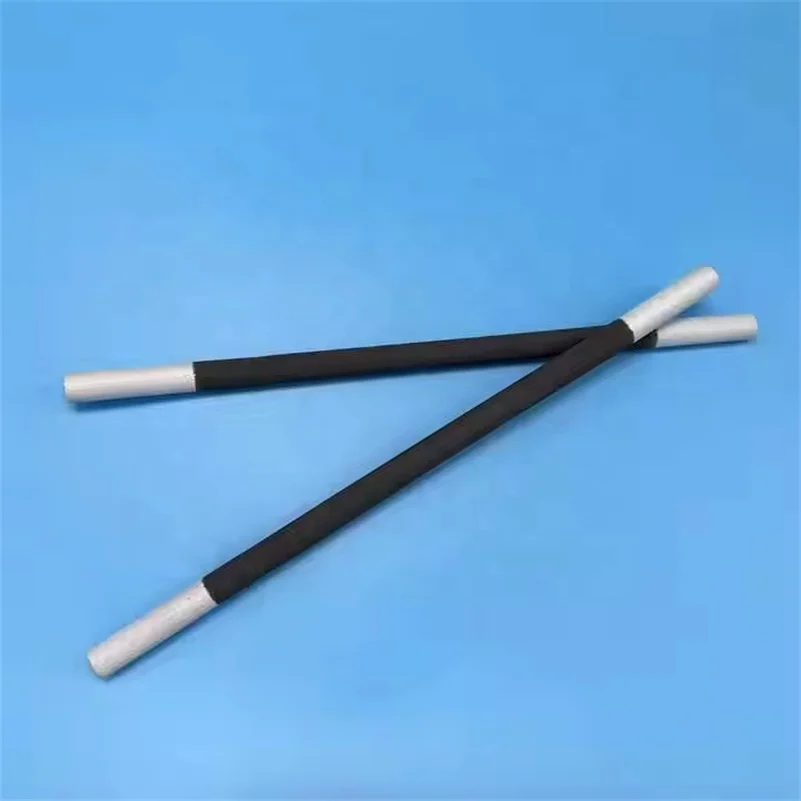
To understand why SiC is so effective, it helps to look at its inherent material properties. Silicon carbide is a remarkable ceramic compound that thrives under extreme conditions where other materials would fail. One of its most celebrated features is an exceptionally high operating temperature capability. While a standard metallic heating element might start to degrade or oxidize at a certain point, a silicon carbide element can maintain its integrity and continue performing at temperatures that soar well above what many industrial processes demand. This headroom is crucial not just for reaching high temperatures, but for doing so reliably over thousands of cycles. Closely tied to this is its fantastic thermal conductivity. Heat doesn't just get generated at the surface of a SiC heating element; it transfers rapidly throughout the entire body of the element. This characteristic is key to achieving rapid heating rates, as the energy from the electrical current is converted to thermal energy and distributed with minimal lag. Furthermore, silicon carbide exhibits outstanding thermal shock resistance. Industrial furnaces aren't always gently ramped up and down. They can be subject to rapid cooling, such as when a batch door is opened or a water-cooled component is introduced nearby. A material that cracks under such stress would be a constant liability. SiC, however, can withstand these sudden temperature swings without fracturing, ensuring operational reliability and safety. Finally, its chemical inertness is a major asset. In atmospheres that would aggressively corrode metal elements—whether mildly oxidizing, vacuum, or certain controlled atmospheres—silicon carbide maintains its stability. This longevity directly translates to lower maintenance costs, less furnace downtime, and a more predictable production schedule. These core advantages make it clear that silicon carbide isn't just another heating option; it's a foundational upgrade for demanding thermal applications.
The material benefits of SiC translate directly into tangible operational improvements for industrial furnaces. The most immediate impact is on heating speed. The combination of high thermal conductivity and the ability to withstand high surface loads means a furnace equipped with SiC heating elements can reach its target temperature significantly faster than one using older technology. This rapid ramp-up time is a direct contributor to increased throughput. Batch furnaces can complete more cycles per day, while continuous furnaces can handle material at a faster line speed. Time, after all, is a critical metric in manufacturing. Alongside speed comes superior temperature uniformity. Because SiC elements heat so efficiently and can be arranged strategically within a furnace, they create a more consistent thermal environment. Hot and cold spots are minimized. This uniformity is essential for processes like heat treatment, where inconsistent temperatures can lead to variable material properties, rejected parts, and wasted energy reheating areas that fell behind. Energy efficiency is another major win. The quick response and excellent heat transfer properties of SiC mean less energy is wasted as the system struggles to come up to temperature or maintain it against thermal losses. Users often report measurable reductions in power consumption after retrofitting a furnace with silicon carbide elements. Finally, the operational flexibility is greatly enhanced. A single furnace design utilizing robust SiC elements can often accommodate a wider range of processes and temperature profiles without requiring element changes. This versatility allows manufacturers to be more agile, using the same asset for different production needs. In summary, by enabling faster heating, better uniformity, lower energy use, and greater flexibility, silicon carbide heating elements don't just heat a furnace—they optimize the entire thermal process.
The unique performance profile of the silicon carbide heating element has made it indispensable across a wide spectrum of industrial sectors. Its influence is perhaps most pronounced in high-temperature metallurgy. In applications like melting non-ferrous metals such as aluminum or zinc, or in the heat treatment of steel, the ability to deliver intense, clean heat rapidly is paramount. SiC elements provide the thermal muscle needed for these tasks with reliability that keeps production lines moving. The ceramics and powder metallurgy industries are another perfect fit. Processes like sintering, which involves fusing powder particles into a solid mass, require precise temperature control and a uniform atmosphere over extended periods. The stability and high-temperature capability of SiC make it the element of choice in many sintering and debinding furnaces, ensuring parts are produced with consistent density and dimensions. Beyond these traditional heavy industries, SiC is enabling advancements in technology manufacturing. The production of semiconductors, for instance, involves numerous high-temperature steps in diffusion and oxidation furnaces. The purity and controllability offered by silicon carbide heating elements are critical in these sensitive environments where contamination must be avoided at all costs. Similarly, in the research and development of new materials—from advanced composites to novel alloys—laboratory and pilot-scale furnaces rely on SiC to provide the precise and extreme conditions needed for experimentation. Its role even extends into specialized areas like industrial ceramic coating and glass processing. Wherever there is a need for efficient, reliable, and high-temperature heat, the SiC heating element has proven to be a versatile and powerful solution, driving innovation and quality across the board.
Adopting this technology successfully requires careful consideration. Not all silicon carbide heating elements are identical, and matching the right element to the application is crucial for achieving the promised benefits. Key selection factors include the element type, such as rods, tubes, or spiral forms, each offering different surface area and mounting characteristics for specific furnace designs. The electrical specifications—resistance, voltage, and power rating—must be carefully calculated to integrate seamlessly with the existing furnace control system. The operating atmosphere is perhaps the most critical consideration. While SiC is broadly resistant, very specific conditions, such as certain halogen-rich or highly reducing atmospheres, may require specially treated elements or alternative materials. Therefore, consulting with knowledgeable technical suppliers who can provide guidance based on extensive application experience is highly recommended. Proper installation is the next critical step. Elements must be mounted according to the furnace manufacturer's or element supplier's specifications, with correct spacing to prevent shadowing and ensure even heating. Attention must be paid to electrical connections to avoid hot spots that could lead to premature failure. Once operational, a well-designed control system that manages the power input and temperature ramp rates will maximize the element's service life. While silicon carbide is incredibly durable, it is still a ceramic and can be damaged by physical impact or extreme thermal stress outside its design limits. With correct selection, careful installation, and sensible operation, a SiC heating element system becomes a long-term asset, delivering years of reliable, high-performance service that redefines what an industrial furnace can achieve. By embracing this advanced thermal technology, manufacturers position themselves for greater efficiency, productivity, and capability in an increasingly competitive global market.


 EN
EN