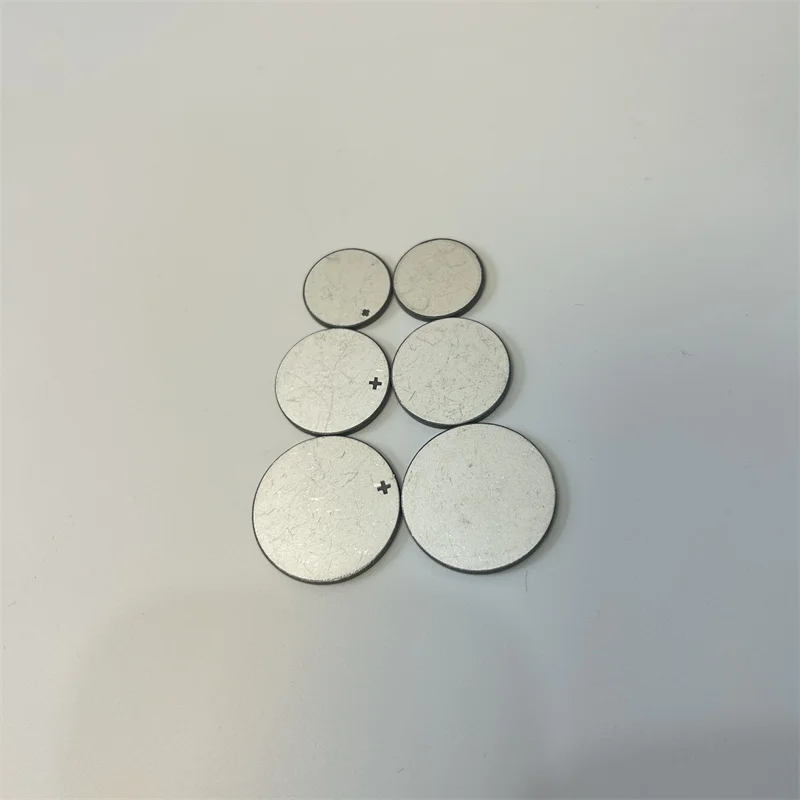
Piezo PZT rings, which stands for Lead Zirconate Titanate, are special components that can turn electricity into tiny movements or do the opposite thanks to something called the piezoelectric effect. These ceramic rings are made from materials with a specific crystal structure known as perovskite. When voltage is applied, they create really small displacements at the nanoscale level. Because of this property, they work great in applications where accuracy matters a lot, such as in ultrasonic transducers used for cleaning equipment or in positioning systems that need to move things with extreme precision.
PZT materials have this really interesting property where they can convert mechanical energy into electrical signals and vice versa. Apply some pressure or stress to these crystals, and they generate electricity right back at you what we call the direct piezoelectric effect. Flip things around and apply voltage instead, and watch those crystals deform structurally the inverse effect in action. This two way street makes PZT rings incredibly versatile components that work great as both sensors picking up changes and actuators creating movement. Looking at recent findings from studies published in 2024 on piezoelectric materials, PZT stands out with its impressive d33 coefficient measuring how much strain occurs per volt applied. The numbers? Around 650 picometers per volt, which puts it light years ahead of natural alternatives like quartz in terms of performance capabilities.
Three factors elevate PZT’s efficiency in industrial and medical systems:
These advancements make PZT ceramic rings 30% more responsive than alternative piezoceramics in applications requiring sub-micron precision.
What makes PZT ceramic rings so good at piezoelectric performance? Their special crystal structure is key here. These rings combine lead zirconate titanate (PZT) with various dopants such as strontium or lanthanum to get those desired properties. When grain sizes drop below 2 microns, we see much less hysteresis problems without sacrificing the impressive d33 coefficient values which can go over 600 pC per Newton. Some recent research from 2023 showed something interesting too. Silver coated electrodes actually boost conductivity around 40 percent better than regular ones, plus they stay dimensionally stable even when loaded up. Today's manufacturing techniques have gotten really good at controlling porosity levels down to under 0.5%. That matters a lot for medical applications where implants need to resist sterilization processes without breaking down.
The poling process aligns 85–90% of ferroelectric domains through controlled DC fields (6–8 kV/mm). Properly oriented domains boost electromechanical coupling factors (kᵪ > 0.65), as shown in 2022 research where optimally poled rings achieved 15% faster response times than unpoled equivalents.
PZT rings maintain functionality across -40°C to 150°C, with Curie temperatures above 350°C ensuring piezoelectric stability. A 2024 material analysis found that nickel-alloy housings reduce thermal expansion mismatches by 30% compared to stainless steel, preventing delamination in high-vibration industrial pumps.
Designers optimize ring geometries using the displacement-force product (d𝖾𝖾 × g𝖾𝖾). For example, a 10 mm OD ring with 0.5 mm wall thickness generates 12 µm displacement at 100 V, while thicker walls (1.2 mm) prioritize 40 N blocking force—a trade-off validated in 2021 aerospace actuator case studies.
PZT ceramic rings in piezoelectric devices offer amazing precision down to sub-micrometer levels for robotic surgical instruments. This allows doctors to navigate tight spots inside the body where traditional tools would struggle. Research from Johns Hopkins back in 2023 showed something pretty impressive actually - when they tested these piezoelectric actuators against older electromagnetic systems during laparoscopic surgeries, there was about a 47 percent drop in positioning mistakes. What makes this technology stand out is how fast it reacts, under two milliseconds basically, which means surgeons get immediate feedback while performing delicate operations. That kind of responsiveness can make all the difference in complicated procedures.
PZT ceramic rings serve as the core of high-frequency ultrasonic transducers (>15 MHz), generating detailed images of soft tissues and blood flow patterns. Their ability to convert 92–96% of electrical input into mechanical vibrations outperforms conventional piezoelectric polymers, enabling clearer fetal imaging and tumor boundary detection.
Researchers have developed implantable micro-pumps using PZT rings that administer drugs with 0.1 µL dosage accuracy. A 2024 Materials Today study showed an 82% improvement in delivery consistency compared to solenoid-based systems, particularly critical for insulin-dependent diabetes and chemotherapy treatments.
Rigorous accelerated life testing (1 million cycles at 120°C) confirms PZT rings maintain >99% charge density in cardiac pacemakers and neurostimulators. Clinical trials published in JAMA (2023) reported a 99.6% 5-year survival rate for piezo-powered implantables, surpassing FDA durability requirements by 34%.
The use of piezo PZT ceramic rings allows for extremely accurate control over valve timing in today's fuel injection systems, with response speeds below 0.1 milliseconds. Such fast action helps boost combustion efficiency somewhere between 12 to 22 percent according to a study published last year in Automotive Engineering, plus it cuts down on harmful particle emissions. Traditional solenoid valves just can't handle what these piezoelectric actuators do. They keep working properly even when temps reach around 150 degrees Celsius, which makes them perfect for those tough conditions found inside high pressure diesel engines and emerging hydrogen power plants.
PZT ceramic rings play a critical role in laser cutting and semiconductor lithography systems by actively countering those tiny micron-level vibrations that can throw off precision work. According to research published last year, when these piezoelectric damping modules are incorporated into optical assemblies, they cut down positional errors by around 40% even when subjected to mechanical shocks during operation. What makes them so effective? Their incredibly low thermal expansion rate of less than 0.02% at temperatures reaching 100 degrees Celsius means they maintain stability where it counts most. This property is particularly valuable for high precision imaging equipment such as MRI machines and the delicate mirror systems found in space telescopes, where even minor dimensional changes could compromise results.
Micropositioning stages driven by piezoelectric actuators can reach resolutions down to about 5 nanometers when used in CNC machines or wafer inspection robots. Car makers have started incorporating PZT ring stacks into their production lines because these devices can deliver around 250 Newtons of force with precision within 0.1 micrometers during the assembly of bearings. What's interesting is that this approach cuts down on time compared to traditional hydraulic methods by roughly forty percent. Because they offer both high force output and exceptional positioning accuracy, piezoelectric systems are becoming essential tools for manufacturing tiny parts such as modern fuel injectors and those miniature MEMS sensors we find in so many electronic devices today.
PZT materials do come at a premium, typically costing three to five times what traditional piezoceramics would set a manufacturer back. But here's where they shine: those same PZT components boast around 95% electromechanical conversion efficiency, which actually brings down overall energy consumption by roughly 30% throughout the entire lifespan of the device. When manufacturers get creative with their designs, such as implementing unimorph ring structures, they can cut down on raw material requirements by about 15% while still maintaining the necessary displacement output levels. Take industrial valves for instance, these kinds of optimizations make a real difference in production economics. The numbers tell the story pretty clearly too - according to the Precision Manufacturing Report from 2024, companies managing large volume operations see their per unit costs drop by approximately 18% when switching to these advanced materials and smart design approaches.
There's been a big push lately for smaller medical implants and handheld diagnostic tools, which has led to some interesting progress in MEMS technology. New bonding methods at the wafer level are letting manufacturers shrink those Piezo PZT ceramic rings down to just fractions of a millimeter without sacrificing that crucial 0.1% strain output needed for tiny pumps used in diabetes care systems. According to a report from 2024 looking at the piezoelectric actuator market, about 41% of endoscopic tools sold last year featured these MEMS compatible PZT components. That number tells us something important about where the field is heading, especially as doctors continue to favor less invasive surgical approaches.
The EU RoHS 2027 regulations are pushing manufacturers to phase out lead zirconate titanate materials, which has led to increased interest in alternatives such as sodium bismuth titanate or NBT for short. These new materials have d33 coefficients around 320 pm/V compared to traditional PZT-5H at roughly 600 pm/V, though researchers continue looking for better matches. Recent field tests with lead-free piezoelectric PZT ceramic rings used in insulin delivery systems showed promising results, achieving about 94% energy conversion efficiency when tested at body temperature (37 degrees Celsius). The devices met FDA requirements for biocompatibility and importantly removed the risk associated with heavy metals that were previously present in these medical components.
Fourth-generation PZT rings now incorporate embedded strain sensors that feed real-time performance data to predictive maintenance algorithms. This IoT integration reduces failure rates in automated assembly lines by 63% (Piezosystem Jena 2023) through adaptive voltage adjustments compensating for temperature-induced depolarization.
Strategic adoption requires balancing four factors:
| Parameter | Medical Priority | Industrial Priority |
|---|---|---|
| Cycle Lifetime | >10¹ Operations | >5–10• Operations |
| Temperature Range | 25–40°C | -40–150°C |
| Lead-Free | Mandatory | Preferred |
| Cost Tolerance | High (₪120/unit) | Medium (₪40/unit) |
Cross-industry standardization efforts led by ASTM Committee F04.12 aim to deliver <3% hysteresis PZT formulations by Q2 2025, enabling modular designs across implantables and robotics.
PZT ceramic rings are used in a variety of applications, including ultrasonic transducers for cleaning equipment, positioning systems, fuel injection systems, and medical devices like surgical instruments and imaging probes.
PZT materials are more efficient due to their high d33 coefficient, optimal poling process, microstructure design, and composition control, leading to impressive electromechanical conversion efficiencies.
PZT materials provide precision motion control, enhanced imaging capabilities, and reliable drug delivery systems. They offer higher positioning accuracy compared to traditional methods, which is crucial for delicate procedures.
While PZT materials have a higher initial cost, their higher efficiency, reduced energy consumption, and potential lead-free variants make them more sustainable options for industrial applications in the long run.
The future trends for PZT ceramic technology include miniaturization, integration with MEMS technology, development of lead-free materials, and enhancement with IoT-enabled actuator networks for smart manufacturing.


 EN
EN