 EN
EN

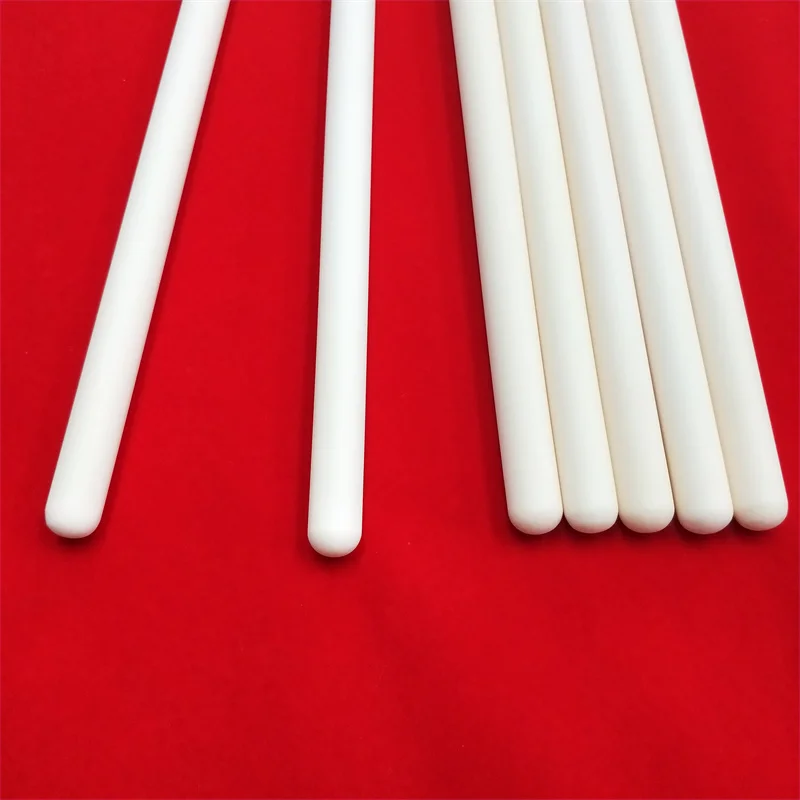
Why Ceramic Thermocouple Tubes Are Critical for Reliable High-Temperature Measurement
Thermal and Chemical Degradation Risks Above 1000°C
When temps go above 1000 degrees Celsius, thermocouples start breaking down fast both thermally and chemically, which really messes with their accuracy and how long they last. The metal covering gets oxidized pretty quick, and those nasty acidic gases like sulfur dioxide and chlorides work their way through regular insulation, making the calibration drift more than 5 degrees Celsius each week. The constant heating and cooling cycles create tiny cracks in standard materials, speeding up the failure process. Most unprotected sensors installed in industrial furnaces or kilns don't make it past three months before needing replacement. What happens during this breakdown? Signal drift occurs because of contaminated wires, insulation resistance falls under 1 megaohm mark, and eventually we get total sensor failure when short circuits develop.
How Ceramic Thermocouple Tubes Preserve Signal Integrity and Calibration Stability
Ceramic tubes for thermocouples serve as a tough shield against both intense heat and harsh chemicals, keeping measurements accurate thanks to several important features. The material itself, usually made from very pure alumina or zirconia, stands up well to attacks from molten metals and corrosive environments found in industrial settings. These ceramics also have naturally low thermal conductivity, which means they don't conduct heat easily across their walls. This property helps prevent those annoying calibration issues caused by temperature differences within the tube. Plus, when properly sealed, these tubes keep out all sorts of contaminants that would otherwise mess with the thermocouple's ability to generate consistent electrical signals. In practice, thermocouples protected by ceramics maintain their accuracy within about 1 degree Celsius even at temperatures reaching 1600 degrees Celsius. Many last over 18 months straight inside cement kilns where conditions are extremely tough, surviving repeated heating cycles and constant chemical bombardment without losing performance.
Ceramic Thermocouple Tube Materials: Alumina vs. Zirconia Performance Trade-offs
Alumina (Al₂O₃) — Superior Thermal Stability and Cost Efficiency up to 1650°C
Alumina stands out as the go to material for high temperature applications reaching up to around 1650 degrees Celsius. It offers a great mix of thermal stability, good mechanical strength, and reasonable costs for what it provides. The material has a thermal expansion coefficient measuring about 8.1 times 10 to the minus sixth per degree Celsius, which means it keeps its shape even when temperatures change rapidly. When we look at materials with 99.5% purity, they can handle flexural stresses around 170 megapascals without breaking down, plus they stand up well against both oxidation and attack from molten salts. What makes alumina really valuable is how little it affects thermocouples during operation. At temperatures hitting 1500 degrees Celsius, the drift stays below 0.1%, according to those industry standard tests like ASTM E230 and E988. And let's not forget about money matters either. Alumina production typically costs about 40% less than making zirconia products. This cost advantage comes from having plenty of bauxite available and the fact that manufacturing processes are generally simpler compared to other ceramics.
Zirconia (ZrO₂) — Enhanced Thermal Shock Resistance and Corrosion Tolerance at 1700°C+
When temperatures go above 1700 degrees Celsius, particularly in situations where there's rapid cooling or lots of halogens around, zirconia just can't be beat. Take yttria stabilized zirconia for instance. This material has this neat property called transformation toughening. Basically, its tetragonal phase stays kind of unstable until it gets stressed thermally, then it soaks up all that stress instead of cracking apart. We've seen these materials handle multiple cycles from 1000 degrees down to room temperature with less than half a tenth of a percent dimensional change. And let's talk about corrosion resistance. In environments loaded with halogens, zirconia holds up about ten times better than regular old alumina does. That's why industrial folks reach for zirconia when dealing with sulfur recovery systems handling hydrogen sulfide and sulfur dioxide, vacuum furnaces working with reactive metals, or even coal gasification plants battling alkali vapors.
| Property | Alumina | Zirconia |
|---|---|---|
| Max Temp | 1650°C | 2200°C |
| Thermal Shock (TCR) | Moderate | Excellent |
| Halogen Resistance | Limited | High |
| Cost Index | 1.0x | 1.6x |
Design and Selection Criteria for Optimal Ceramic Thermocouple Tube Performance
Matching Purity Grade, Wall Thickness, and Geometry to Process Conditions
Getting good results really comes down to matching three key design factors with what the operation actually needs. When we talk about alumina purity, anything above 99.5% gives us better structural strength even at those extreme temperatures around 1650 degrees Celsius. But there's a tradeoff here too because these high purity materials tend to crack more easily when subjected to intense thermal changes over time. For wall thickness, manufacturers face this classic dilemma between lasting power and reaction speed. Thicker walls ranging from 6 to 10 millimeters stand up much better against wear and tear in harsh environments such as cement kilns. On the flip side, thinner walls measuring just 3 to 5 mm respond faster to heat changes which matters a lot in processes where quick heating is required. The shape matters just as much. Straight tubes work great for inserting into vertical furnaces, but when dealing with molten metals where slag tends to accumulate, engineers often go for tapered or stepped designs instead since they help keep things running smoothly without blockages forming.
Atmosphere Compatibility: Oxidizing, Reducing, and Halogen-Rich Environments
When choosing materials for industrial applications, atmospheric chemistry matters more than just temperature considerations. Zirconia stands out in environments with reducing atmospheres like those found in hydrogen-rich heat treatment processes. It can resist carburization at temperatures reaching around 1700 degrees Celsius, whereas alumina starts breaking down under similar conditions. On the flip side, high purity alumina works well in oxidizing conditions but tends to fail quickly when faced with chlorine exposure or sulfur dioxide environments. That's where yttria stabilized zirconia really shines thanks to its unique ionic structure that stops halides from penetrating the material. Glass melting furnaces dealing with fluoride compounds benefit greatly from zirconia too. Its almost non-existent porosity keeps corrosive elements from getting inside, which means these furnaces maintain their calibration stability about 40% longer than what we see with other ceramic options based on recent industry testing results.
Real-World Validation: Ceramic Thermocouple Tube Applications in Extreme Industries
Cement Kiln Monitoring: 1600°C Operation with SO₂/Cl₂ Exposure
The environment inside cement kilns is among the toughest places to get accurate measurements anywhere in industry. These massive furnaces run non-stop at temperatures around 1600 degrees Celsius, all while producing corrosive sulfur dioxide and chloride compounds from the raw materials they process. Standard thermocouples simply can't stand up to this abuse. Without protection, these sensors typically fail completely within just a few weeks due to damaged junctions and drifting calibration readings. That's where zirconia based ceramic tubes come into play. They've stood the test of time in these harsh conditions because they resist thermal shock and block harmful halides, keeping signals stable for anywhere between six to twelve months. The low thermal conductivity of these tubes also helps reduce measurement errors caused by extreme temperature differences along the length of the kiln. Plus, their hermetic seals stop reactive gases from getting inside. All these features allow operators to maintain continuous monitoring of critical parameters. This reliability matters a lot for controlling clinker quality and preventing unexpected shutdowns that could cost upwards of half a million dollars each day in lost production alone.
Glass Melting Furnaces and Metal Heat-Treating Lines
Glass melting furnaces run at temperatures well over 1500 degrees Celsius need special protection for their thermocouples. Ceramic tubes are essential here because they stop molten glass from sticking and resist damage from sodium vapors that would otherwise mess up temperature readings after just a few days. Most manufacturers go with 99.5% alumina tubes since they create surfaces that glass simply won't adhere to and maintain stability against alkaline substances. When it comes to metal heat treatment processes involving things like annealing, hardening, and quenching, the situation gets even trickier. These operations expose sensors to constantly changing atmospheric conditions between oxidizing and reducing environments. That's where ceramic tubes really shine by providing completely sealed, non-porous barriers. They block out contaminants like carburizing gases and oil residues that could throw off sensor calibrations after repeated heating cycles. The importance of this reliability cannot be overstated. Even small temperature variations during critical tempering stages can lead to serious structural problems in parts used for aircraft manufacturing where tolerances must be razor sharp.
Table of Contents
- Why Ceramic Thermocouple Tubes Are Critical for Reliable High-Temperature Measurement
- Ceramic Thermocouple Tube Materials: Alumina vs. Zirconia Performance Trade-offs
- Design and Selection Criteria for Optimal Ceramic Thermocouple Tube Performance
- Real-World Validation: Ceramic Thermocouple Tube Applications in Extreme Industries

