 EN
EN

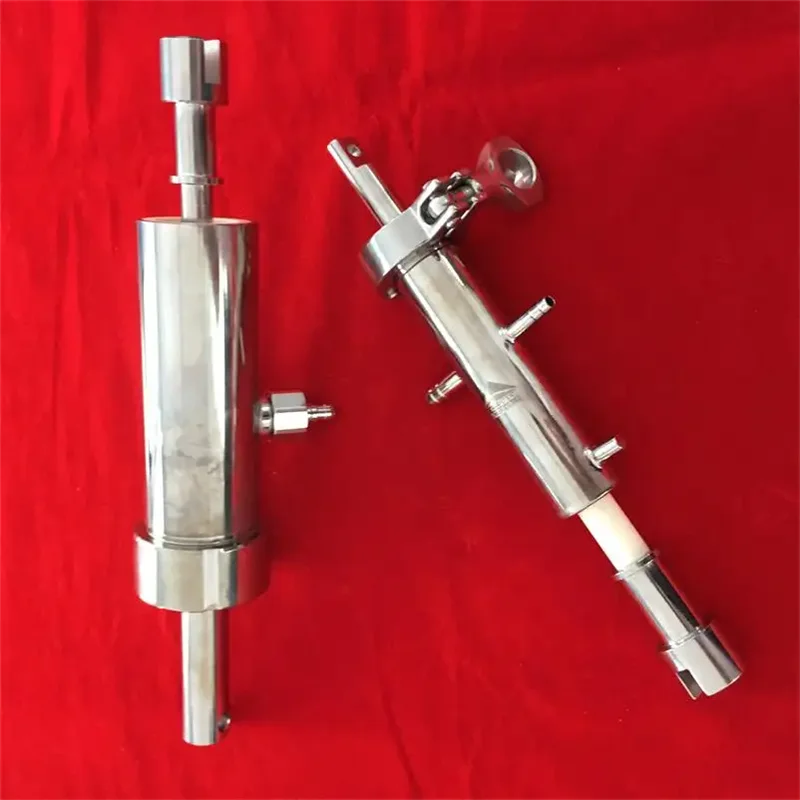
Material Science Foundations: Why Ceramics Enable Stable Plunger Performance
Alumina and Zirconia: Thermal Stability, Chemical Inertness, and Mechanical Rigidity
The materials behind precision ceramic dosing pump plungers are primarily alumina (Al2O3) and zirconia (ZrO2). These ceramics stand out because they handle extreme conditions really well. They stay dimensionally stable even when temperatures swing between -40 degrees Celsius and 300 degrees Celsius, which means no problems with thermal expansion messing up chemical transfers. What makes these materials so special is their chemical inertness. They don't break down when exposed to harsh substances like hydrochloric acid (HCl), sodium hypochlorite (NaOCl), or even dilute hydrofluoric acid (HF). That's why they're so popular in industries such as pharmaceutical manufacturing, semiconductor production, and various analytical processes. From a mechanical standpoint, alumina has a Vickers hardness rating somewhere between 1,200 and 1,400 HV, while zirconia offers good fracture toughness around 3 to 4 MPa·m^0.5. This combination gives the plungers both strength and flexibility, allowing them to maintain accuracy with minimal drift of less than 0.25% over about 5 million operating cycles.
Microstructural Precision: Grain Uniformity and Boundary Engineering for Zero-Dimensional Drift
The long term accuracy of these materials relies heavily on having grains that are uniformly sized at sub micron levels along with carefully engineered grain boundaries between them. When grain sizes stay consistently small (below 1 micrometer), it removes those weak spots that typically start causing dimensional changes when subjected to repeated stress cycles. Modern sintering methods have made significant improvements here. Take yttria stabilized zirconia for instance. The chemistry at the grain boundaries gets optimized through these advanced processes, allowing what's called transformation toughening. Basically, this means the material can absorb mechanical energy without actually cracking. This kind of microstructural control keeps deformation within safe limits, so we avoid both hysteresis effects and unwanted plastic flow. Ceramic plungers built this way show almost no dimensional change over time, less than 0.1 micrometer after 10,000 operating hours even during high frequency dosing operations. The result? Flow rates stay remarkably stable, varying by only plus or minus 0.5% from their intended targets throughout many years of service. This level of stability matters a lot in critical applications like vaccine manufacturing and semiconductor fabrication, where even tiny volume inconsistencies simply won't cut it.
Mechanical Endurance: Cycle-Life Integrity and Repeatability of the Ceramic Dosing Pump Plunger
Empirical Longevity Data: <0.25% Accuracy Drift After 5 Million Cycles
Tests show that ceramic plungers in dosing pumps maintain metering accuracy with deviations staying under 0.25% even after running for 5 million cycles. This kind of performance sets a standard for how well materials resist changes in shape over time. Advanced ceramics behave very differently from metals when subjected to constant stress. They basically don't deform at all, keeping their volume measurements consistent within a tight ±0.5% range year after year of non-stop work. Such dependable performance makes these components essential for applications where precision matters most, like making medications or operating sensitive lab equipment that requires absolute accuracy in measurements.
Hysteresis Elimination Through Elastic-Only Kinematics and Zero Plastic Deformation
The ceramic plungers manage to move without any hysteresis because they work only within what's called the elastic deformation range. When compressed during those dosing cycles, materials like alumina and zirconia will bend a bit but always snap back to their original shape completely, so there's no lasting change in form. Metal parts tell a different story though. They tend to collect plastic deformation over time, which leads to flow rates drifting past the 2% mark after about half a million cycles. What makes ceramics special is this purely elastic behavior that gives us three main benefits. First, they reliably return to their exact original shape. Second, they maintain consistent contact with the pump chamber walls. And third, they eliminate that annoying memory effect which slowly ruins calibration accuracy. Looking at stress-strain curves confirms all this works as expected, since the path taken when releasing pressure matches exactly what happened when loading it up, meaning all the energy gets recovered with nothing left behind.
Wear Resistance Realities: Hardness, Toughness, and Nanoscale Surface Evolution
Vickers Hardness (1200–1400 HV) vs. Fracture Toughness (3–4 MPa·mâ°Â·âµ): Balancing Durability and Reliability
The ceramic plungers used in dosing pumps are built to last thanks to clever material combinations. These alumina zirconia composites have a Vickers hardness rating between 1200 and 1400 HV, which is actually over three times harder than hardened steel. This makes them really good at standing up to wear from particles in thick or slurry type fluids. What's interesting is how these materials handle stress. They have a fracture toughness rating around 3 to 4 MPa m 0.5, which means they can absorb small impacts without cracking when subjected to high pressure cycles. The result? No sudden breakage issues and dimensions stay stable within about 0.1 micrometers even after running continuously for 10,000 hours straight. That kind of reliability matters a lot in industrial applications where downtime costs money.
Is 'Zero Wear' Accurate? Distinguishing Functional Integrity from Atomic-Scale Abrasion
Manufacturers often claim their products show "zero functional wear," but at the atomic level, there's actually some surface recession happening. We're talking about tiny changes between 5 to 20 nanometers per year in acidic environments. Most standard measurement tools can't pick up these microscopic changes, and they don't affect how the equipment performs day to day. Real problems only start showing up when wear gets past the 50 micrometer mark. Ceramic plungers generally stay well below this failure point for around 7 to 10 years because they operate under stresses less than 1.2 GPa where plastic deformation would normally happen. There's also something interesting about how these components naturally smooth themselves at the nanoscale during operation. This self-mitigating abrasion process actually cuts down friction by about 18% after the initial running period, which helps extend their working life even further.
Chemical Resilience: Corrosion Resistance in Aggressive Dosing Environments
Passivation Layer Stability in Acidic, Oxidizing, and Fluoride-Containing Media (e.g., HCl, NaOCl, Dilute HF)
The ceramic plungers used in dosing pumps keep their shape thanks to these special oxide layers that can repair themselves over time. When exposed to hydrochloric acid solutions at concentrations around 20%, alumina ceramics hardly lose any material at all, with losses below 0.01 mg per square centimeter each year. Zirconia works particularly well in environments with oxidizing agents like sodium hypochlorite because its crystal structure blocks oxygen from getting through, something metals just cant handle without corroding fast. Even when dealing with tricky fluoride containing substances such as diluted hydrofluoric acid, the carefully designed grain boundaries stop fluoride from penetrating deeper than about 5 nanometers after being immersed for 500 hours straight. This helps maintain the original geometry of the parts and stops problems like pits forming or damage between grains affecting accuracy. What makes ceramics really stand out is how these protective layers fix themselves automatically, so they work reliably no matter what the pH level is from extremely acidic to very alkaline conditions. That means fewer interruptions for maintenance in those tough chemical processing jobs where downtime costs money.
Table of Contents
- Material Science Foundations: Why Ceramics Enable Stable Plunger Performance
- Mechanical Endurance: Cycle-Life Integrity and Repeatability of the Ceramic Dosing Pump Plunger
- Wear Resistance Realities: Hardness, Toughness, and Nanoscale Surface Evolution
- Chemical Resilience: Corrosion Resistance in Aggressive Dosing Environments

