 EN
EN

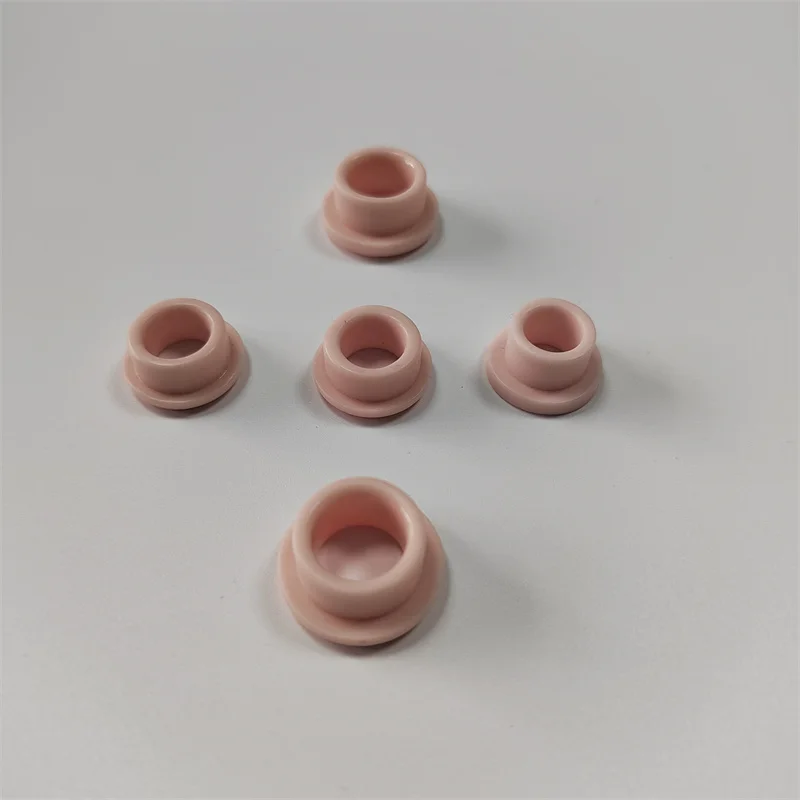
The Wire Wear Problem at High-Speed Guidance Points
Why wire abrasion occurs at critical contact zones in spinning, weaving, and winding systems
The wearing away of wires at guidance points happens because of three main things working together: friction from speed, mismatch between materials, and the stresses of operation. Modern textile machines push wires through narrow channels at over 100 meters per second, creating serious heat where surfaces rub against each other constantly. When metal guides meet wires coated with softer polymers or platings, this wear gets worse fast. Dust and moisture hanging around the system also contribute to the problem, acting like tiny cutting tools that accelerate damage. What makes matters worse is that small misalignments in these high speed winding systems create uneven pressure spots, which means certain areas take all the punishment while others sit idle. That leads to early failure for both the wire itself and whatever guides it along its path. Without proper engineering fixes like those precision ceramic eyelets, these combined effects will keep eating away at wire quality until production starts suffering.
Consequences: Broken wires, machine downtime, and inconsistent yarn quality
When wires start wearing down in production lines, the effects hit fast and hard throughout the entire operation. If one wire breaks on a ring spinning line, it can bring around 1,200 spindles to a complete standstill. Big manufacturing plants lose upwards of $5k every hour when production grinds to a halt. And things get worse from there. Textile companies across the board are seeing their yearly output drop between 15% and 30% because of these unexpected wire problems. The quality issues are equally bad too. As guidance surfaces wear out, they create all sorts of tension variations in the yarn being produced. This leads to yarn with higher than normal CV percentages (sometimes above 12%) and weaker tensile strength overall. These kinds of defects don't just cost money through rejected orders, they also create massive waste further down the processing chain and slowly chip away at customer confidence in the brand. On top of everything else, constantly replacing worn wires adds about 40% more to maintenance costs compared to what companies would spend if they switched to more durable alternatives.
How Ceramic Eyelets Deliver Superior Wear Resistance
Ceramic eyelets outperform traditional metal guides through fundamental material advantages backed by real-world validation—not just laboratory metrics.
Material science advantage: Hardness (HV 1200–1500), low friction coefficient, and atomic-level surface smoothness of alumina and zirconia
Alumina (Al₂O₃) and zirconia (ZrO₂) ceramics deliver three synergistic properties essential for high-speed wire guidance:
- Extreme hardness (1200–1500 HV) resists micro-cutting from embedded abrasives and prevents deformation under load
- Low friction coefficients (0.1–0.3) cut sliding resistance by 60% versus stainless steel, reducing heat generation and wear energy
- Atomically smooth surfaces—achieved via ion-beam polishing—eliminate microscopic peaks that snag or score fine filaments
These characteristics are intrinsic to the material structure, not surface coatings, ensuring consistent performance across the full service life.
Real-world validation: 3.2× longer service life vs. stainless steel eyelets in ring-spinning trials (Linvatec, 2022)
Field tests lasting three years at twelve different textile mills showed that ceramic eyelets last around 224% longer than their stainless steel counterparts. When machines run at speeds above 100 meters per second during winding operations, there wasn't a single replacement needed throughout the entire testing period. Yarn breaks went down by about 63 percent because these ceramic guides don't damage the threads while keeping everything running smoothly. The bottom line? These durable components cut down on overall costs significantly. There's less need for maintenance work, less wasted material ends up getting thrown away, and production lines stay online without interruptions caused by equipment failures.
Ceramic Eyelet Design Features That Minimize Surface Damage
Edge-radius optimization and ion-beam polishing to eliminate micro-scratching on fine copper or carbon wires
Getting the right edge radius is key to spreading out loads evenly on those delicate filaments, which stops them from getting snarled up or developing stress points where they enter and exit. When we pair this with ion beam polishing that gets surfaces down to around 0.05 microns roughness, it basically wipes away those tiny flaws that start wearing things down. What does all this mean? Friction goes down by about 40% compared to regular ceramic grinding methods. This makes a big difference for materials like copper wire, carbon fibers, and specialty polymers that need to move smoothly through machinery without tearing at microscopic levels or distorting their shape during processing.
Thermal stability and non-galling behavior under continuous high-speed contact (up to 120 m/s)
Alumina zirconia composites stay dimensionally stable even when temperatures climb past 300 degrees Celsius, matching almost perfectly with standard mounting materials in terms of thermal expansion. The crystal structure of these materials prevents adhesion problems, which is one of the main ways failures happen in systems where metals rub against each other or contact wire components. During actual field tests in manufacturing settings, ceramic eyelets didn't show any signs of galling or material transfer after running continuously for over 2000 hours at speeds reaching 120 meters per second. This lack of galling means equipment performs consistently from shift to shift and batch to batch, something plant managers really value when trying to maintain quality control standards in high volume production environments.
Total Cost of Ownership: Why Ceramic Eyelets Reduce Long-Term Operational Costs
While ceramic eyelets carry a 15–25% higher initial investment than stainless steel alternatives, their lifecycle economics are decisively favorable. Their extreme hardness (HV 1200–1500) and atomically smooth surfaces reduce wear rates at guidance points so effectively that they deliver measurable savings across three critical cost drivers:
- Component Replacement Costs: With 3.2× longer service life in high-speed textile applications (Linvatec, 2022), ceramic eyelets slash replacement frequency and associated labor.
- Downtime Reduction: Fewer failures mean fewer unplanned interventions—reducing annual unplanned maintenance by up to 40%, according to industry data.
- Quality Consistency: Stable wire guidance cuts yarn breaks and tension variation, lowering material waste by 15–22% and reducing downstream processing defects.
Comprehensive five-year operational analyses confirm ceramic eyelets deliver a 12% net reduction in total cost of ownership—driven by extended service life, minimized labor, and preserved throughput. For mills prioritizing reliability, quality consistency, and sustainable operations, this represents not an added expense—but a strategic efficiency upgrade.

