 EN
EN

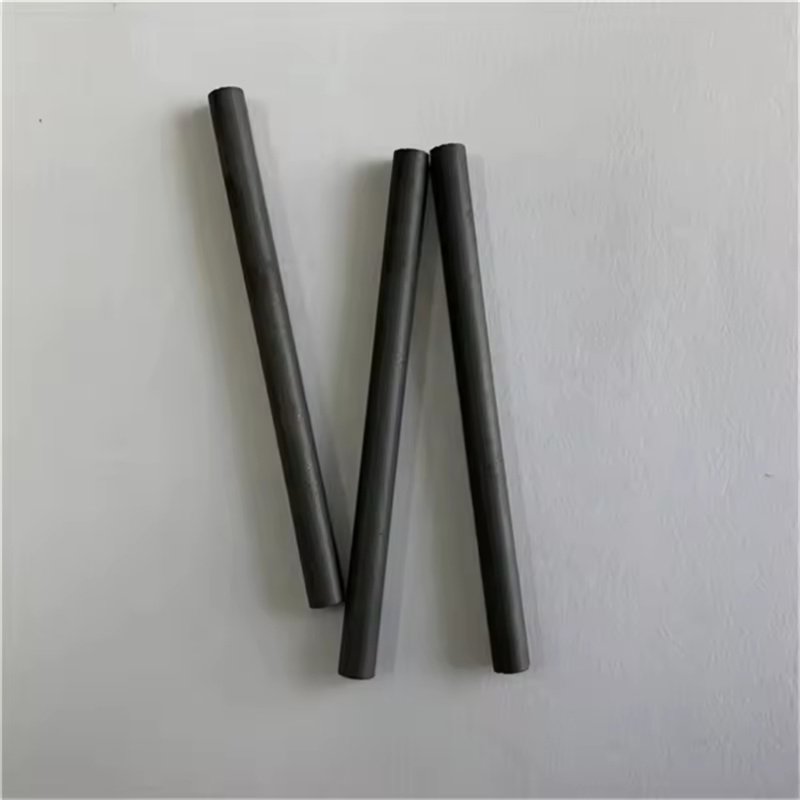
Material Science: Why Silicon Carbide Enables Consistent Thermal Emission
High thermal conductivity and stable emissivity across 1100–1450 °C
Silicon carbide (SiC) distinguishes itself from conventional heating materials through two interrelated properties: high thermal conductivity (100–150 W/m·K) and stable emissivity (0.85–0.95) across the critical 1100–1450 °C operating range. Unlike metallic alloys—which suffer steep declines in conductivity and unpredictable emissivity shifts above 1000 °C—SiC maintains efficient heat conduction into the furnace atmosphere while delivering consistent radiative output as temperature changes. This dual stability minimizes localized hot spots and eliminates unexpected shifts in heat transfer mode during ramp-up or hold cycles, enabling predictable, uniform thermal emission across the entire heating zone.
Oxidation resistance and structural stability preserving uniform radiative output
At elevated temperatures, oxidation compromises both performance and longevity of most heating elements by forming non-uniform, insulating surface scales that scatter radiation and distort electrical resistance. SiC counters this through passive oxidation: it forms a thin, adherent, self-limiting layer of silica (SiO₂) that protects the underlying material in air up to 1600 °C. Because this layer remains intact—without pitting, spalling, or cracking—the element’s surface geometry and emissive characteristics stay unchanged over thousands of operating hours. Complementing this chemical resilience is SiC’s low coefficient of thermal expansion (~4.5 × 10⁻⁶/°C), which ensures minimal dimensional change during repeated thermal cycling. The result is sustained geometric fidelity: elements remain straight and evenly spaced, preserving the precise hot-zone configuration required for uniform radiative coverage in industrial furnaces.
Geometric Design: Configurations That Optimize Heat Distribution
U-shaped, spiral, and tubular layouts for targeted hot-zone coverage
The physical configuration of a silicon carbide heating element directly shapes heat distribution within the furnace. U-shaped elements concentrate radiant energy along vertical surfaces, minimizing dead zones in compact or vertically oriented workspaces. Spiral designs maximize surface-to-volume ratio, supporting rapid temperature ramping in high-power-density applications. Tubular elements—often deployed in parallel arrays—create a broad, overhead radiative canopy ideal for large or irregularly shaped loads, significantly reducing shadowing effects. Selecting the optimal layout requires alignment with load geometry, desired thermal profile, and furnace insulation design—not just power requirements—to prevent localized overheating or underheating.
Cold-end engineering and transition geometry to suppress axial thermal gradients
Uniform radiative output along the full length of an SiC heating element depends critically on controlled axial heat flow. Cold ends—sections located outside the hot zone—act as thermal barriers, limiting conductive heat loss and stabilizing core temperature. Equally important is the transition geometry between cold and hot zones: a gradual taper or stepped reduction in cross-section smooths the axial thermal gradient, preventing abrupt temperature drops that induce mechanical stress and risk premature failure. This integrated thermal-mechanical design ensures consistent surface temperature—and thus consistent emissivity—along the entire radiating length, eliminating end-to-end variations that could otherwise manifest as cold streaks or thermal banding.
Electrical & Thermal Integration: Matching SiC Heating Elements to Furnace Load
Resistance matching and parallel/series wiring strategies for balanced power distribution
Balanced power distribution hinges on precise resistance matching—especially given SiC’s positive temperature coefficient of resistance (TCR), which causes resistance to increase with temperature. Factory-tested resistance values are marked on each element, and for parallel installations (the most common configuration), elements should be matched within ±20% to prevent current imbalance and localized overloading. Series configurations demand tighter tolerance—±5%—due to their inherent sensitivity to resistance variation; mismatched elements in series risk thermal runaway in one unit while starving others of power. Crucially, mixing aged and new elements in the same circuit must be avoided, as resistance drifts significantly over service life. When combined with appropriate wiring strategy, rigorous resistance matching ensures every element contributes proportionally to total heat output—eliminating hot spots, cold zones, and process variability.
Surface load optimization: Maximizing uniformity without compromising SiC heating element lifespan
Surface load—the watt density applied to the radiating surface—is a decisive factor in both thermal uniformity and service life. Excessive surface load elevates local element temperature beyond design limits, accelerating oxidation and silica scale growth, particularly in air. Insufficient load, meanwhile, reduces heating capacity and may prevent target process temperatures from being reached. Optimal surface load varies with atmosphere: lower densities (e.g., 1.0–1.5 W/cm²) are recommended for oxidizing environments to extend scale-inhibition benefits, while inert or vacuum conditions permit higher densities (up to ~2.5 W/cm²) due to reduced oxidation kinetics. Engineers calculate surface load by dividing total element wattage by its effective radiating area, then validate against published atmospheric derating guidelines. Routine amperage monitoring in service confirms continued operation within safe thermal margins—ensuring uniform furnace performance while maximizing the rated service life of each SiC heating element.
FAQs
Q: Why is silicon carbide preferred over metallic alloys for high-temperature applications?
A: Silicon carbide offers high thermal conductivity and stable emissivity across a wide temperature range (1100–1450 °C), unlike metallic alloys that suffer conductivity declines and emissivity shifts above 1000 °C.
Q: How does silicon carbide resist oxidation at elevated temperatures?
A: SiC forms a self-limiting silica layer that remains intact up to 1600 °C, preserving surface geometry and emissive characteristics while preventing pitting, spalling, and cracking.
Q: What are the optimal configurations for silicon carbide heating elements?
A: Optimal configurations include U-shaped, spiral, and tubular layouts, tailored to specific furnace geometries and heat distribution requirements.
Q: Why is resistance matching critical in SiC heating systems?
A: Resistance matching ensures balanced power distribution, avoiding localized overheating or underheating, and prolongs element lifespan by preventing thermal runaway or uneven wear.
Q: How is surface load calculated and why is it important?
A: Surface load is calculated by dividing total element wattage by its radiating area. Maintaining the correct surface load is crucial for optimal thermal uniformity and maximizing the lifespan of heating elements.

