 EN
EN

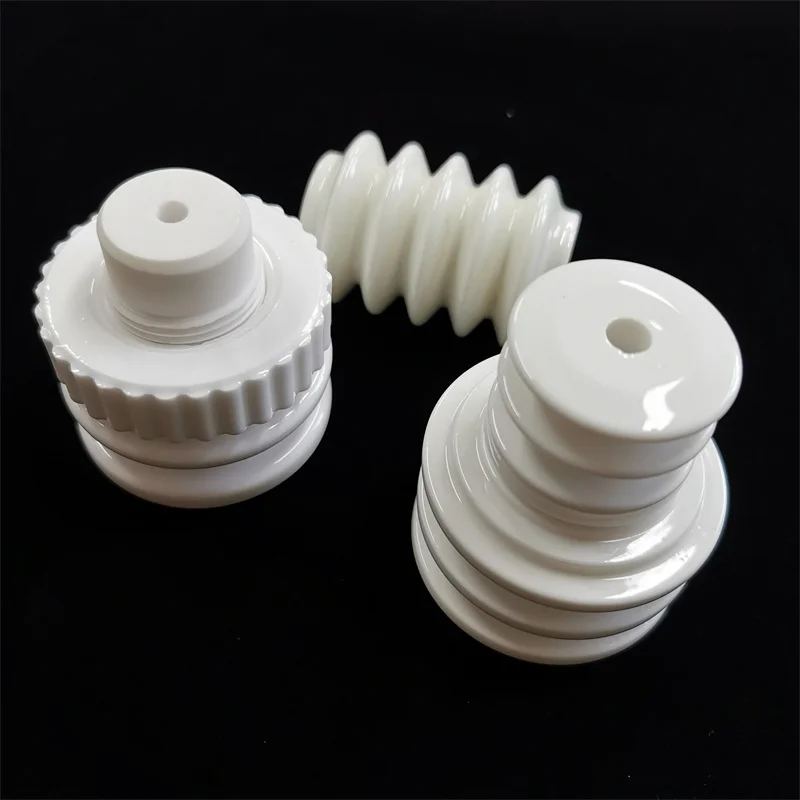
Unmatched Electrical Insulation Performance
High Volume Resistivity and Dielectric Strength for Reliable Voltage Isolation
Steatite ceramic insulators offer outstanding electrical isolation thanks to their remarkable volume resistivity (over 10^12 ohm-cm) and impressive dielectric strength (more than 15 kV per mm). These properties stop current leakage even when subjected to high voltage stress beyond standards like IEC 60112. What sets steatite apart from plastic options is its ability to maintain insulation integrity at temperatures reaching 1200 degrees Celsius. This makes it ideal for applications involving intense heat, such as commercial ovens or industrial heating systems where overheating can become dangerous. The material's non-organic makeup means no harmful gases escape during operation, and there's no carbon tracking either. As a result, these insulators deliver reliable performance over extended periods without showing signs of wear or failure.
Low Dissipation Factor Minimizes Energy Loss in High-Frequency Applications
Steatite has a dissipation factor of less than 0.0005 at 1 MHz frequency range, which means it cuts down on those pesky dielectric losses we see in RF systems. Think about induction cooktops and microwave generators where this matters a lot. The material actually allows for around 98 percent efficiency in these high frequency circuits. That kind of performance helps products meet ENERGY STAR standards while keeping things cool even when space is tight. What makes steatite work so well? Its crystal structure basically stops molecules from getting polarized when exposed to alternating electric fields. This prevents the heat problems that cause plastics to degrade faster over time. Because of all this, steatite satisfies CTI Class 1 specifications required in areas prone to contamination, and manufacturers don't have to worry about adding extra cooling solutions just to meet safety requirements.
| Material Type | Dissipation Factor (1 MHz) | Thermal Limit |
|---|---|---|
| Steatite | >0.0005 | 1200°C |
| Polymers | 0.01–0.05 | 150°C |
Exceptional Thermal and Structural Stability Under Operational Stress
Maintained Insulating Integrity Up to 1200°C Without Degradation
The magnesium silicate crystal structure of steatite stays electrically stable even when heated to around 1200 degrees Celsius, which is way past what most polymers can handle and actually exceeds the melting points of several oxide materials too. When running hot, the material maintains a resistance level above 10 to the power of 14 ohm centimeters, making it perform about three times better than regular alumina ceramics in this regard. Because of these properties, manufacturers rely on steatite for parts like heating elements and furnace control systems in appliances that operate at extreme temperatures. Without proper insulation in such conditions, there's always a risk of electrical shorts happening or worse, potential fires breaking out.
Resistance to Thermal Shock and Dimensional Stability During Cycling
Steatite has almost no thermal expansion coefficient, about 7.5 times 10 to the minus sixth per degree Celsius. This means it can handle extreme temperature changes from minus 40 degrees all the way up to 800 degrees without any real warping or tiny cracks forming. Even after going through over 500 heating and cooling cycles, the dimensions stay within 0.1% variation. That kind of stability keeps those critical insulation gaps intact in things like electrical relays, various switches, and electric vehicle charging stations where precision matters most. The material's compact structure resists microcracks so well that thermal stress gets absorbed rather than creating conductive paths. As a result, we get reliable arc resistance even when facing tough thermal conditions day after day.
Mechanical Robustness and Design Flexibility for Appliance Integration
Steatite can handle compressive forces above 400 MPa and stands up well against things like chipping, vibration fatigue, and mechanical shocks. These properties are really important when building appliances that need to be reliable but also fit into tight spaces. The material's ability to be molded means it works great for complex shapes such as thermal break housings or arc chamber barriers. This allows manufacturers to build compact modules right from the start without needing extra machining steps later on. When exposed to temperature changes during normal operation, steatite maintains its shape within about half a percent tolerance. That kind of dimensional stability ensures parts will fit together properly and work consistently on automated assembly lines. Because of how strong it is structurally yet still adaptable in form factor, many engineers prefer steatite for applications where any failure could compromise electrical safety standards.
Proven Reliability in Critical Electrical Appliance Applications
Steatite ceramic insulators are trusted where failure carries unacceptable risk—delivering consistent, certified performance across residential and industrial electrical systems.
Safety-Critical Roles in Lamp Sockets, Switches, Fuses, and Relays
Steatite plays a crucial role in keeping people safe from electrical shocks in everyday appliances. It works as an insulator in lamp sockets and manual switches, and continues to function properly even when there are power surges in fuses and relay coils, which helps stop dangerous short circuits and potential fires. What makes steatite so valuable is its remarkable ability to handle extreme heat fluctuations. It can withstand temperatures reaching 1200 degrees Celsius without breaking down or creating conductive paths, something that's essential for meeting global safety requirements like those set out in IEC 60664 standards. This heat resistance ensures products remain safe over their entire lifespan.
High-Voltage Bushings and Arc-Resistant Components in Industrial Appliances
In industrial settings, steatite is commonly used as high voltage bushings for transformers and circuit breakers, offering excellent insulation properties well beyond 12 kV/mm. What makes this material truly valuable is its ability to quench electrical arcs, which protects sensitive control panels on motors and welding equipment even when they're subjected to extreme conditions where temperatures can reach over 20,000 degrees Celsius. Steatite also stands up remarkably well against vibrations and maintains its shape over time. These characteristics mean fewer unexpected shutdowns, something manufacturers really care about since studies suggest unplanned equipment failure costs them around $260k every single hour according to Forbes from last year.

