 EN
EN

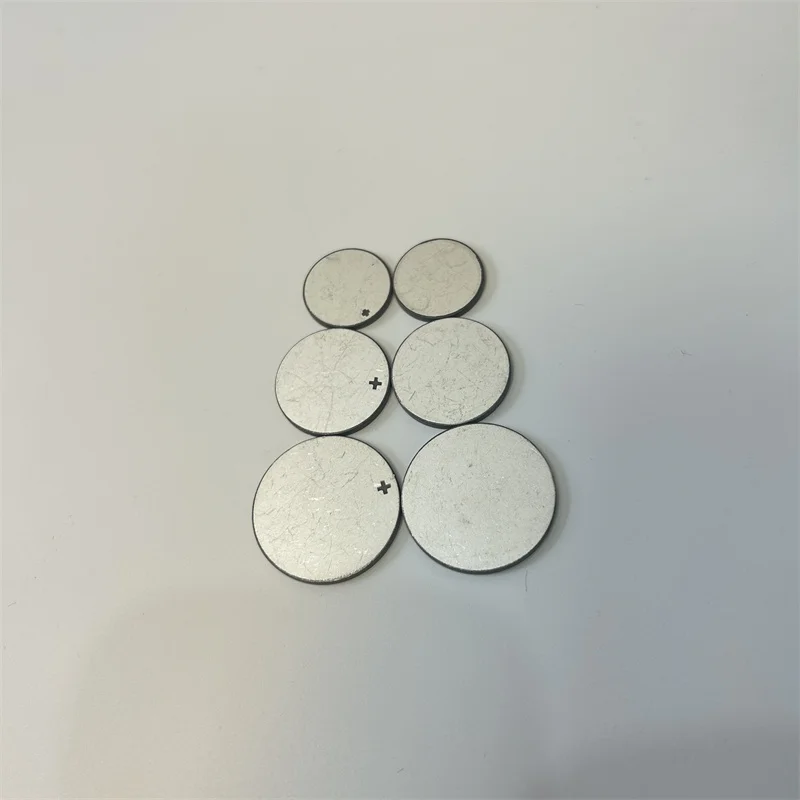
Core Piezoelectric Mechanism: Why PZT Ceramic Rings Deliver Superior Sensitivity
Direct and converse piezoelectric effects in polycrystalline PZT
Lead zirconate titanate or PZT ceramic rings work by turning mechanical energy into electrical signals and can do the reverse too through what we call direct and converse piezoelectric effects. When these materials experience mechanical stress from things like pressure or vibrations, they create surface charges on their electrodes. Apply an electric voltage instead, and they actually change shape in very controlled ways which makes them great for actuation purposes. What sets polycrystalline PZT apart from regular single crystals is how it works with those tiny internal structures called ferroelectric domains. During a process known as poling, these domains line up in specific directions. This alignment boosts the material's ability to move charges around efficiently. As a result, when properly formulated, these ceramics can achieve impressive piezoelectric charge coefficients (d values) over 500 pC per Newton of force applied.
Role of d₃₁ and d₃₃ coefficients in radial vs. axial charge generation
The ring shape takes advantage of directional piezoelectric properties to boost sensitivity. When pressure is applied radially, it works with the d31 coefficient in what's called transverse mode. Axial forces then trigger the d33 coefficient for longitudinal response. Annular designs spread out stress evenly all around their circular form, which makes them naturally better at handling radial strains. This results in much higher charge density compared to regular disc shapes when similar forces are applied. Research published in reputable journals confirms that these ring setups generate about 18 percent more voltage during radial operation. That means cleaner signals with less noise interference, making them particularly valuable for applications involving force measurement, vibration detection, and sound analysis where precision matters most.
| Deformation Mode | Dominant Coefficient | Charge Output Efficiency |
|---|---|---|
| Radial (ring) | d₃₁ | High (optimized geometry) |
| Axial (disc) | d₃₃ | Moderate (shear losses) |
This radial-mode advantage translates to superior resolution without increasing sensor size or power consumption.
Geometric Advantage: How Ring Architecture Enhances Electromechanical Conversion Efficiency
Radial mode dominance and minimized shear coupling in annular designs
PZT ceramic rings have this closed loop shape that actually stops those annoying parasitic shear movements because their edges are all connected continuously. Regular plates or discs aren't so lucky since their edges create these stress concentration points. At last year's IEEE Ultrasonics meeting, researchers found out that these edge issues can waste around 25-30% of the energy as unwanted shear loss in non-ring shapes. Ring designs work much better though, getting over 90% of the mechanical strain directed straight through the material along the d33 direction, which is basically where the piezoelectric effect works best. Plus, there's far less sideways coupling happening. For applications needing really clean axial signals like precision accelerometers or underwater microphones called hydrophones, these ring shaped sensors perform about 40% better in maintaining linear signals compared to those square element alternatives most people use.
Stress distribution and elevated effective coupling factor (kₚ) in piezo PZT ceramic rings
When hoop stress spreads evenly around the ring's edge, it actually helps build up strain consistently all the way around 360 degrees instead of letting those forces cancel each other out. This balanced design boosts the planar coupling coefficient (k_p) to somewhere between 0.72 and 0.78, which is about 20 percent better than what we see with regular disc transducers. What does this mean practically? Sensors generate roughly 3.2 times more charge per volume when excited at the same level, making them much more sensitive overall. Another important benefit comes from how the ring shape handles temperature changes differently on opposite sides. These opposing thermal expansion patterns fight back against depolarization caused by heat fluctuations, so the sensor stays stable and reliable even as temperatures swing during operation.
Material & Structural Robustness: Stability, Precision, and Long-Term Reliability
Thermal aging resistance in lanthanum-modified PZT (PLZT) rings
PLZT rings modified with lanthanum maintain over 95% of their piezoelectric properties even after sitting at 150 degrees Celsius for 1,000 straight hours. This kind of durability has been confirmed through rigorous automotive industry tests. When manufacturers add lanthanum to these materials, it helps fix those pesky domain wall issues and creates tiny spaces in the crystal structure that soak up heat stress. These changes stop small cracks from forming and spreading throughout the material. Because of this unique combination of traits, PLZT components work exceptionally well in engine compartments and various industrial settings where regular PZT materials tend to lose accuracy over time when exposed to extreme temperatures.
Balancing high d-coefficient with mechanical quality factor (Q) in soft PZT grades
The soft PZT formulations reach d33 values exceeding 650 pC/N, which is almost twice what standard PZT offers, though they need careful Q management for lasting performance. When damping isn't properly controlled, these high-d materials tend to produce excessive heat through repeated operations, leading to faster material fatigue. The best performing soft variants incorporate acceptor dopants such as iron ions to create harmless structural flaws that absorb vibration energy without losing too much of their useful deformation capability. About 85% strain remains available after this treatment. Such optimization allows these materials to withstand over one billion operational cycles in industrial accelerometers, roughly 100 times longer than regular PZT can handle, all while maintaining their sensitive response characteristics.
| Property | Standard PZT | Optimized Soft PZT | Impact on Reliability |
|---|---|---|---|
| d₃₃ Coefficient | 350 pC/N | 650 pC/N | +85% signal output |
| Mechanical Q | 80 | 50 | -37% heat generation |
| Cycle Lifetime | 10· cycles | >10¹ cycles | 100x endurance gain |
Design Integration: Optimizing Resonance, Output, and Signal Integrity in Real-World Sensors
When it comes to putting piezo PZT ceramic rings into working sensors, there are really three main things engineers need to get right at the same time: getting the resonant frequencies aligned properly, figuring out how to arrange the electrodes, and making sure everything can handle both electromagnetic interference and temperature changes. For starters, adjusting wall thickness along with inner and outer diameters matters a lot for matching different applications. Thinner walls actually create higher resonance which works great for those ultrasonic applications around 40 to 200 kHz range. But if we want something for lower frequency vibrations, thicker walls make more sense since they prevent those annoying harmonic distortions. The next big factor? Electrodes. Wrap around metal coatings give much better contact area compared to just partial coatings on the surface. This boosts charge output somewhere between 15% to 30%, according to what most transducer designers recommend these days. And then there's the whole issue of keeping signals clean. Grounded Faraday cages plus differential signal processing do wonders for canceling out that pesky common mode EMI noise, especially important when dealing with stuff like motor control units where electrical noise runs rampant. Lastly, using epoxies that match the coefficient of thermal expansion (CTE) with PZT materials helps reduce stress during extreme temperature swings from minus 40 degrees Celsius all the way up to 150 degrees. This keeps things stable over time in pressure transducers, accelerometers, and various flow measuring devices.
Table of Contents
- Core Piezoelectric Mechanism: Why PZT Ceramic Rings Deliver Superior Sensitivity
- Geometric Advantage: How Ring Architecture Enhances Electromechanical Conversion Efficiency
- Material & Structural Robustness: Stability, Precision, and Long-Term Reliability
- Design Integration: Optimizing Resonance, Output, and Signal Integrity in Real-World Sensors

