 EN


How ceramic wire guide extends service life in textile production lines
A ceramic wire guide is a small part of a textile line, but it sits at a critical contact point. Every pass of yarn, filament, thread, or wire adds sliding contact to the guide surface. When the path is stable and the contact surface is suitable, the guide can support consistent running. When alignment, tension, contamination, or edge condition is wrong, wear may appear earlier than the material choice alone would suggest.
From an equipment-user perspective, an industrial ceramic guide should be evaluated in its working position, not only by its material name. In textile production, yarn speed, wrap angle, tension variation, guide geometry, mounting, and cleaning practice all shape the contact conditions. That is why a ceramic yarn guide or textile guide roller is usually part of a wider maintenance decision.
Why guide condition matters to textile-line service life
Textile paths run continuously. A guide that maintains a smooth, controlled contact path can help limit unnecessary rubbing and snagging as material moves between rollers, tension devices, winders, or slitting sections. Technical textile-guide sources commonly point to polished surfaces, controlled radii, and managed yarn deflection as practical design concerns. These features do not create a fixed lifespan; their value depends on the actual line conditions.
In a typical line, the guide has two related jobs: it directs the moving material and it protects the path from abrupt, unstable, or contaminated contact. A ceramic wire guide can be useful where repetitive sliding would gradually mark a less suitable contact surface. Yet a high-wear material does not correct a misaligned bracket or an excessive change in direction.
How an industrial ceramic guide supports longer use
A stable surface reduces avoidable contact damage
A properly finished ceramic yarn guide presents a continuous route for the moving strand. Smoothness matters because a raised defect, deposit, chipped edge, or damaged transition can concentrate contact in one small area. Over time, that local contact may affect the yarn path and may also accelerate damage to the guide itself. The practical objective is not simply a glossy-looking part; it is a surface and radius that remain appropriate for the material moving across it.
Wear resistance must be matched to the path
Industrial ceramic describes a broad family of engineered materials, not one universal answer. For a ceramic wire guide, the useful question is whether the selected material, geometry, and surface condition fit the yarn type, speed, tension, and contact angle. A line handling abrasive or heavily loaded material may need a different assessment from a line handling a fine, delicate filament. Material selection should therefore be paired with an examination of the actual path.
Geometry can be as important as composition
One common oversight is to check the outside dimensions of a guide while overlooking the running path. Groove profile, entry and exit radii, guide angle, and the position of adjacent rollers all affect how the strand enters and leaves the component. A textile guide roller and a small eyelet-style ceramic yarn guide may serve different geometries, but both need a path that avoids abrupt deflection. If the strand is pulled against a narrow edge, even a robust guide can face concentrated loading.
Common reasons ceramic wire guides wear sooner
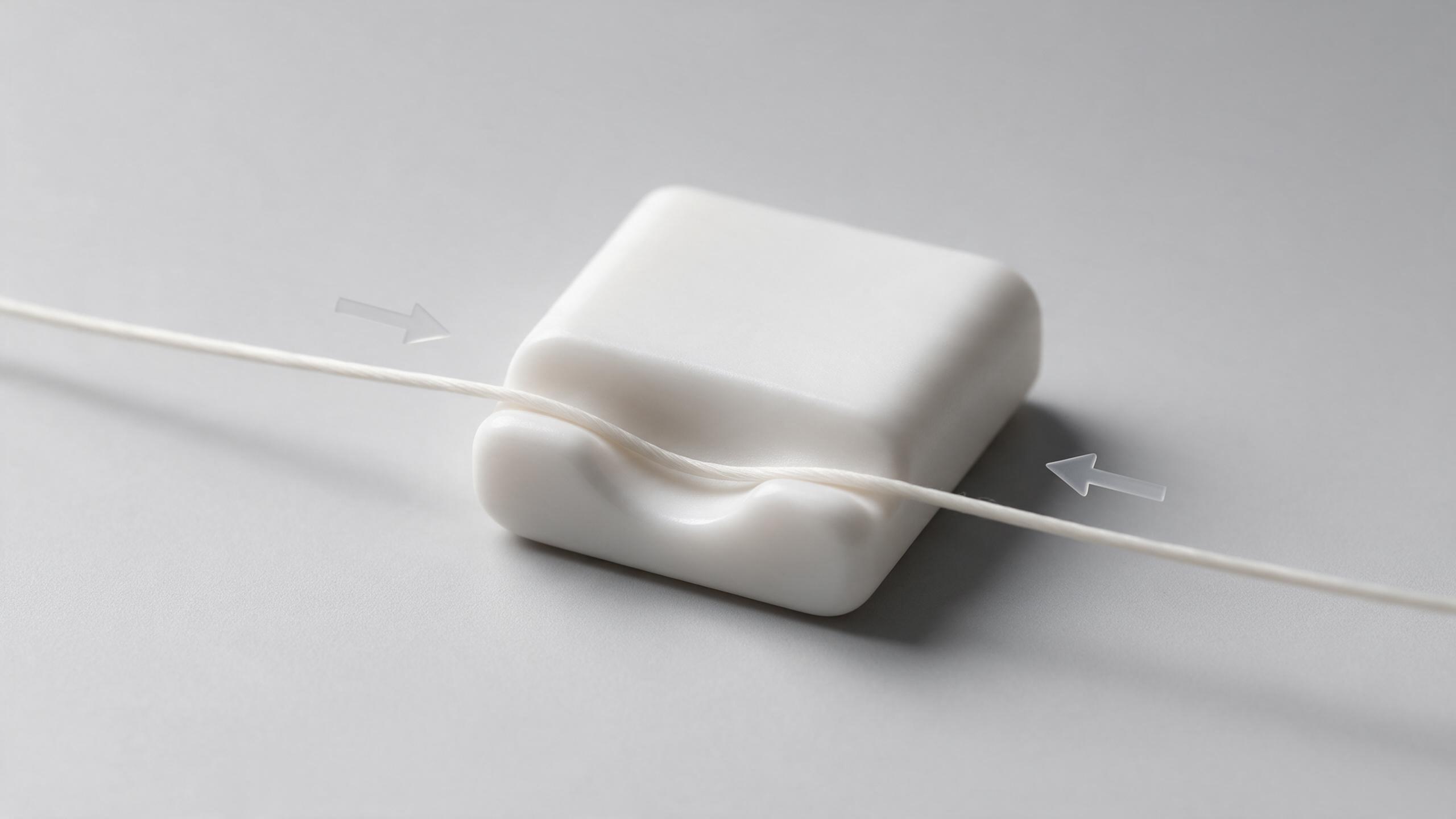
- Misalignment: A guide installed off the intended centerline can force the strand against one edge instead of distributing contact through the designed path.
- Unexpected tension or vibration: Variable tension can change the contact point and increase rubbing at an edge, groove, or transition.
- Contamination: Fibre finish, dust, broken filament, or process residue may alter the surface that the moving material sees. Cleaning needs to match both the line process and the guide material.
- Chips and handling damage: Ceramics can be wear-resistant in service while still requiring careful handling during installation. A small edge defect deserves inspection before the line returns to speed.
- Wrong replacement assumptions: Similar-looking parts may differ in groove shape, radius, mounting, or centerline. A replacement should be checked against the original mounting arrangement and running path.
In other words, a ceramic wire guide is not automatically the cause of a path problem. If a part wears unevenly, first review the guide position, mounting condition, tension behavior, nearby rollers, and cleaning history. This is a more useful starting point than treating every early-wear observation as a material failure.
A practical inspection routine for a ceramic yarn guide
Routine checks can focus on observable conditions rather than assumptions. During planned maintenance, inspect the guide under suitable lighting and compare both sides of the contact path. Look for visible grooves, edge damage, accumulated residue, inconsistent polish, or a change in the way the yarn tracks through the component. Where process requirements allow, confirm that the guide mount has not shifted and that fasteners or adjacent hardware do not alter the intended path.
For a Textile Slit Guide, include the cut material, slit width, path angle, and edge contact in the inspection discussion. For a textile guide roller, confirm whether the moving material is tracking across the intended zone rather than riding a shoulder. These details help maintenance teams distinguish a guide-surface issue from a web-handling or alignment issue.
Specify the right information before ordering a replacement
A replacement request is easier to evaluate when it contains more than a product name. For a ceramic wire guide, prepare the following information:
- Material being guided: yarn, filament, wire, tape, or slit textile.
- Approximate operating speed and tension range.
- Guide drawing, photos with dimensions, or the original part number where available.
- Groove profile, entry and exit geometry, and mounting method.
- Observed wear location, maintenance history, and any line changes made before the issue appeared.
- Surface, dimensional, and acceptance requirements for the replacement.
This information allows the discussion to move from a generic industrial ceramic request to a component that fits the path. For custom textile ceramic parts, Lianyungang Highborn Technology Co., Ltd. can organize communication around drawings, dimensions, and operating conditions; final feasibility and acceptance requirements should be confirmed for the specific application.
Service life is a system result
The useful contribution of a ceramic yarn guide is not a promised number of operating hours. It is the ability to support a controlled contact path when material, surface condition, geometry, installation, and maintenance are evaluated together. Watch the material, the path, and the mounting; inspect the surface, the radius, and the alignment. With those conditions documented, a ceramic wire guide can be specified and maintained as a practical part of textile-line reliability.
FAQ
Does a ceramic wire guide necessarily last longer than a metal guide?
Not in every application. Service life depends on the guide material, surface condition, path geometry, yarn or wire characteristics, speed, tension, and installation. Compare the full operating condition rather than relying on a material label alone.
What should be checked when a ceramic yarn guide shows uneven wear?
Check the guide centerline, entry and exit angles, tension behavior, mounting stability, contamination, and nearby roller alignment. Uneven contact often provides a useful clue about the running path.
Can a textile guide roller replace a small ceramic yarn guide?
They may serve different path and mounting functions. Confirm the original geometry, contact zone, rotation requirement, and alignment before selecting a substitute.

