 EN


Why textile ceramic components resist abrasion from synthetic fiber materials
In a fast-running textile line, a guide can look like a small detail, yet it repeatedly controls where a filament touches, turns, and builds tension. That is why an industrial ceramic guide is often considered for synthetic fiber paths. The useful question is not simply whether ceramic is hard. It is how material, surface finish, guide geometry, yarn tension, and the fiber finish work together at the contact point.
From a materials-selection perspective, a textile ceramic component can reduce wear at the guide while helping the yarn travel through a stable, smooth path. More accurately, the benefit depends on the operating conditions. A rough edge, an unsuitable angle, contamination, or a misaligned holder can still create a troublesome contact zone even when the base industrial ceramic has good wear resistance.
Why synthetic fibers create a demanding contact condition
Polyester, nylon, olefin, and other synthetic yarns may pass through the same eyelet or traverse point many times during production. Each pass produces small sliding forces. Over a long run, the guide surface is exposed to repeated rubbing, tension changes, finish oils, pigments, and sometimes additive-bearing filaments. A textile ceramic part is used because technical ceramics can combine a hard contact surface with chemical stability in conditions where a softer guide may develop grooves or lose its intended profile.
The yarn is not a cutting tool, and abrasion is not explained by one property alone. The contact pressure rises when the yarn changes direction sharply, when tension is high, or when the actual contact area becomes small. Particles carried by the yarn, dried finish residue, or a damaged guide edge can intensify the mechanism. For an industrial ceramic component, resistance to this gradual surface change helps preserve the guide contour, but it does not replace cleaning and alignment checks.
Hardness matters, but the working surface matters too
A ceramic yarn guide is normally valued for a hard, wear-resistant surface. Alumina-based grades are widely used for textile guides, while the appropriate composition should be matched to the application rather than selected by a material name alone. The reason is practical: a guide must retain its shape while keeping the yarn contact path smooth. If a guide wears into a flat, groove, or abrupt transition, friction behavior can change along with the angle of wrap.
Surface finish is therefore part of the performance system. Grinding and polishing can produce a controlled surface with low roughness. This does not mean every industrial ceramic guide needs the same finish. Filament type, line speed, tension, and lubricating finish influence what is appropriate. Still, a smooth, continuous contact zone generally gives fewer opportunities for a filament to snag on local surface features.
Geometry distributes contact instead of concentrating it
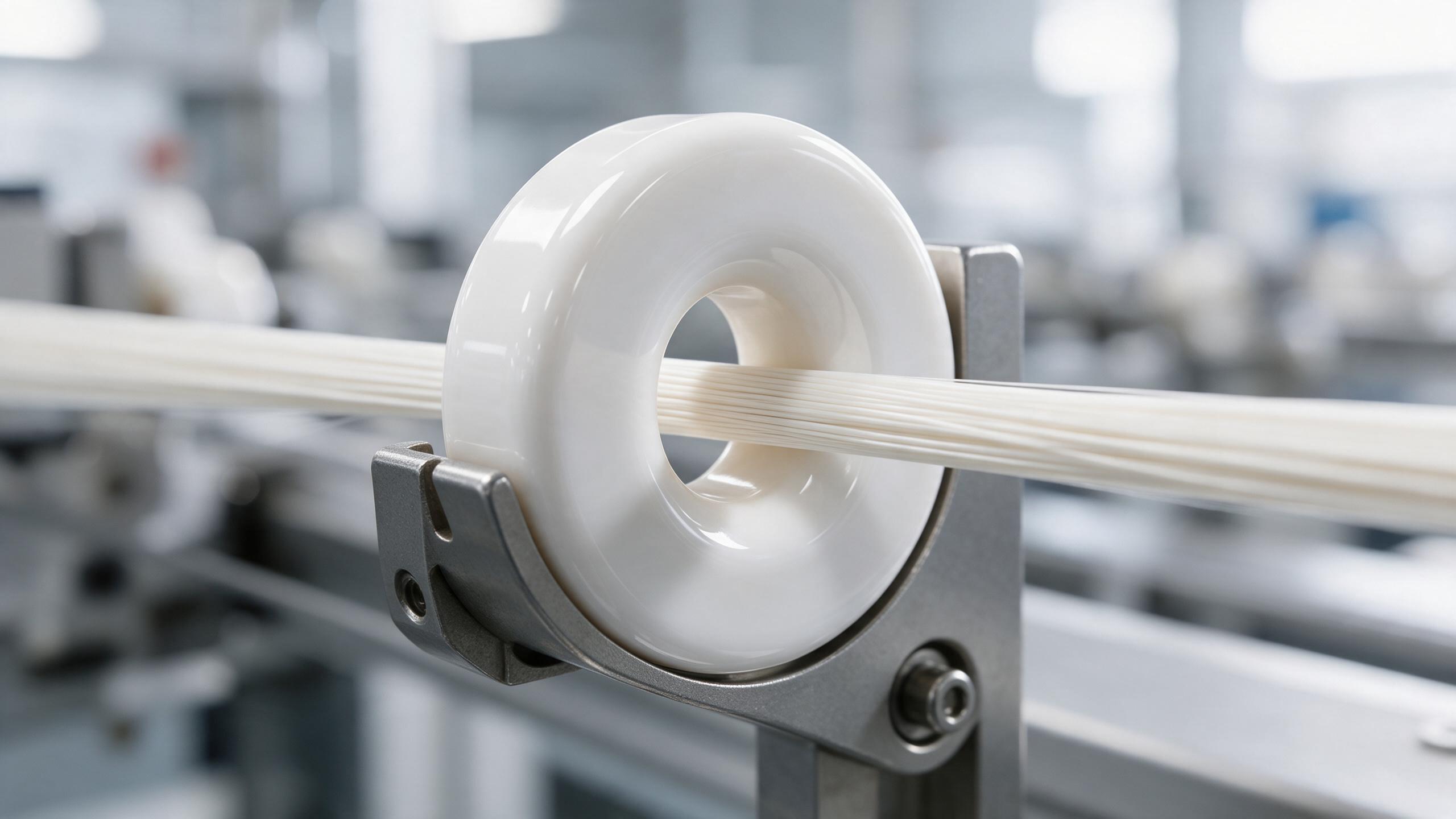
The profile of a ceramic eyelet is as important as its material. A suitable radius, entrance, exit, and wrap angle distribute the yarn load across a designed surface. A poorly chosen geometry can concentrate force in a narrow band. In that situation, even a durable industrial ceramic may be paired with higher yarn stress than the process requires.
This is why textile ceramic design discussions should include the yarn path rather than only the outer dimensions. For a ceramic yarn guide, confirm whether the thread enters straight or at an offset, whether it oscillates across the guide, and whether the guide handles a single end or a bundle. Also check mounting rigidity. A component that shifts during use can alter the contact point and make wear patterns harder to interpret.
How a textile ceramic component supports yarn quality
When the contact surface remains stable, the guide can help maintain a consistent path and tension relationship. That can matter during drawing, texturing, twisting, winding, or melt-spinning operations. An industrial ceramic component does not by itself resolve yarn breaks or package defects; those outcomes also depend on upstream yarn quality, machine setup, finish chemistry, and operating speed. Its role is narrower and useful: provide a durable, controlled contact point where the yarn changes direction or is constrained.
Consider a hypothetical replacement situation. A line changes to a fiber containing a different pigment package, and an existing guide begins to show a local track. It would be easy to attribute the issue to material hardness alone. A more complete review checks the textile ceramic grade, the polish at the contact zone, yarn tension, guide angle, contamination, and whether the new fiber finish changes sliding behavior. This approach does not claim a single cause; it creates a workable inspection sequence.
What to confirm before specifying a ceramic yarn guide
- Yarn information: fiber polymer, denier or count, filament construction, finish, pigments, and additives.
- Operating conditions: line speed, tension range, temperature near the guide, and whether the yarn is dry, lubricated, or carries process residue.
- Contact geometry: eyelet diameter, groove radius, entry and exit angles, traversing motion, and allowable surface condition.
- Mounting details: holder material, fastening method, alignment tolerance, and access for cleaning.
- Acceptance focus: dimensions, visual edge condition, surface requirement, sample quantity, and how the textile ceramic part will be checked before volume use.
Looking at the application this way helps separate the properties of an industrial ceramic from the behavior of the complete yarn path. It also gives engineering and purchasing teams a clearer basis for comparing a ceramic eyelet or guide design.
Maintenance observations that help diagnose wear
Inspect guides under suitable lighting for visible tracks, chipped edges, residue, or changes at the entry and exit. If yarn behavior changes, compare the guide position with neighboring guides before assuming the component is the sole source. This may be an installation or cleanliness issue as much as a material issue. Record the fiber type, running condition, and time in service so that a replacement decision is based on the actual contact environment.
An industrial ceramic guide is most effective when its surface and geometry are treated as functional specifications rather than cosmetic details. For a new textile ceramic part or a replacement ceramic yarn guide, provide the drawing, yarn information, speed and tension conditions, and acceptance priorities before discussing processing and inspection.
FAQ
Why use a ceramic eyelet with synthetic fiber?
A ceramic eyelet can provide a hard, smooth contact surface for repeated yarn guidance. The suitability of a particular industrial ceramic still depends on the yarn route, finish, tension, and guide geometry.
Can a smoother guide alone resolve abrasion?
A smoother contact surface can be helpful, but it is only one variable. Alignment, edge design, contamination, tension, and the fiber finish should be reviewed with the surface condition.
What information is needed for a textile ceramic inquiry?
Share the drawing or key dimensions, yarn type, operating speed, tension range, contact path, mounting method, and the inspection or acceptance points that matter for the application.

