 EN


How quartz glass resists thermal shock in high temperature laboratory applications
In a high-temperature laboratory, special glass is often selected not because it ignores heat, but because it limits the strain created when one area heats or cools faster than another. Quartz glass, commonly described as fused silica or fused quartz in technical discussions, is a useful special glass for furnace sight ports, reaction hardware, lamp envelopes, sample holders, and process tubing. Its response is tied to material structure, component geometry, mounting, and the actual temperature path.
As a materials-selection specialist, I would start with the thermal gradient rather than the peak temperature alone. A special glass component can operate at a high temperature yet fail during a rapid local change if an edge is chilled, a clamp holds it rigidly, or a thick section lags behind a thin one. That distinction is important when specifying quartz glass for a laboratory setup.
Thermal shock begins with uneven expansion
Thermal shock is mechanical stress caused by nonuniform temperature. When part of a component becomes hotter, it tries to expand. If cooler material or a fixture restrains that movement, tensile or compressive stress develops. Glass is strong in compression but more sensitive to surface flaws under tension, so a scratch, chip, abrupt internal corner, or point load can become the location where damage starts.
The reason quartz is frequently used as a special glass is its very low coefficient of thermal expansion. A published fused-silica data sheet for a particular high-purity grade lists expansion near 0.52 × 10⁻⁶/°C from 5°C to 35°C and 0.57 × 10⁻⁶/°C from 0°C to 200°C. Those figures illustrate the mechanism: lower expansion means less dimensional mismatch across a temperature difference. They are not a substitute for verifying the grade and temperature range of a particular quartz glass part.
Low expansion does not make special glass immune to thermal shock. It reduces one driver of stress. Thermal conductivity, elastic behavior, surface condition, residual stress, wall thickness, and heating rate still influence the result. In practice, the question is not simply “Can this special glass take heat?” but “What temperature gradient will this exact component experience?”
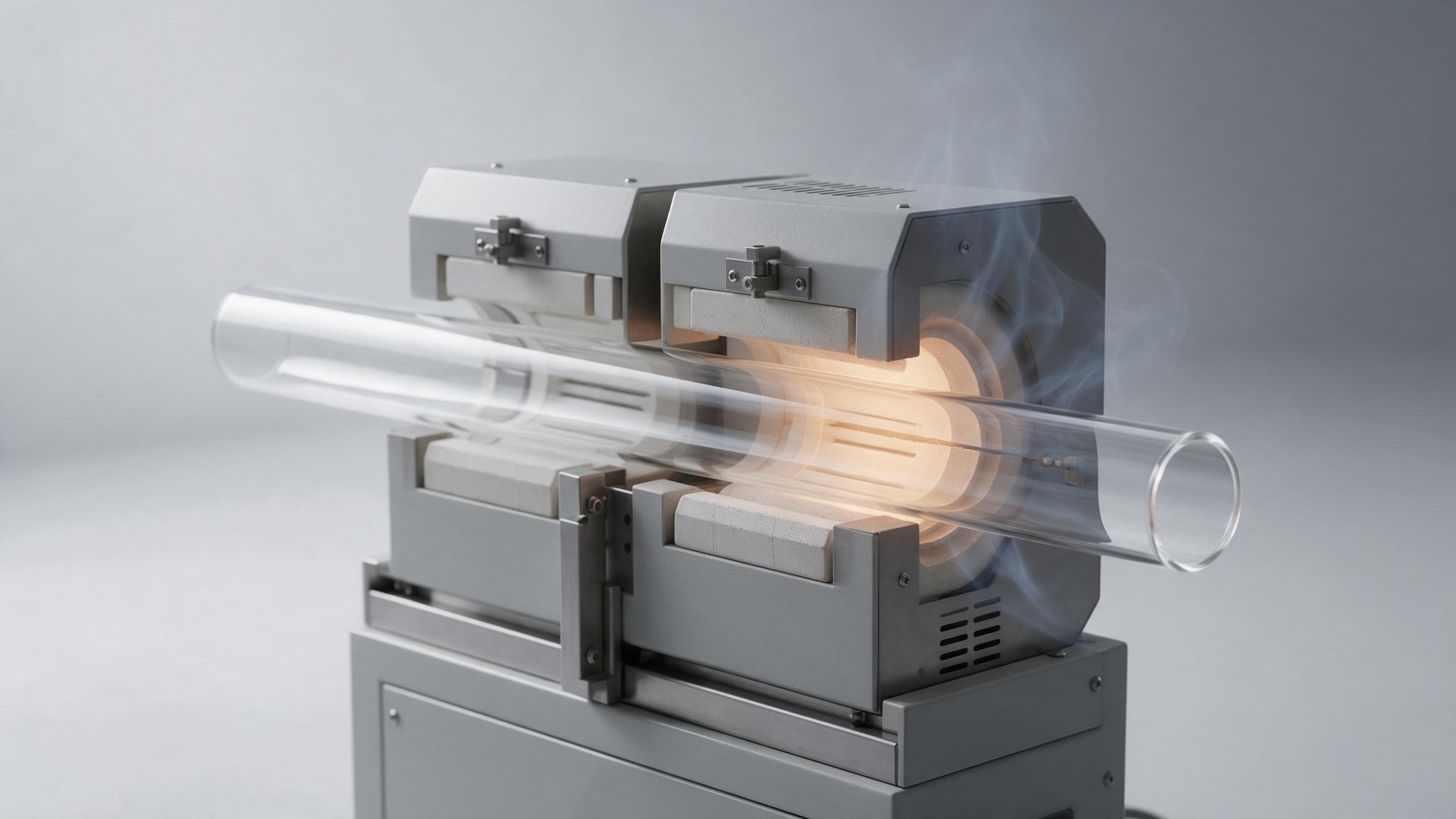
Why quartz glass performs differently from ordinary glass
Quartz glass is a silica-rich glass with a structure that produces much less thermal expansion than many common glasses. When a laboratory furnace ramps, a quartz plate or quartz tube therefore experiences less movement per degree of temperature change. That makes the material a practical special glass where optical access, chemical resistance, and temperature cycling must be considered together.
However, material names alone are not specifications. “Quartz glass” can refer to different purity levels, manufacturing routes, and finished forms. A quartz tube may have a different wall thickness and end geometry than a quartz plate, while a silica pipe may be joined, supported, or exposed to a different gas flow. Each difference changes how a special glass component sees heat and mechanical constraint.
Component form changes the thermal-shock risk
Quartz tube: look at gradients along and through the wall
A quartz tube is commonly heated from the outside, from within, or by radiation. Thin walls can equilibrate more quickly, whereas thick walls can retain a larger temperature difference between the hot and cool surfaces. Gas flow, a cold fitting, or a metal support near one end can also create a local gradient. For a tubular special glass part, ask for outer diameter, inner diameter, heated length, orientation, ramp profile, and how the ends are supported.
Quartz plate: edges and supports deserve attention
A quartz plate used as a window, cover, or support can be vulnerable at its edges if the center is heated while the perimeter is cooled by a frame. A flat special glass panel should not be overconstrained by a hard metal clamp. Allowing controlled clearance and using a suitable compliant layer where the assembly requires it can reduce unintended restraint. Edge finish, holes, cutouts, and corners should be reviewed because they influence stress concentration.
Silica pipe: treat joints and fixtures as part of the design
A silica pipe may span zones with different temperatures, carry hot gases, or connect to equipment with different expansion behavior. In those cases, the pipe is only one part of the thermal system. A special glass selection review should include seals, supports, connectors, flow direction, and the possibility of cold gas contact during operation or shutdown.
How to use quartz glass more thoughtfully in a laboratory
Good laboratory practice is less about a single temperature limit and more about reducing abrupt, unplanned gradients. Use a ramp and cool-down profile that reflects the component’s form and assembly. Avoid applying cold tools, liquids, or directed air to a hot quartz surface unless the procedure has been evaluated for that transition. Before installation, inspect the special glass part for chips, scratches, residue, and edge damage; these details can matter more than a polished material description.
A useful pre-use checklist for special glass components includes:
- the expected temperature range, ramp rate, dwell time, and number of cycles;
- the temperature difference expected across the wall, length, or mounting edge;
- wall thickness, diameter, plate span, holes, cutouts, and corner geometry;
- atmosphere, process media, pressure differential, and any external cooling source;
- fixture material, contact points, expansion clearance, and tightening method; and
- the required inspection criteria before and after thermal cycling.
This checklist turns a broad request for special glass into information that engineering and purchasing teams can verify together. For custom pieces, providing a drawing, temperature program, media information, and the mating-part materials is more useful than stating only “high temperature.”
Do not confuse heat resistance with a universal service limit
Quartz glass is often an appropriate special glass for high-temperature laboratory work, but service suitability still depends on the application. A component may be thermally stable yet unsuitable because of pressure loading, aggressive chemistry, poor support design, contamination, or a geometry that concentrates stress. Likewise, a part that survives one heating cycle may require a different assessment for repeated cycling.
For that reason, a material review should connect quartz glass properties to the finished component. Confirm the relevant material grade, dimensions, surface condition, heating method, fixture arrangement, and acceptance criteria. When the consequences of failure are significant, a representative evaluation under the planned thermal cycle is a sensible engineering step.
Conclusion
Quartz glass resists thermal shock because its low thermal expansion limits the strain produced by uneven temperature. That advantage makes it a valuable special glass for laboratory quartz tube, quartz plate, and silica pipe applications. The strongest selection decisions also account for gradient, geometry, edges, mounting restraint, atmosphere, and cycling. By defining those conditions early, laboratories can specify a quartz component around the real thermal problem rather than relying on a material name alone.

