1.The Process Cornerstone: The "Close-Protection Guard" in the Oxidation Furnace
Among the many steps in chip manufacturing, the oxidation process serves as a critical protective "shield" step. Wafers are loaded into high-temperature furnace tubes, where oxygen flows evenly across their surfaces, growing a dense layer of silicon dioxide film. This thin film plays multiple roles: acting as a chemical barrier against impurity intrusion, serving as an insulating layer to prevent leakage, and providing buffering and protection during subsequent ion implantation and etching steps. Inside the furnace tube system, which operates like a precisely controlled micro-reactor, components such as the wafer boat, furnace tube liner, and thermal insulation parts each perform their designated functions. Among all these components, the wafer boat is in direct "close contact" with the wafers, bearing the responsibility of loading and transporting them. Since temperatures inside the furnace are typically maintained above 800°C, and some processes even exceed 1000°C, these internal components must remain dimensionally stable under high temperatures while simultaneously releasing no trace of contaminants. Otherwise, the yield of an entire batch of wafers could be severely compromised.
2.Stringent Requirements: The Multidimensional "Hard Metrics" of a Wafer Boat
On the high-temperature battlefield of oxidation, the role of the wafer boat extends far beyond that of a simple "tray." It serves as both the "mobile carriage" for wafers within the furnace tube and the critical element ensuring each wafer maintains proper orientation within the thermal field. Even slight tilting or displacement can lead to uneven film thickness or even wafer breakage. Therefore, a qualified wafer boat must deliver exceptional performance across multiple dimensions: its structure must support dozens of wafers densely packed without deflection; its surface treatment must prevent electrostatic adsorption of particles; and the material itself must maintain dimensional stability through repeated heating and cooling cycles, resisting warping and cracking. However, the most challenging issue for engineers is impurity control, which acts as a "hidden hurdle." The extreme temperatures exceeding 1000°C inside the oxidation furnace can cause metal elements in ordinary materials to become mobile. If these elements precipitate and diffuse to the wafer surface, they can directly compromise device electrical performance. This demands that wafer boat materials not only withstand high temperatures and resist wear but also achieve nearly "obsessive" levels of purity.
3.Material Evolution: When Quartz Hits Its Ceiling
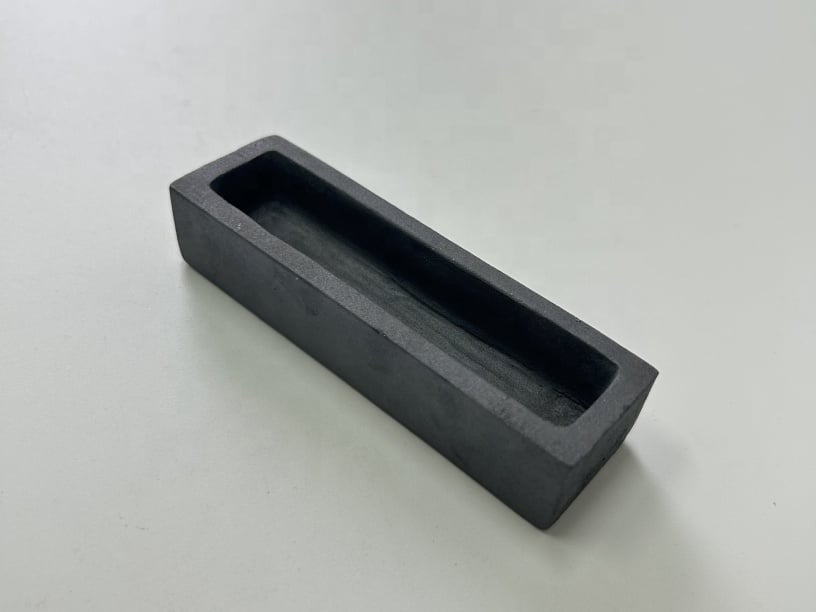
Currently, quartz remains the dominant material for wafer boats in the mainstream market, owing to its mature processing technology and cost advantages. However, as chip manufacturing processes continue to push towards 7nm and smaller linewidths, the process temperature windows have widened, imposing increasingly severe demands on the carriers used in oxidation and diffusion steps. Under repeated thermal shock at temperatures frequently exceeding 1000°C, the limitations of quartz boats have become increasingly apparent: slow, high-temperature deformation can misalign wafer slots; fine particle shedding can contaminate wafer surfaces; and the limited lifespan necessitates frequent furnace shutdowns for boat replacement. Faced with these growing challenges, a higher-performance material — the silicon carbide (SiC) ceramic boat — has emerged from the shadows. Leveraging its overwhelming advantages in temperature resistance, purity, and durability, it is rapidly replacing traditional quartz solutions and becoming an indispensable "invisible pillar" in advanced manufacturing processes.
4.Advantages Decoded: The Four "Core Strengths" of SiC Boats
What exactly makes the silicon carbide ceramic boat stand out? Let's examine its core strengths from four dimensions:
First is thermal performance. Quartz material begins to "soften" above 1200°C, gradually undergoing creep and sagging. In contrast, SiC maintains its form and precision without deviation even under extreme operating conditions above 1300°C. This ensures that wafer positional accuracy is always guaranteed for those complex processes requiring extended high-temperature operation.
Second is purity. The metal impurity content within SiC material itself is controlled at extremely low levels, virtually eliminating concerns over secondary wafer contamination. Moreover, its surface, after precision machining, can achieve nanometer-level roughness, becoming so smooth that it hardly retains any micro-particles. This is perfectly suited for advanced production lines that typically require Class 100 or even Class 10 cleanroom environments.
Next is its process adaptability. An increasing number of specialized processes — such as thick-film oxidation, deep trench filling, and the manufacturing steps for SiC power devices themselves — must be completed in ultra-high-temperature zones above 1200°C. In these temperature ranges where quartz materials are no longer capable, the silicon carbide ceramic boat stands as practically the only choice capable of reliably handling the task.
Finally, there is exceptional durability. The mechanical strength of SiC far exceeds that of quartz; a single SiC boat can simultaneously support over a hundred 12-inch wafers without any flexing. More importantly, its service life is several times to over ten times longer than its quartz counterparts. This significantly reduces the frequency of equipment shutdowns for boat replacement, enabling more continuous production line operation and rendering the total cost of ownership far more competitive.
5.Application Landscape
The "Rigid Partner" in the Photovoltaic Industry
On the track of photovoltaic manufacturing, silicon carbide ceramics also demonstrate significant value. Processes like diffusion for TOPCon cells, as well as LPCVD and PECVD deposition stages, must all be completed under high temperature and corrosive atmospheres. SiC ceramic boat supports, mini-boats, and various tubes, boasting excellent mechanical strength, thermal shock resistance, and chemical inertness, perform exceptionally well under these harsh conditions. Notably, SiC ceramics are not limited to wafer boat forms; they can be customized into silicon carbide ceramic plates, silicon carbide ceramic tubes, silicon carbide ceramic rods, and various shaped custom silicon carbide ceramic parts according to process needs, flexibly matching different furnace tube structures and loading schemes. In comparison, traditional quartz products appear somewhat "fragile" in these applications — they tend to soften and deform at high temperatures, and frequent replacement not only raises consumable costs but also causes costly effective operating time losses due to downtime for maintenance. SiC products, conversely, achieve service lives easily five times longer than quartz, and their superior rigidity ensures wafers remain flat and clean during processing, significantly reducing scrap rates. Looking at the total cost equation — with readily available raw materials, extended replacement cycles, and reduced downtime losses — the overall cost advantage of SiC solutions is clear.
The "Flatness Guardian" in Integrated Circuits
Shifting focus to the core battlefield of integrated circuit manufacturing, the SiC wafer boat remains indispensable. Throughout a series of critical processes including oxidation, diffusion, chemical gas deposition, and ion implantation, wafers must repeatedly endure high-temperature exposure, with each thermal cycle imposing thermal stress challenges. Here, the boat's responsibility extends beyond merely "holding" the wafers — it must ensure each wafer maintains an absolutely flat posture within the furnace tube, denying thermal stress any opportunity to cause problems. Even micron-level wafer warpage can induce lattice misalignment or slip, leading directly to device failure. SiC material, leveraging its excellent high-temperature rigidity and dimensional stability, minimizes this risk. Furthermore, its ultra-low impurity release characteristics mean that even during high-temperature processes lasting several hours, it does not introduce harmful metal ions to the wafer surface, thereby safeguarding the final electrical parameters and long-term reliability of the chips. One could say that behind the birth of every high-performance chip, the SiC wafer boat silently plays the dual roles of "flatness guardian" and "purity protector."
The "Invisible Foundation" for Third-Generation Semiconductors
Within the landscape of third-generation semiconductors, the application scenarios for SiC boats extend into new dimensions. Take MOCVD equipment, the core tool for preparing gallium nitride (GaN) epitaxial layers, as an example. The reaction chamber is filled with highly corrosive gases like ammonia, and temperatures are consistently high. Here, the SiC wafer boat undertakes the task of supporting sapphire substrates, maintaining its composure in such a harsh chemical environment, providing stable support for the uniform growth of GaN films, directly impacting the light extraction efficiency and final brightness of LED chips. In the growth of silicon carbide single crystals, the boat's role changes — it transforms into a seed crystal holder, positioned within the extreme environment of molten silicon, enduring continuous erosion and attack from the high-temperature melt, building the primary "foundation" for the orderly growth of SiC single crystals. It can be said that without these SiC boats silently bearing the heavy load behind the scenes, performance breakthroughs in third-generation semiconductor devices would be unattainable.
6.Future Outlook: Technological Breakthroughs and Expanding Horizons
Looking ahead at the evolutionary path of SiC wafer boats, the direction of technological development is increasingly focused on several key nodes. On one hand, the inherent physical characteristic of SiC material's relatively high coefficient of thermal expansion makes it prone to internal stress and subsequent crack formation during severe temperature fluctuations. To overcome this bottleneck, the industry is actively promoting the adoption of integrated molding processes — minimizing joints and welds to eliminate particle release and stress concentration risks at the source. On the other hand, the geometric design of the boat's slots is undergoing refined iteration. Utilizing advanced techniques like 5-axis CNC machining and precision wire cutting, the dimensional tolerances and surface quality of the slots are reaching unprecedented levels, ensuring smooth, precise wafer transfer by robotic arms without any jamming or scratching risks. It is foreseeable that as process maturity increases and economies of scale take effect, the cost threshold for SiC wafer boats will gradually decrease, and their application boundaries will continue to expand from high-end processes to a broader range of industrial fields.


 EN
EN