 EN


What Roles Does a Silicon Nitride Igniter Play in Combustion Systems?
An electrically heated ceramic ignition component supplies the hot surface needed to start combustion. In a furnace, boiler, pellet appliance, industrial burner, or other controlled combustion unit, the component does more than glow: it helps the control sequence move from a fuel-ready condition to a stable flame. That role makes the part relevant to startup timing, flame establishment, repeatability, and maintenance planning.
It is tempting to describe this ceramic hot-surface part as simply a replacement for a spark device. More accurately, it is one element in a coordinated system of power supply, controller, airflow, fuel delivery, sensing, mounting, and safety logic. The material can offer useful strength and resistance to rapid temperature changes, but a combustion system still has to provide the correct electrical and mechanical conditions.
How a silicon nitride igniter starts the combustion sequence
During a typical hot-surface ignition cycle, the controller applies power to the silicon nitride igniter. Electrical resistance causes the active section to heat until it can ignite the intended fuel-air mixture. Once the flame establishes, the system confirms operation through its own sensing and control sequence. The igniter therefore acts as the controlled heat source at the beginning of combustion rather than as a continuous flame sensor or fuel-metering device.
This distinction matters during troubleshooting. A component may heat while the appliance still fails to light because fuel delivery, air supply, grounding, sensor operation, valve timing, or combustion-chamber conditions need attention. Conversely, an ignition fault may originate in the ceramic ignition element, its terminals, or its mounting. A sensible diagnosis checks the sequence rather than assigning every no-light condition to the ceramic part.
Why silicon nitride is used for hot-surface ignition
Silicon nitride is an advanced ceramic valued in many engineering settings for its mechanical and thermal behavior. In this type of igniter, that material choice supports a compact heated element that is intended to face repeated heating cycles. Thermal shock resistance is particularly relevant because the part moves from a relatively cool state to a hot operating state quickly. Its value, however, depends on the component design, electrical rating, mounting arrangement, and application environment.
A silicon nitride ceramic body also lets designers place the heating function close to the fuel path without relying on an exposed metal filament. The exact geometry differs by appliance. Some designs use a flat blade or a shaped hot zone; others pair the element with a bracket, protective sleeve, or integrated connector. For that reason, the replacement assembly should be selected by verified fitment and electrical requirements, not by appearance alone.
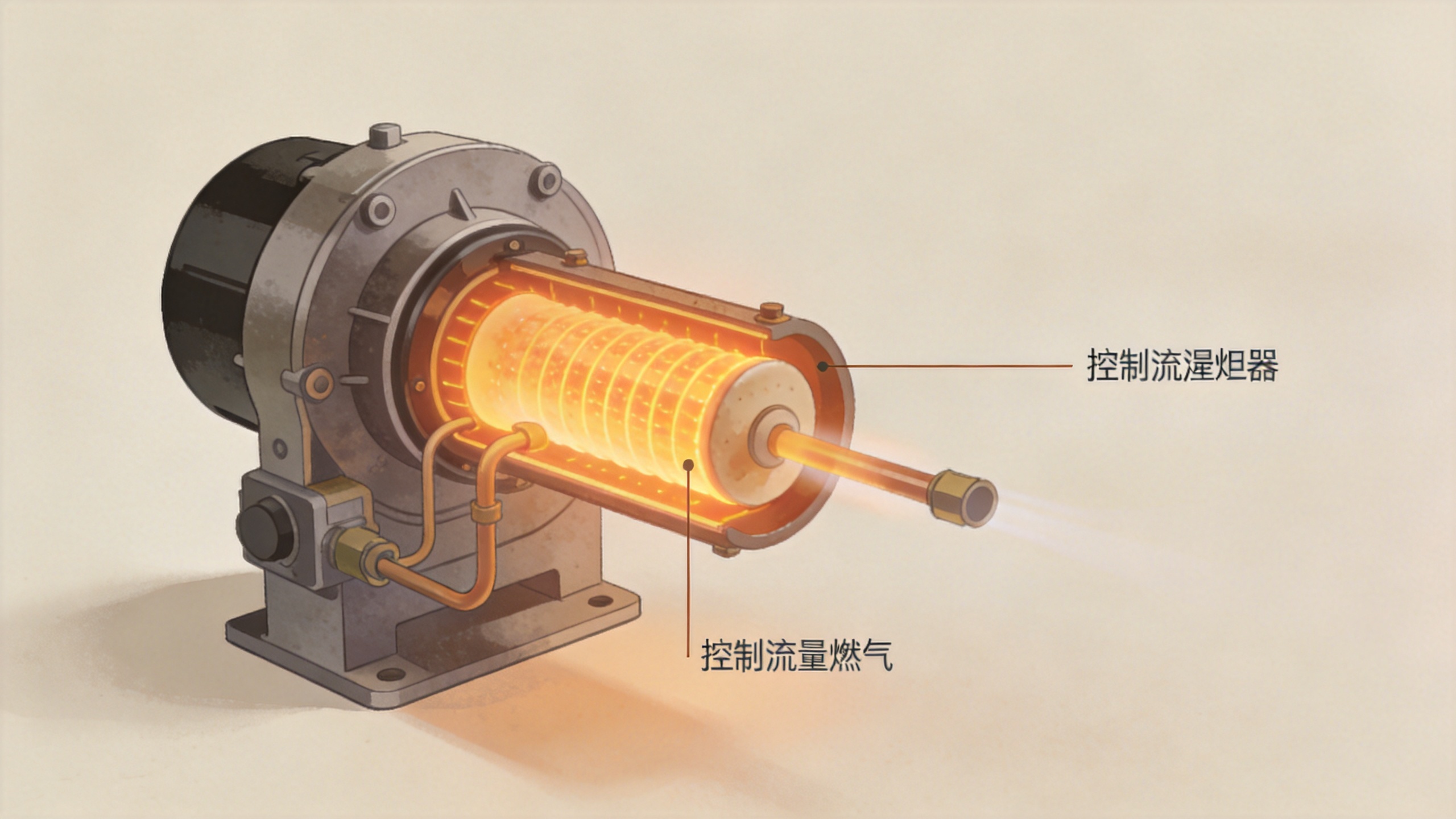
Four practical roles in combustion-system performance
1. Providing a repeatable ignition heat source
The first role of this igniter is to create sufficient localized heat for fuel ignition at the proper point in the cycle. Repeatability matters in equipment that starts and stops often. If the fuel and air conditions are within the equipment design range, the hot surface gives the mixture a dependable ignition location. This is different from claiming that one igniter material makes every appliance equally reliable; the surrounding control system remains part of the result.
2. Supporting compact burner and appliance layouts
Because the heating element can be formed as a small ceramic component, a compact ceramic ignition part can fit into burner assemblies where space, shielding, and connector position matter. The mounting bracket and insertion depth are not minor details. A small change in where the hot section sits relative to the fuel stream may alter startup behavior. When replacing a silicon nitride ignitor, confirm the original position, clearance, lead routing, and connector arrangement before energizing the unit.
3. Managing repeated thermal cycling
Combustion equipment often sees a sequence of cool-down, startup, heat-up, and shutdown. This ceramic component is used where the material and component construction can accommodate those repeated transitions. Even so, handling damage, mounting stress, contamination, voltage mismatch, or a distorted bracket can shorten service life. The material is not a reason to ignore installation conditions. In fact, a ceramic element deserves careful handling because localized loads can matter.
4. Helping maintenance teams isolate startup issues
This ignition component gives technicians and maintenance planners a defined point in the startup sequence to inspect. Check the approved resistance or electrical test procedure for the exact component, inspect the connector and lead insulation, and compare the installed geometry with the equipment documentation. Do not touch the active portion with contaminated hands, and do not force a replacement si3n4 igniter into a bracket that does not match. Those checks help distinguish a fitment issue from a broader control or fuel-system issue.
Where these igniters are used
These igniters may be found in gas-fired heating equipment, pellet or biomass appliances, and selected industrial heating systems that use hot-surface ignition. The common task is not a particular brand or fuel alone; it is controlled startup through an electrically heated ceramic surface. The terms silicon nitride ignitor and si3n4 igniter are commonly used for the same material family, although the exact assembly can vary widely.
Application context should guide selection. A low-voltage industrial assembly is not automatically interchangeable with a line-voltage appliance component. Connector type, controller output, startup timing, mounting dimensions, protective hardware, and surrounding temperature all need confirmation. When the system is safety-critical or the original part information is incomplete, follow the equipment documentation and use qualified service support.
What to verify before specifying or replacing a silicon nitride igniter
- Electrical input: Match the approved voltage, current, resistance range, and controller requirements for the exact assembly.
- Geometry: Verify active length, insertion depth, bracket shape, mounting holes, and clearance from surrounding parts.
- Connection: Confirm terminal style, lead length, insulation, polarity requirements where applicable, and routing clear of hot or moving parts.
- Combustion context: Identify fuel type, airflow arrangement, startup sequence, and the nearby temperature environment.
- Service evidence: Record the original part marking, symptoms, inspection observations, and any relevant fault codes before choosing a replacement.
These checks turn a broad igniter request into an engineering discussion with usable inputs. For custom ceramic or replacement-part communication, it is helpful to provide photographs, dimensions, electrical information, mounting details, and the operating environment. That approach is more useful than selecting a silicon nitride ceramic part by material name alone.
Key takeaway
The role of this ceramic ignition component is to provide a controlled hot surface that initiates combustion and supports a repeatable startup sequence. Its material characteristics can suit repeated thermal cycling, but the final outcome also depends on fuel, air, power, controller timing, mounting, and maintenance. Look at the material, the geometry, and the use conditions together. Before replacement or specification, verify the original assembly details and the equipment requirements so the replacement igniter is evaluated as part of the whole combustion system.

