 EN


Why ozone generator modules are adopted for air disinfection projects
For an industrial team, an ozone generator is not simply a box that makes gas. It is one controlled part of a wider treatment process. That distinction explains why project developers often adopt an ozone generator module rather than a consumer-style appliance: the module can be specified around a chamber, duct section, treatment cycle, access-control arrangement, and verification plan.
From a procurement perspective, the useful question is not “Which ozone generator is strongest?” It is whether the ozone generator module can be integrated into a controlled, unoccupied treatment process with the information needed for engineering review. Air disinfection work is especially sensitive because ozone exposure is a safety issue. An air purification ozone generator should not be positioned as a general occupied-space air cleaner.
Why a module fits project work
An ozone module is commonly adopted when the project already has a housing, power arrangement, airflow path, and control cabinet. The integrator can then build an ozone generator into a system rather than asking a finished appliance to fit every site. This approach can make it easier to align electrical connections, mounting space, gas connections, cooling provisions, and service access with the actual equipment layout.
The modular approach also separates responsibilities clearly. A component supplier can discuss the ozone generator module, its physical connection arrangement, and information needed for selection. The project owner, controls engineer, and safety team still need to define the treatment volume, operating sequence, ventilation, monitoring method, access restrictions, and re-entry process. A module is therefore a building block, not evidence that a complete air-disinfection system is ready for use.
Controlled cycles matter more than headline output
Ozone is reactive, and the treatment outcome depends on more than the rated output of an ozone generator. Volume, leakage, humidity, temperature, airflow pattern, surface loading, contact time, and post-cycle ventilation can all change what happens in a real installation. A nominal output figure may help size an ozone module, but it does not replace site-specific validation.
That is why well-defined projects tend to use a cycle-based architecture. The ozone generator operates only after the controlled area is cleared and secured. Timers, interlocks, signage, ventilation controls, and, where required, concentration monitoring are planned as part of the system. After the cycle, the area is ventilated and released only under the project’s documented procedure. The safety logic is not an optional accessory to an air purification ozone generator; it is part of the design basis.
Public-health guidance is particularly relevant here: ozone levels that remain within public-health limits have limited potential for controlling indoor contaminants, while higher-concentration applications demand controls to keep people and pets from exposure. For a project team, that means an ozone generator should be evaluated as a controlled-process component, not as a substitute for filtration, source control, cleaning, ventilation, or an occupied-space air-cleaning strategy.
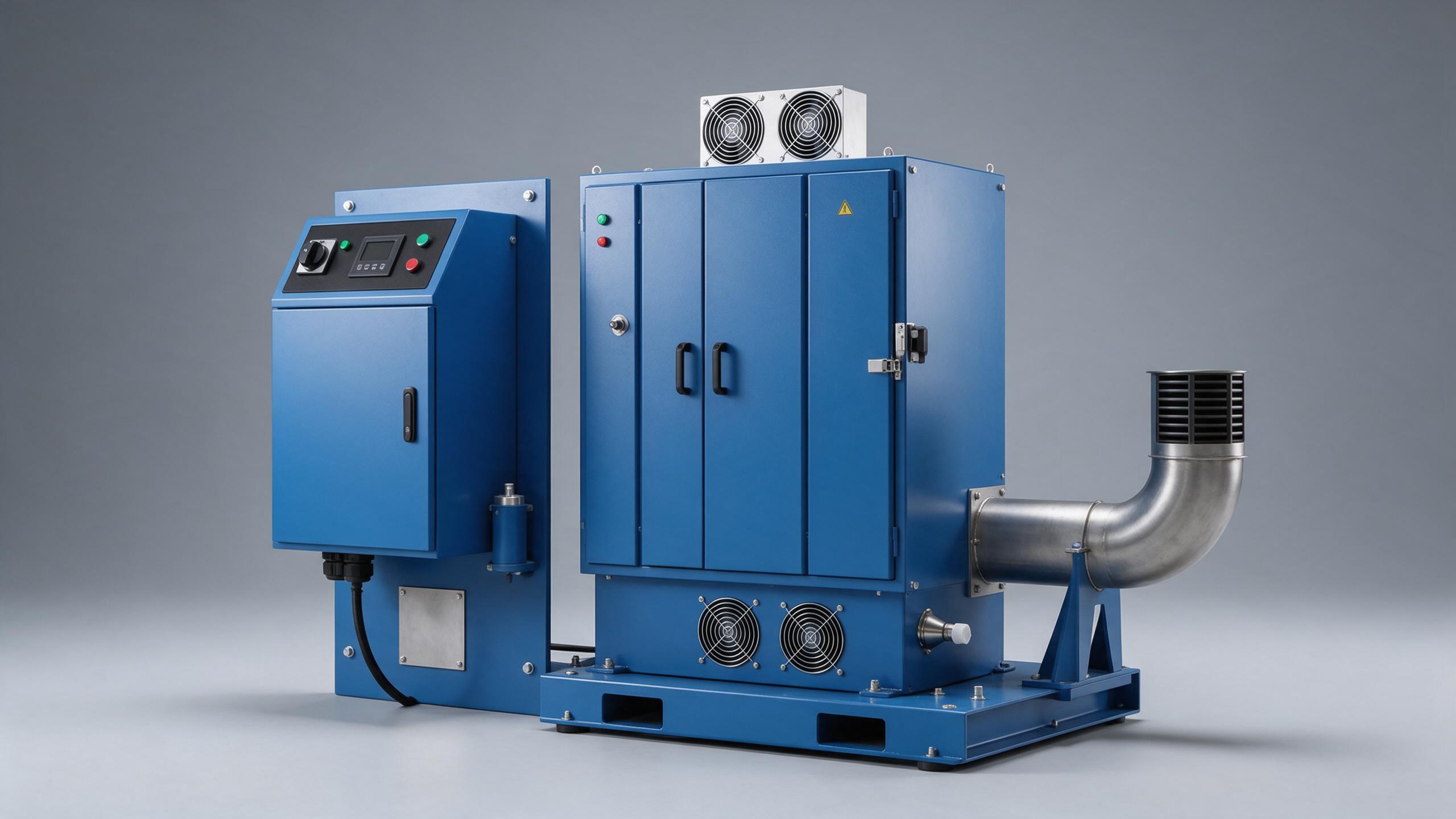
What engineering teams want to confirm before choosing an ozone generator module
Teams usually make better decisions when they turn a broad “air disinfection” request into a short list of verifiable inputs. The list below helps frame an inquiry without making unsupported performance promises.
- Process boundary: Is the target a sealed chamber, a room during a controlled shutdown, equipment enclosure, ducted section, or another unoccupied zone?
- Cycle requirement: What operating sequence, contact window, ventilation period, and re-entry condition will the site use?
- Integration details: What input power, control signal, mounting envelope, cooling method, and gas-path connection are available for the ozone generator module?
- Materials and compatibility: Which seals, plastics, coatings, wiring insulation, and nearby components will encounter ozone during the process?
- Safety controls: Which interlocks, alarms, labels, ventilation controls, lockout steps, and measurement methods are required by the site?
- Verification plan: Who will validate the completed process under the actual facility conditions, and which acceptance criteria apply?
This list also reduces a frequent procurement problem: requesting an ozone generator by name without enough information about the system it will join. An ozone generator module may have a suitable connection arrangement yet still be unsuitable if the enclosure, control logic, or materials are not compatible with the planned cycle.
Why project teams separate the module from the finished system
Separating the component from the system supports a more disciplined review. The ozone generator can be assessed for fit within its defined operating envelope, while the wider project review covers exposure control and process validation. This is useful for OEM equipment, retrofit work, and maintenance replacements, where the available cabinet space and controller connections may already be fixed.
Consider a hypothetical equipment enclosure that must be treated only when production is stopped. The buyer may begin by asking for an air purification ozone generator. A more useful technical discussion would establish the enclosure volume, available power, permissible mounting position, fan sequence, door interlock, exhaust path, material compatibility, and the responsible team’s release procedure. The chosen ozone module then becomes one item in an engineered sequence rather than a stand-alone claim about results.
This distinction is also important when comparing quotations. A lower component price does not tell the whole story if additional controls, containment changes, testing, or documentation are needed. Conversely, a higher-capacity ozone generator is not automatically the appropriate option. The required process conditions and safety controls should lead the specification.
Information to prepare for a component inquiry
For an ozone generator component discussion, share the application type, treatment-zone dimensions, electrical supply, expected duty cycle, installation environment, available mounting space, control-connection details, and any known material restrictions. If the request involves a replacement, include photos, drawings, connection details, and the existing control sequence where available. This gives the supplier a practical basis to discuss whether an ozone generator module can fit the project.
It is also worth stating what must be confirmed later: site risk assessment, local regulatory requirements, process validation, sensor selection, access control, and safe re-entry. More accurately, an ozone generator can support a controlled disinfection design only when those conditions are addressed; it does not settle them by itself.
Conclusion: adoption follows integration needs, not consumer marketing
Projects adopt an ozone generator module because it can be incorporated into a purpose-built control architecture. The value is in its integration flexibility: engineers can align the ozone generator with the enclosure, controls, ventilation, and documentation required for the application. For air disinfection projects, the responsible path is to define the unoccupied process, verify compatibility, and build exposure controls before selecting the component. That framework gives procurement and engineering teams a clearer starting point for a technically grounded inquiry.

