 EN


Why zirconia ceramic gains popularity in wear resistant components
For an abrasive-duty part, material choice is rarely a contest between one headline property and another. A zirconia ceramic is attracting attention because it can pair useful hardness with comparatively high fracture toughness for a technical ceramic. That combination matters when a component sees sliding contact, particles, edge loading, or intermittent impact. The practical question is not whether zirconia ceramic is suitable in the abstract; it is whether its grade, geometry, mating surface, and installation conditions fit the actual duty cycle.
From a material-selection perspective, this is why zirconia ceramic has become more visible in wear-resistant rollers, guides, seals, nozzles, valves, and precision handling parts. Engineers are looking for ways to reduce wear without simply exchanging one failure mode for another. A very hard material may resist abrasion yet chip at a stressed corner. A zirconia ceramic can be a useful option when resistance to crack growth is as important as surface wear.
What zirconia ceramic means in component design
Zirconia ceramic is the common name for zirconium dioxide, often written as ZrO2. In engineering discussions, the material is not defined by chemistry alone. The stabilizer level, phase composition, powder processing, sintering route, surface finish, and final geometry all affect how a zirconia ceramic part behaves.
That is why the terms zirconia oxide ceramic and ZrO2 can describe a family rather than one fixed specification. A drawing that says “zirconia” still needs the application context: what slides against the part, whether debris is present, what loads occur, and whether the part is clamped, press-fit, or free to move. For a zirconia ceramic component, those details can be more useful than a generic material comparison.
Why the toughness mechanism changes the discussion
Many advanced ceramics are selected for hardness, but zirconia ceramic is often discussed for another reason: transformation toughening. In suitable stabilized grades, local stress around a developing crack can trigger a crystal-structure change that produces a small volume increase. The resulting local stress state can oppose further crack opening. It does not make a zirconia ceramic unbreakable, and it does not replace sound part design, but it helps explain why the material is considered where brittle edge damage is a concern.
Search results and tribology literature commonly connect transformation-toughened ceramics with strong abrasive-wear performance in specific test conditions. The qualifier matters. Wear testing depends on the counterface, load, lubrication, particle size, motion, temperature, and specimen preparation. A zirconia ceramic that performs well in one contact system should still be evaluated against the actual mating material and load path.
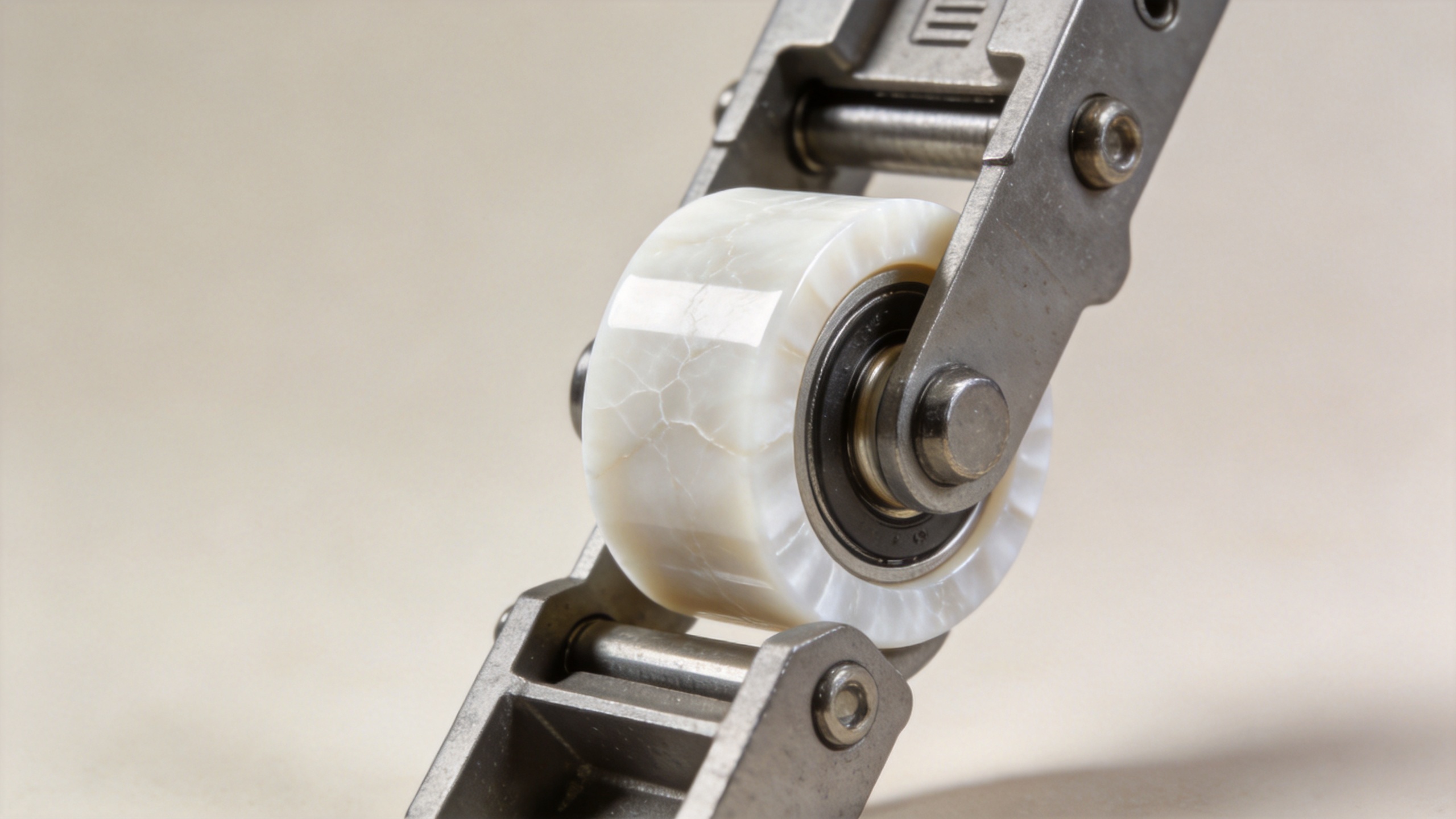
Why wear resistance is more than hardness
Wear-resistant components do not fail in one way. Abrasive particles can cut or plough a surface. Sliding pairs can generate frictional heat. Misalignment can concentrate load near an edge. Repeated impacts can initiate small defects that grow over time. Zirconia ceramic is appealing because its strength-and-toughness balance can help address several of these concerns together, rather than optimizing only a hardness number.
Consider a guide or sleeve exposed to a moving wire, fiber, slurry, or shaft. A zirconia ceramic may help maintain a controlled contact surface, but its result will depend on finish, clearance, alignment, and the condition of the counterface. In other words, material and contact relationship must be reviewed together. This is especially relevant for a zirconia oxide ceramic part with a thin wall, abrupt transition, or constrained mounting arrangement.
Where 3MOL yttria-stabilized zirconia fits
The term 3MOL yttria-stabilized zirconia is commonly used for a zirconia grade stabilized with about 3 mol% yttria, often referred to as 3Y-TZP. It is known for a balance of strength and fracture toughness associated with a tetragonal zirconia microstructure. For wear parts, that balance can make 3MOL yttria-stabilized zirconia worth considering when the component must tolerate both repetitive contact and occasional stress concentration.
Still, a grade name is not a complete specification. A zirconia ceramic quotation should distinguish bulk material properties from finished-part requirements. Ask how dimensions, surface condition, edges, holes, grooves, and assembly stresses will be controlled. If a component is expected to run dry, under slurry, or against a metal or polymer counterface, make that duty explicit. This is the point at which a material conversation becomes a useful engineering review.
Why zirconia ceramic is gaining popularity now
Several purchasing and design trends help explain the increased interest. First, maintenance teams increasingly examine replacement frequency and unplanned stoppage alongside unit price. Zirconia ceramic may merit evaluation when a longer-lived contact surface could reduce maintenance interventions, provided the comparison is based on the same operating conditions. Second, more components are customized around compact equipment, which makes geometry and stress concentration more important. Third, buyers have more access to technical ceramic grades and want clearer trade-off discussions before committing to a design.
This does not mean zirconia ceramic is the default for every abrasive job. Alumina, silicon carbide, zirconia-toughened alumina, metals, coatings, and polymers can each make sense under different conditions. A zirconia ceramic may be less attractive when thermal shock, chemical exposure, allowable dimensional tolerance, cost, or machining complexity points elsewhere. The useful decision is conditional, not automatic.
A practical selection checklist for zirconia ceramic parts
- Define the wear mechanism: Is the main issue abrasion, sliding, impact, erosion, fretting, or a combination?
- Describe the counterface: Provide the mating material, roughness, speed, contact pressure, and lubrication state.
- Review geometry: Note thin sections, small-radius corners, holes, threads, grooves, and load-bearing edges before finalizing a zirconia ceramic design.
- Confirm the grade: State whether a 3MOL yttria-stabilized zirconia grade is needed and identify any phase, density, or inspection requirements that must be verified.
- Plan installation: Clarify fits, clamping force, thermal expansion differences, and how the component will be handled during assembly.
- Set acceptance criteria: Identify dimensions, surface condition, visual requirements, and any application-specific testing needed for the zirconia ceramic part.
Turn material interest into a workable specification
The popularity of zirconia ceramic comes from a practical materials-engineering proposition: it can combine wear-relevant hardness with a level of toughness that supports demanding component designs. Yet the value appears only when the part, the contact system, and the assembly are considered together. For industrial buyers, the next step is to share the drawing, service medium, temperature range, contact conditions, expected quantity, and acceptance priorities. That information makes it possible to discuss whether zirconia ceramic, a zirconia oxide ceramic alternative, or another material route is the appropriate fit.
For a custom wear component, ask for a review that separates material selection from unverified performance promises. A clear specification for zirconia ceramic should state what must be confirmed, what will be inspected, and which operating conditions remain outside the available evidence. This keeps the conversation focused on a durable, application-specific decision.
Frequently Asked Questions
Is zirconia ceramic the same as ZrO2?
Yes. Zirconia ceramic is the common engineering name for zirconium dioxide, written as ZrO2. The actual component specification should also identify the grade and relevant finished-part requirements.
Why can zirconia ceramic suit wear-resistant parts?
Its appeal is the combination of hardness and comparatively high fracture toughness for a technical ceramic. Suitability still depends on the wear mechanism, counterface, load, geometry, surface finish, and assembly conditions.
What does 3MOL yttria-stabilized zirconia mean?
It commonly refers to zirconia stabilized with about 3 mol% yttria, often called 3Y-TZP. It is a grade description, not a substitute for confirming the requirements of a finished component.

