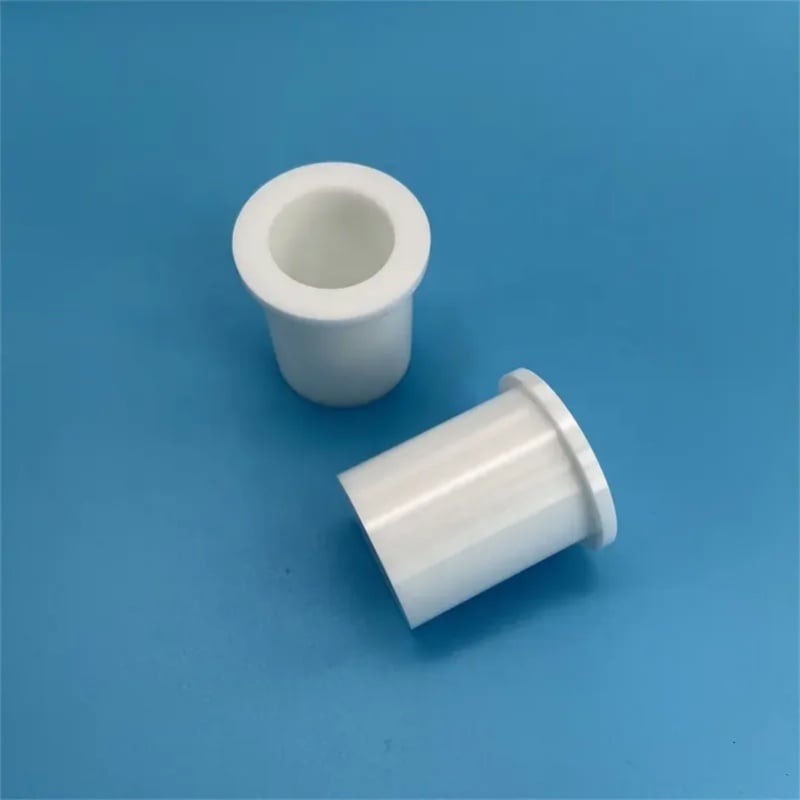
Fine grinding efficiency basically means how well mechanical energy actually breaks down particles below 100 microns without wasting too much power or introducing contaminants. Industries where precision matters most, such as pharmaceutical manufacturing and ceramic production, need at least 90 percent uniformity across all those tiny particles if they want their products to perform properly and stay within budget constraints. Take batteries for example - when the nanoparticles aren't synthesized consistently throughout the material, this can cut down on energy storage capacity by around 15 to 20 percent according to research from IntechOpen last year. Getting good results from grinding processes leads to materials with predictable characteristics, saves time during processing, and ultimately cuts down on what companies spend running these operations day after day.
The exceptional hardness of zirconia, around 12 to 14 GPa on the Vickers scale, allows for consistent energy distribution when milling materials. This helps avoid those annoying irregular fractures that happen with softer media containing weak points. When we look at ceramic powder production specifically, switching from steel jars to zirconia mill grinding jars cuts down particle size differences by roughly 40 to maybe even 60 percent because the impacts are so evenly distributed across the material. The resulting precision makes it possible to create nanomaterials consistently within very narrow tolerances, about plus or minus 5 nanometers. For industries where materials need to perform exactly as intended physically or chemically, this level of control is absolutely critical.
These characteristics align with findings from the 2024 Grinding Efficiency Report, which highlights zirconia’s density (6.05 g/cm³) as a key factor in balancing impact force and friction heat generation in planetary mills, making it uniquely suited for high-efficiency fine grinding.
Zirconia mill grinding jars stay dimensionally stable even after long periods of operation, which means they resist wear really well in those intense high-energy settings. The material has a density around 6 grams per cubic centimeter, almost double what we see with standard alumina media. Because zirconia is so dense, it actually moves kinetic energy better when particles collide inside the jar, according to STR Industries research. This stronger impact helps grind materials down faster without damaging the jar itself. Most industrial operations find that these jars last for thousands of hours straight without needing replacement, making them a cost effective solution for many manufacturing processes.
The inert nature of zirconium dioxide prevents ionic leaching during sensitive processes such as pharmaceutical grinding. Unlike reactive metal alloys, zirconia mill grinding jars avoid introducing trace contaminants that could compromise catalyst performance or pigment purity, ensuring batch-to-batch consistency meets ISO 9001 standards.
When put to the test, zirconia managed to get about 98% sub micron particles during lithium cobalt oxide processing compared to just 82% when using steel media. Alumina does have enough hardness for basic purposes, but what really sets zirconia apart is its fracture toughness at around 9 MPa root m combined with its dense nature. These properties make zirconia particularly good for sophisticated applications such as making battery materials where getting those super fine particle distributions matters a lot, plus having surfaces free from contaminants becomes absolutely essential too.
The shape of the jar plays a major role in how particles move around and transfer energy during the milling process. Research from Advanced Powder Technology in 2023 shows that jars with curved inner surfaces cut down on differences in tangential velocity by about 18 to 22 percent when compared to those with flat walls. This leads to more even collisions between the grinding media and the material being processed. The curvature also works well with the forces generated by planetary rotation, creating what's known as cascading flow patterns. These patterns help reduce the amount of energy lost at the jar walls, making the whole system more efficient overall.
The low friction coefficient of zirconia (ranging from 0.1 to 0.3 compared to steel's much higher 0.6 to 0.8) helps create controlled vortices during processing, which basically gets rid of those annoying stagnant areas where materials just sit around doing nothing. According to computational fluid dynamics studies, jars shaped in hexagons manage to utilize about 94% of their milling volume actively working on the material. That's actually 31 percentage points better than regular cylindrical containers used in most setups today. When we combine these great surface characteristics of zirconia with smart geometric design choices, it means all the material inside gets properly mixed and ground against the media throughout the entire process without leaving anything behind.
Three design innovations enhance stress distribution in modern zirconia jars:
| Design Feature | Efficiency Improvement | Contamination Reduction |
|---|---|---|
| Angled inner walls (55–65°) | 28% faster size reduction | 40% lower wear debris |
| Precisely spaced media guides | ±2.1% particle uniformity | – |
| 1.5:1 height-to-diameter ratio | 25% energy savings | 34% lower heat generation |
A 2023 study confirms these enhancements enable particle sizes between 0.5–3 μm in 30% less time than conventional configurations, while maintaining zirconia’s <0.01% contamination advantage over steel or alumina media.
Getting efficient fine powder processing right in those zirconia jars really comes down to getting three main factors just right: how fast we're milling (measured in RPMs), how long the process runs, and what proportion of grinding media versus actual powder we use. Studies have found something interesting here too - when people push past 300 RPM, they see particle sizes shrink about 40% faster, but there's a catch because some materials start to overheat and break down unexpectedly. On the flip side, if someone doesn't load enough grinding media, say anything less than a 10 to 1 ratio of balls to powder, then collisions happen less often which means longer wait times for completion, sometimes adding as much as two and a half extra hours onto processing. What makes zirconia jars so special is their incredible density of around 6.05 grams per cubic centimeter. When operators work within this sweet spot range of 250 to 280 RPM for about 90 minutes straight, most samples end up with nearly all particles measuring under 10 micrometers in size, which meets industry standards for quality control.
Zirconia’s fracture toughness (9–10 MPa·m¹/²) allows it to transfer 15–20% more kinetic energy per impact than steel or alumina, enhancing comminution efficiency. The following parameters have been validated for key applications:
| Material | Optimal Ball Diameter | RPM Range | Media Load Ratio |
|---|---|---|---|
| Pharmaceuticals | 3–5 mm | 200–250 | 12:1 |
| Battery materials | 2–3 mm | 280–320 | 15:1 |
Studies show that 2–3mm zirconia balls produce 0.5–1μm lithium cobalt oxide powders 35% faster than conventional methods by eliminating dead zones through optimized vortex dynamics.
Today's IoT sensors track temperature levels, how particles spread around, and vibrations at rates as high as fifty times every second. They adjust motor speed automatically within about plus or minus five percent to keep things running at their best efficiency. According to recent research from Particle Tech Journal published last year, this kind of automated monitoring cuts down differences between batches by roughly seventy two percent when compared to older manual methods. The closed loop control system works another important function too. If something goes wrong and pressure inside gets too high beyond 2.5 bar, it will shut everything down automatically. This feature becomes especially critical for facilities operating under strict FDA regulations where even small contaminations can cause major problems.
The zirconia mill grinding jars are pretty much the gold standard when it comes to pharmaceutical purity standards because they have these surfaces that don't react chemically. This means no metals leaching into the mix and keeping medications effective as intended. Recent studies from last year showed something pretty impressive too - zirconia cuts down on contamination risks by about 98% when compared against regular stainless steel equipment. That makes all the difference in creating those sterile environments needed for making antibiotics and vaccines. And since zirconia also handles heat really well, manufacturers can consistently produce particles in the nano range around plus or minus 5 nanometers. Getting such precise sizing matters a lot for how well drugs get absorbed in the body, so this property of zirconia is actually quite important for drug development processes.
Zirconia's impressive hardness at around 8.5 on the Mohs scale combined with its density of approximately 6 grams per cubic centimeter makes it really effective for creating the kind of kinetic energy required when making quantum dots and graphene composites. Researchers have found they can get particles under 50 nanometers in size with about 90% success rates because zirconia actually works about 40% better than alumina when it comes to collisions inside those high energy milling machines. Getting this sort of precision matters a lot for things like optical sensors and catalytic substrates since even small differences in particle size can completely change how electromagnetic fields interact with these materials.
A recent test run in the industry showed that using zirconia mill grinding jars actually boosted the cycle stability of NMC-811 cathode materials around 30% because they kept things clean during processing. When companies managed to keep those particles between 1 and 3 microns consistently over more than 200 production batches, they saw their energy density go up about 15% better than what traditional methods could deliver. What makes these jars really stand out is how resistant they are to wearing down. This means replacing the grinding media happens way less often—something like three quarters less frequently—which cuts down on expenses significantly. As electric vehicle manufacturers push harder for better performing batteries, this kind of efficiency becomes increasingly valuable in meeting market demands without breaking the bank.
Zirconia mill grinding jars offer superior wear resistance, minimize contamination, and have a high thermal stability making them ideal for precise grinding applications.
Zirconia is preferred due to its higher density and fracture toughness which allows for better energy transfer and finer particle distribution compared to alumina and steel.
These jars help achieve sterile grinding without cross-contamination ensuring medication purity and enhancing drug effectiveness.
Optimal process parameters include milling speeds between 250-280 RPM, processing duration of 90 minutes, and a media load ratio of 10:1 for effective fine powder processing.


 EN
EN