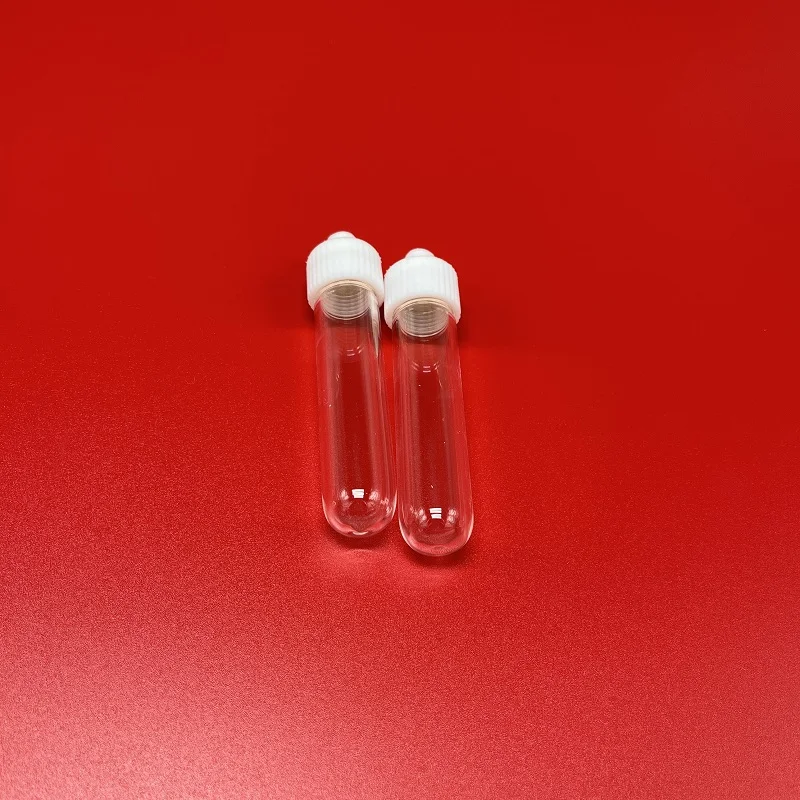
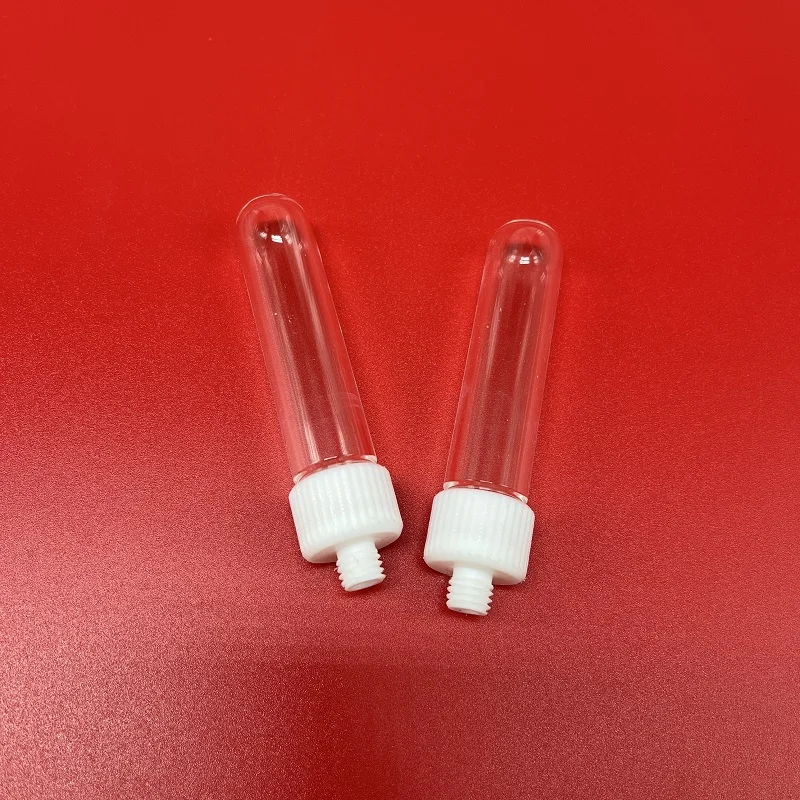
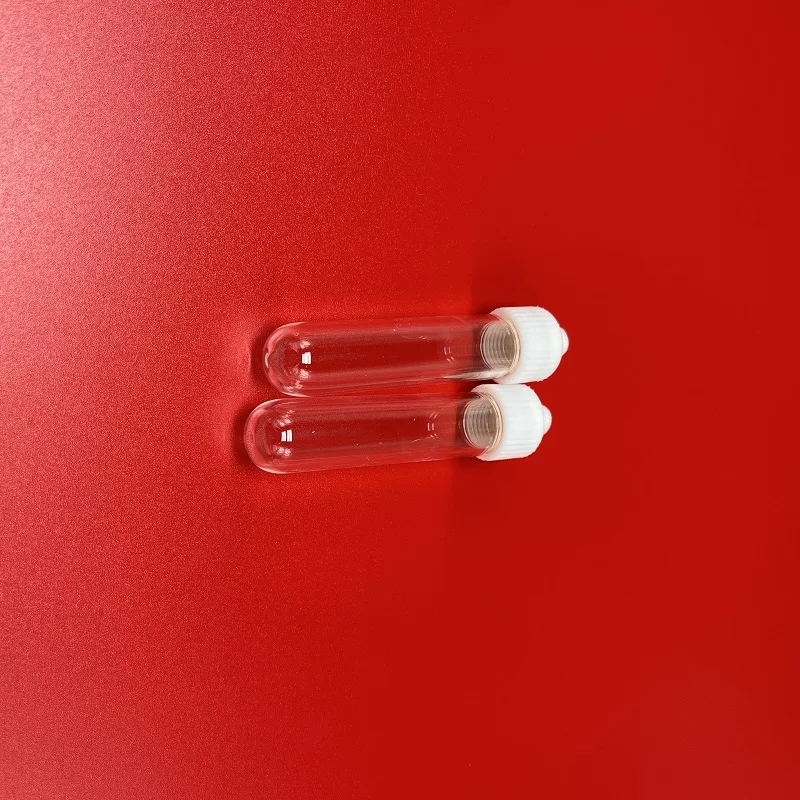
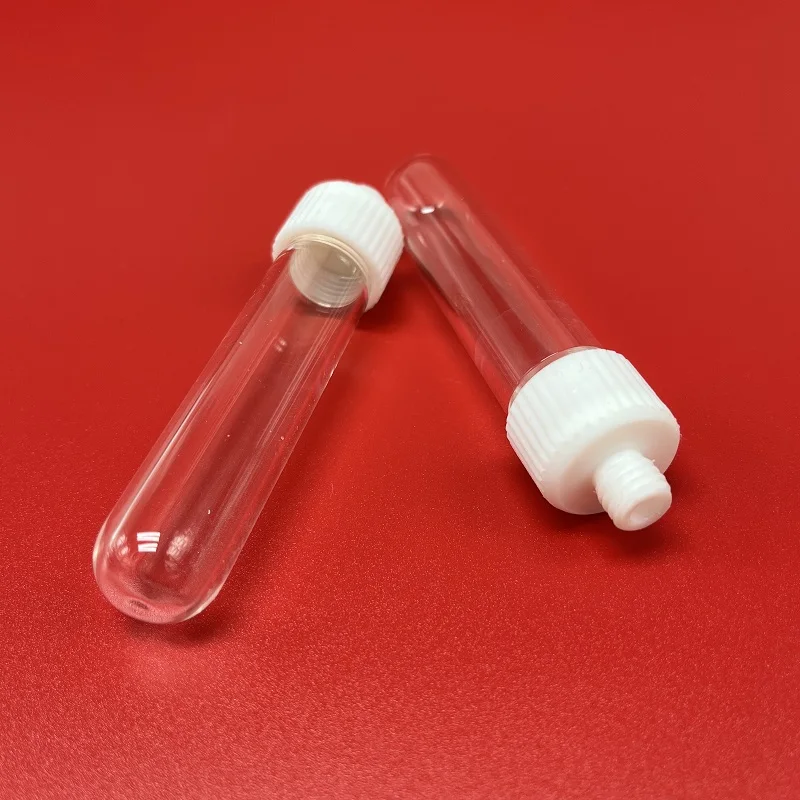
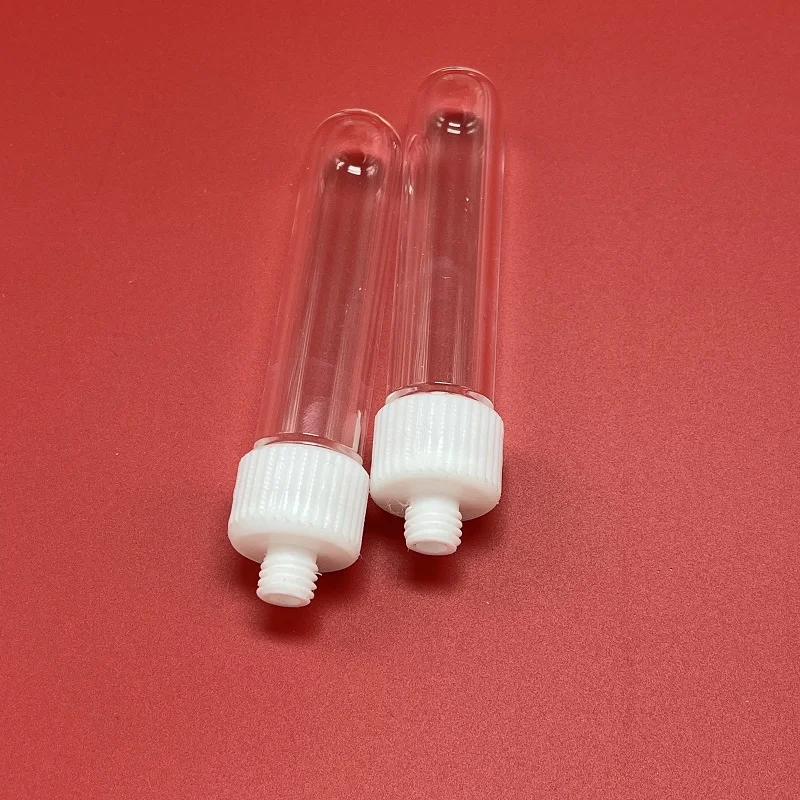
We can customize the clear quartz test tube according to your requirements. Welcome inquiry!
Production Process of Screw-Cap Quartz Test Tubes
The manufacturing of screw-cap quartz test tubes is a complex, multi-stage process that combines high-temperature thermal shaping with precision cold machining. Unlike standard glassware, which can often be molded, the extremely high melting point of quartz (over 1700°C) necessitates specialized techniques.
The process begins with high-purity quartz tubing (silicon dioxide, SiO₂), often with a purity level exceeding 99.99%. This raw material is selected for its lack of impurities, which is crucial for maintaining optical clarity and chemical resistance.
This stage involves shaping the quartz using high-temperature flames, typically generated by hydrogen-oxygen torches (reaching up to 3000°C).
Body Formation: The quartz tube is heated and rotated to form the main body of the test tube.
Bottom Sealing: The bottom is melted and shaped (e.g., into a round or flat bottom) using fire polishing techniques to eliminate micro-cracks.
While the body is formed by heat, the screw thread requires precision mechanical machining.
CNC Machining: Thick-walled quartz tubes are mounted on CNC lathes. Diamond tools are used to cut the precise screw threads onto the glass.
Precision: The threading is machined to strict tolerances (often within ±0.03mm) to ensure a tight, leak-proof seal when the cap is applied.
Joining: The machined screw neck is often joined to the test tube body using a thermal fusion process (sealing) on a lathe to ensure concentricity.
Polishing: The final step involves fire polishing or overall polishing to smooth the surface, remove grinding marks, and enhance transparency.
Advantage of clear quartz test tube:
Extreme Heat Resistance: Unlike standard borosilicate glass, quartz can withstand continuous operating temperatures up to 1100°C and short-term peaks up to 1450°C without softening or deforming.
Thermal Shock Resistance: Quartz has a very low coefficient of thermal expansion. This allows the test tubes to withstand rapid temperature changes—such as being heated to over 1000°C and immediately plunged into room-temperature water—without cracking or shattering.
Broad Spectrum Transmittance: High-purity quartz offers excellent light transmission across a wide spectral range, from the ultraviolet (UV) to the infrared (IR).
UV Transparency: It has a transmittance of over 80% in the UV region (specifically at 200nm-250nm), whereas standard glass blocks UV light. This makes quartz tubes essential for UV spectroscopy and photochemical experiments.
Acid Resistance: Quartz is highly inert and resistant to most acids, making it suitable for storing aggressive chemical reagents (with the exception of hydrofluoric acid)
Low Metal Ion Content: With a purity level often exceeding 99.9% SiO₂, quartz contains very few impurities. This prevents sample contamination, which is critical for high-precision analysis in the semiconductor and pharmaceutical industries.
Precision Machining: The screw threads are manufactured using high-precision CNC grinding, ensuring a perfect fit.
Secure Sealing: When paired with a compatible cap (often PTFE-lined), the screw design provides a hermetic, leak-proof seal. This prevents the evaporation of volatile solvents and protects samples from external contamination.
Hardness: Quartz is significantly harder than standard glass, making it more resistant to scratching and abrasion.
Reusability: Due to its resistance to thermal degradation and chemical corrosion, these test tubes can be cleaned, sterilized (autoclaved), and reused many times without losing their optical clarity or structural integrity.
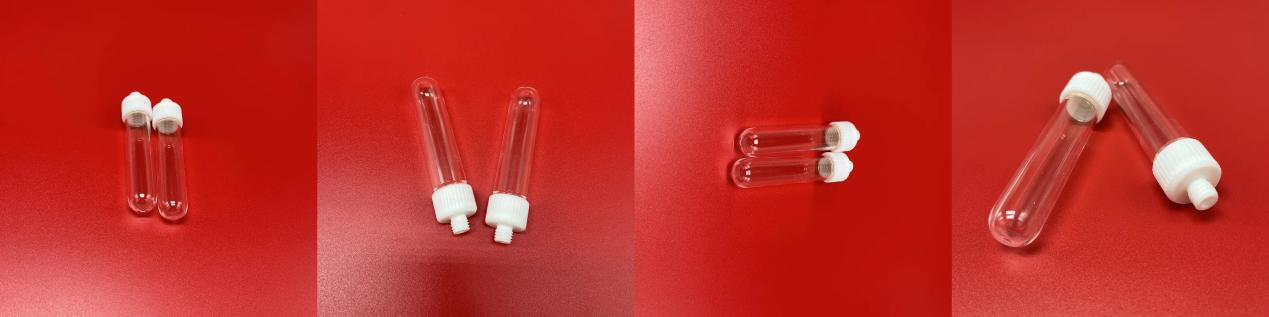
Applications of clear quartz test tube:
Due to their unique properties, screw-cap quartz test tubes are used in specialized fields:
Analytical Chemistry & Spectroscopy: Used as cuvettes or sample holders for UV-Vis spectrophotometers because they do not absorb UV light.
High-Temperature Experiments: Ideal for ashing, calcination, and thermal decomposition studies where standard glass would fail.
Semiconductor Industry: Used for storing high-purity reagents and samples, as the low metal ion content prevents contamination of sensitive electronic materials.
Pharmaceuticals & Biotechnology: Suitable for high-pressure sterilization (autoclaving) and storing light-sensitive drugs.
Environmental Testing: Used for sampling and storing water or soil samples that require analysis of trace elements.
Quartz Test Tube Usage Precautions:
To ensure safety and prolong the lifespan of the test tubes, observe the following guidelines:
Avoid Hydrofluoric Acid (HF): Quartz reacts with HF, which will etch and destroy the glass.
Avoid Hot Phosphoric Acid & Strong Alkalis: While resistant to acids, quartz is sensitive to alkaline solutions, especially at high temperatures, which can cause corrosion or devitrification (crystallization).
Fragility: Although quartz is hard, it is brittle. Avoid dropping or striking the tubes against hard surfaces.
Thread Care: Be careful not to cross-thread the caps. Over-tightening can crack the precision-machined glass threads.
Cleanliness: Ensure the exterior is clean and dry before heating to prevent surface devitrification caused by contaminants (like fingerprints or alkali salts).
Heating: While resistant to thermal shock, it is best practice to heat gradually for extreme temperature applications.
Use mild detergents or acid washes (excluding HF). Avoid using abrasive scouring pads that could scratch the optical surface.
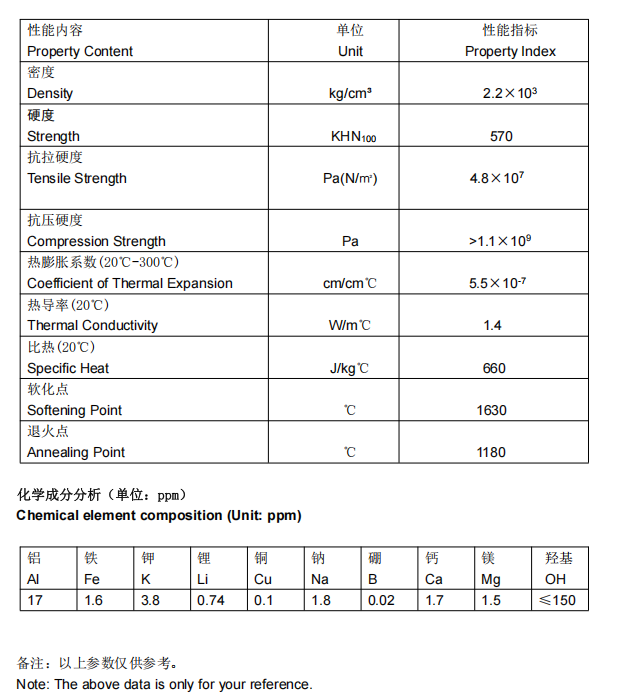
Technical specifications
Low-permeability microporous ceramic electrode rod
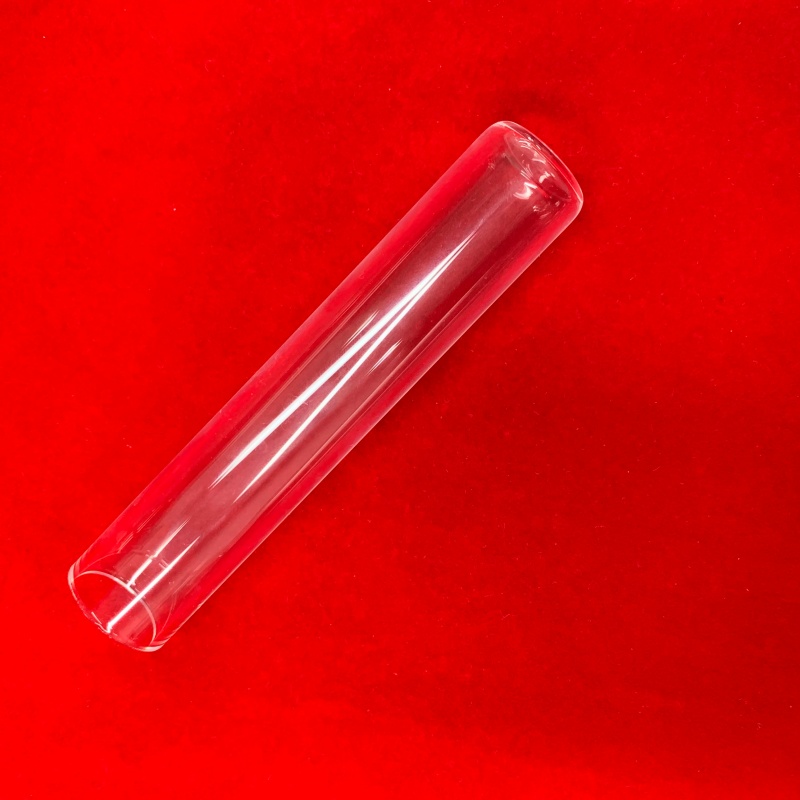
Quartz test Tube with one end closed for Laboratory Glasswares
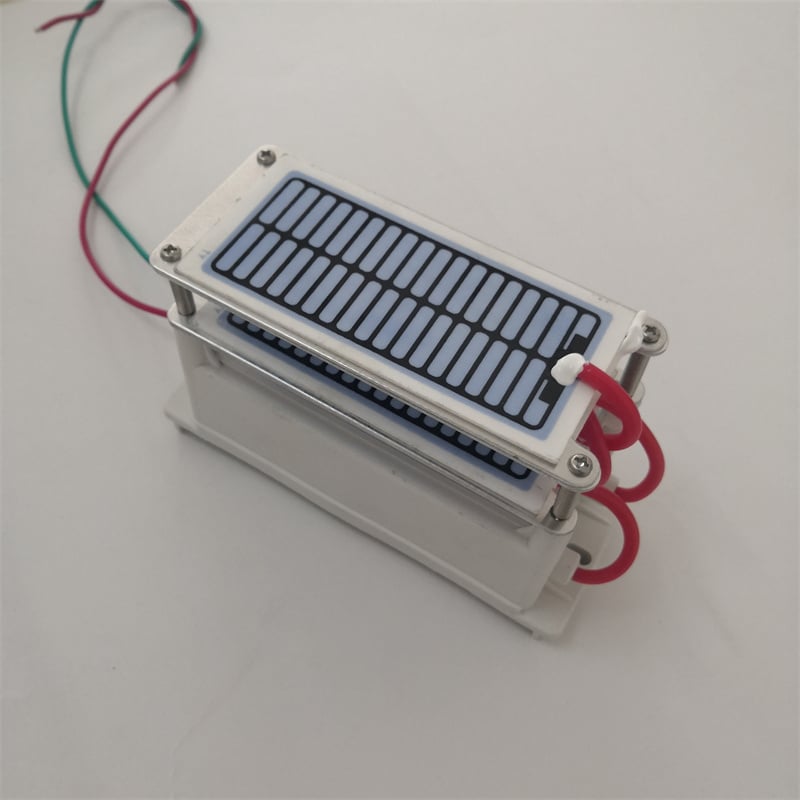
AC110V AC220V 10g/h Long Life Ceramic Plate Ozone module for air Purifying
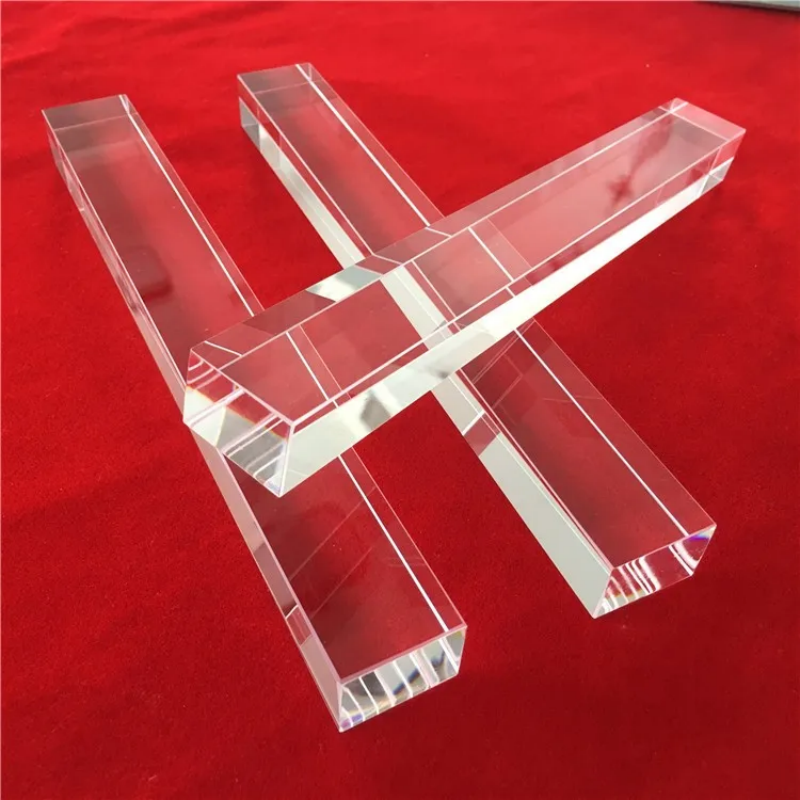
High Purity Custom Size square shape Clear Quartz Glass Rod


 EN
EN