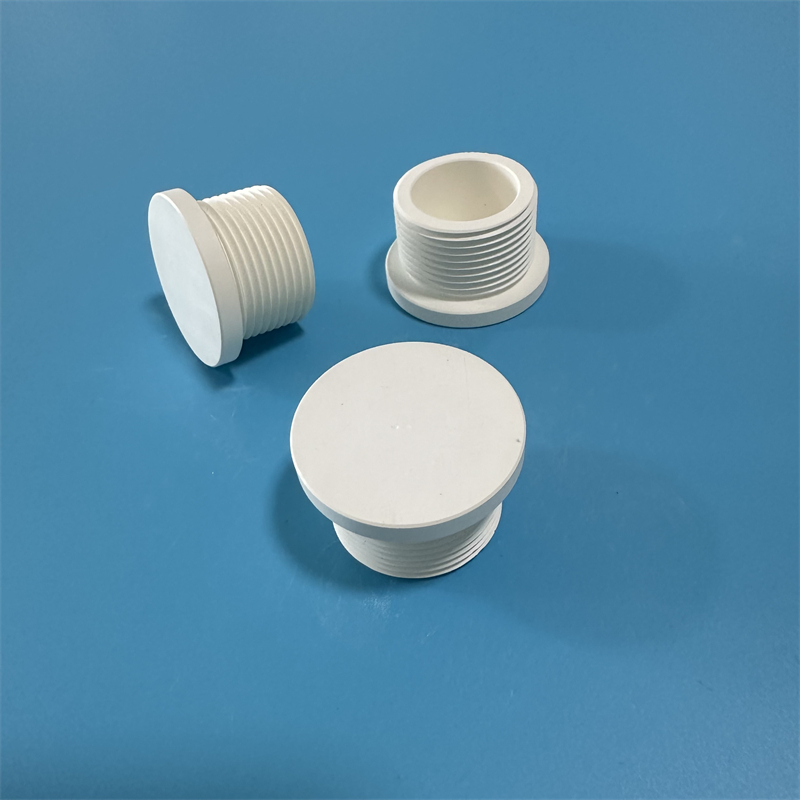
Boron carbide ranks at 9.3–9.5 on the Mohs scale, exceeding the hardness of tungsten carbide (8.5–9.0) and steel (4–4.5), placing it second only to diamond and cubic boron nitride in abrasive resistance. With a Vickers hardness of ~30 GPa, it resists deformation under high-stress blasting conditions where softer materials develop microfractures within hours.
At velocities exceeding 650 km/h, boron carbide’s hardness directly correlates with erosion resistance. Laboratory simulations show its wear rate is 12x lower than hardened steel in silica-abrasive environments. Its atomic structure resists plastic deformation, preventing the “lip formation” commonly seen in tungsten carbide nozzles after prolonged use.
| Material | Erosion Rate (g/kg abrasive) | Operational Lifespan (hrs) |
|---|---|---|
| Boron carbide | 0.08 | 750–1,200 |
| Tungsten carbide | 0.23 | 300–500 |
| High-chromium steel | 0.97 | 50–80 |
These results from controlled sandblasting trials (P50 garnet, 80 psi) highlight boron carbide’s dominance in preventing premature nozzle failure.
The sintered microstructure of boron carbide features an interlocking grain boundary network that distributes impact forces uniformly, reducing localized stress concentrations by up to 37% compared to traditional materials. Post-test microscopy reveals intact surface layers even after 1,000+ hours, whereas steel nozzles exhibit 200–300 µm depth erosion under identical conditions.
Boron carbide maintains structural integrity during rapid temperature fluctuations common in abrasive blasting. Its low thermal expansion coefficient minimizes stress fractures, even when surface temperatures exceed 600°C. This resilience prevents microcracking during repeated heating-cooling cycles, making it ideal for high-intensity applications such as metal surface preparation.
Boron carbide is chemically inert, resisting degradation from acidic or alkaline abrasives and moisture-induced oxidation. Independent studies show no measurable deterioration after 500+ hours of exposure to pH extremes (2–12). This stability eliminates pitting and corrosion issues common in steel nozzles, ensuring consistent abrasive flow rates over time.
At 400°C, boron carbide retains 92% of its room-temperature hardness—significantly outperforming tungsten carbide (78%) and steel (54%). This thermal resilience prevents deformation during extended operations, minimizing downtime. Field data from furnace liner blasting show a 40% productivity gain over carbide alternatives under sustained 550°C conditions.
Boron carbide nozzles last 5x longer than steel and 1.8x longer than tungsten carbide in industrial settings, according to findings from the 2024 Abrasive Materials Performance Review. This durability stems from its extreme hardness (30–35 GPa Vickers), which minimizes material loss during high-velocity particle impacts. Key field observations include:
By resisting microfractures that accelerate wear, boron carbide extends maintenance intervals while sustaining optimal blasting pressure.
When it comes to hardness ratings, boron carbide stands out at around 2,400 to 3,100 HV1. That puts it ahead of tungsten carbide which ranges between 2,300 and 2,600 HV1, and way above silicon carbide's 1,400 to 1,600 HV1 mark. Another big plus for boron carbide is its lighter weight since it has a density of just 2.5 grams per cubic centimeter compared to silicon carbide's heavier 3.16 g/cm³. This means manufacturers can build nozzles that are both strong and not so heavy they become cumbersome during operation. The fracture toughness numbers actually run pretty close together for these materials typically falling between 2 and 4 MPa·m¹/². But what makes boron carbide really shine is how its exceptional hardness helps stop cracks from spreading when subjected to those intense pressure blasts that equipment often faces in industrial settings.
Boron carbide nozzles definitely come at a higher price point, about thirteen times what steel costs, but they save money in the long run. Mining companies have found that these expensive nozzles cut down on overall expenses by around sixty two percent after just five years because there's no need for constant replacement. Small operations running less than 500 hours per year might find tungsten carbide a better fit for their budget initially. Big players though? They typically get their money back within eight to twelve months since these boron carbide systems last way longer. We're talking about service life that stretches past 18 thousand hours, almost twice as long as what tungsten carbide can handle. That kind of durability makes all the difference when looking at operational costs over time.
Shale drilling operations show some impressive results when using boron carbide nozzles. These nozzles keep around 90% of their original size even after being blasted for 2,000 hours straight against cement casings. That's way better than silicon carbide alternatives which tend to wear down about 40% faster when dealing with those tough high-silica abrasives. Field crews have noticed something else too. They need to stop for maintenance about 35% less often compared to older tungsten carbide models. This difference becomes really noticeable in areas with lots of saltwater content. The reason? Boron just doesn't react with chlorides like other materials do, so there's much less of that annoying pitting problem that plagues many drilling setups.
Modern manufacturing achieves over 98% theoretical density in boron carbide through pressure-assisted sintering at temperatures above 2,200°C under controlled atmospheres. This process eliminates microscopic voids that historically acted as fracture initiation sites. The resulting homogeneous microstructure improves fracture toughness by 15%, directly extending service life in high-impact applications.
These days, computational fluid dynamics or CFD is shaping how engineers design those tapered bore profiles that cut down on turbulence when dealing with abrasive materials. Real world testing shows pretty impressive results too these curved shapes bring about a roughly 22 percent drop in exit velocity losses while cutting wall erosion by around 31 percent. What this means practically is that the vital throat diameter stays consistent for approximately three times longer compared to older straight bore designs facing similar operating conditions. For maintenance teams, this translates into fewer shutdowns and less frequent replacements over time.
These days, engineers are putting boron carbide cores inside carbon fiber reinforced polymer (CFRP) housings. What they get is a combination of ceramic's ability to resist wear and the composite material's capacity to handle impacts. This new hybrid design actually tackles those mechanical shocks that cause around 58 percent of early failures seen in older versions. And here's another plus point: these newer assemblies weigh about 14% less than before yet still hold up at pressures up to 150 PSI. For people working with portable blasting gear, this weight reduction makes all the difference in handling and mobility during actual operations.


 EN
EN