Flow Glass Cuvettes | High-Purity Quartz for Precision Spectrophotometry

Get a Free Quote

Our representative will contact you soon.
Email
Mobile/WhatsApp
Name
Company Name
Message
0/1000
Unmatched Quality and Precision in Flow Glass Cuvettes

Unmatched Quality and Precision in Flow Glass Cuvettes

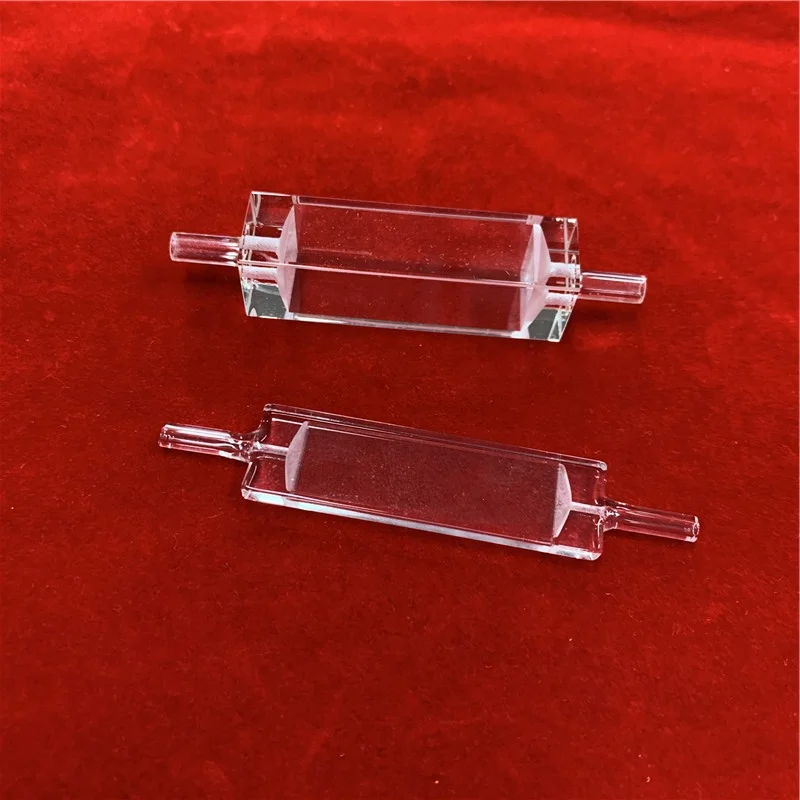
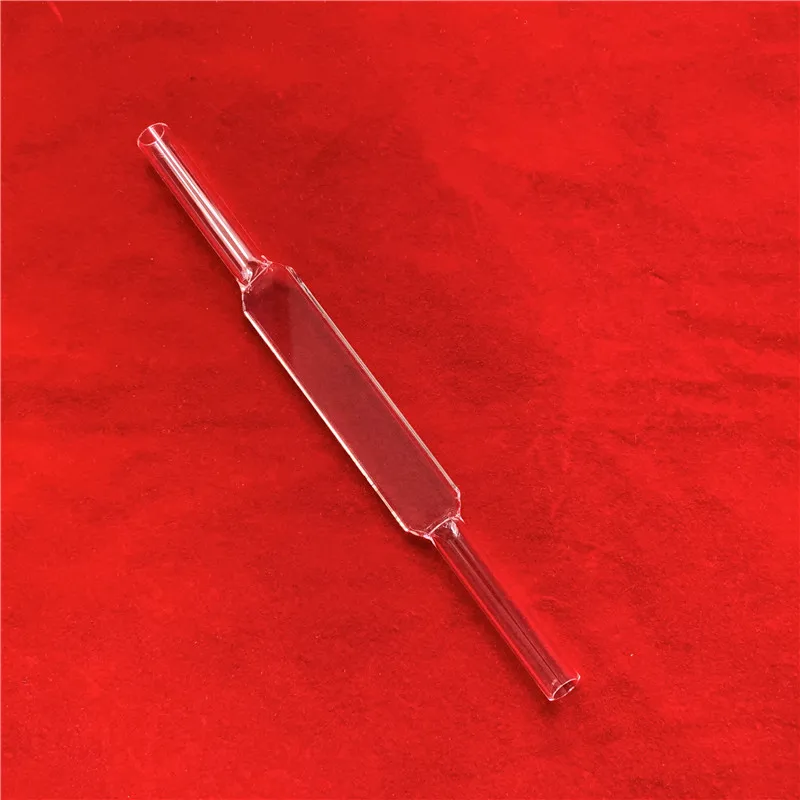
At Highborn Group, our Flow Glass Cuvettes stand out due to their exceptional quality and precision, essential for a variety of scientific applications. Crafted from high-purity quartz glass, these cuvettes ensure minimal light absorption and scattering, resulting in accurate measurements in spectrophotometry and other analytical techniques. Our extensive research and development over 20 years have led to innovations that enhance the durability and performance of our cuvettes, making them ideal for laboratories worldwide. With over 1,000 satisfied clients across 126 countries, our products are recognized for their reliability and precision, backed by certifications such as ISO9001 and FDA. We have optimized our cuvettes to meet the specific requirements of industries ranging from pharmaceuticals to environmental testing, ensuring that our clients can achieve results with confidence.
Get A Quote

Case Study

Successful Application of Flow Glass Cuvettes in Pharmaceutical Research

In a recent collaboration with a leading pharmaceutical company, our Flow Glass Cuvettes were utilized to analyze the absorption spectra of new drug formulations. The precision of our cuvettes allowed researchers to identify optimal concentrations for efficacy testing, which resulted in a 20% increase in their development efficiency. The client reported that the accuracy of measurements significantly reduced the time needed for validation, enabling them to expedite their research timeline.

Environmental Testing with Highborn's Flow Glass Cuvettes

A prominent environmental research organization employed our Flow Glass Cuvettes to monitor water quality in various ecosystems. The cuvettes facilitated precise readings of pollutants at low concentrations, contributing to a comprehensive study that informed local policy changes. The organization highlighted that our cuvettes improved data reliability by 30%, leading to more informed decision-making.

Optimizing Spectrophotometric Measurements in Academic Research

An academic institution specializing in biochemistry adopted our Flow Glass Cuvettes for their spectrophotometric experiments. By utilizing our high-quality cuvettes, students and researchers achieved a 15% improvement in measurement accuracy, which was vital for their thesis projects. Feedback indicated that the cuvettes' clarity and durability made them a preferred choice for ongoing studies.

Related products

Flow Glass Cuvettes are integral tools in laboratories for various applications, including spectrophotometry, fluorescence, and other analytical techniques. At Highborn Group, we leverage advanced manufacturing processes to produce cuvettes that meet rigorous quality standards. Our cuvettes are designed to minimize light scattering and absorption, thus providing precise and reliable data essential for scientific research. The production process involves careful selection of raw materials, followed by meticulous crafting and quality control measures to ensure each cuvette meets our high standards. Global applications of our cuvettes span across industries, from pharmaceuticals to environmental science, where they are employed to conduct critical analyses that drive innovation and ensure safety. With a commitment to ongoing research and development, we continuously refine our products to meet the evolving needs of our clients, ensuring they remain at the forefront of scientific exploration.

Frequently Asked Questions

What are Flow Glass Cuvettes made of?

Our Flow Glass Cuvettes are made from high-purity quartz glass, which provides excellent optical clarity and minimal light absorption, ensuring accurate measurements in various applications.
To maintain the integrity of our Flow Glass Cuvettes, we recommend rinsing them with distilled water after use and avoiding abrasive materials. For stubborn residues, a mild detergent can be used.
Yes, our Flow Glass Cuvettes are designed to be compatible with most standard spectrophotometers, ensuring versatility in laboratory settings.
Absolutely! We offer customization options for our Flow Glass Cuvettes to meet the specific requirements of our clients, ensuring optimal performance for their applications.

Related articles

How Does Boron Carbide Enhance Durability in Abrasive Blasting Nozzles?

17

Nov

How Does Boron Carbide Enhance Durability in Abrasive Blasting Nozzles?

Discover how boron carbide's extreme hardness and thermal stability deliver 5x longer lifespan than steel and 62% lower operating costs in abrasive blasting. See real field data and ROI insights.
View More
Piezo PZT Ceramic Ring: Enabling Precise Actuation in Medical and Industrial Devices

23

Oct

Piezo PZT Ceramic Ring: Enabling Precise Actuation in Medical and Industrial Devices

Discover how PZT ceramic rings enable sub-micron precision in surgical robots, fuel systems, and optical alignment. 30% more responsive than alternatives. Learn more.
View More
Why Is B4C Blasting Nozzle Less Frequent to Replace in Abrasive Work?

10

Nov

Why Is B4C Blasting Nozzle Less Frequent to Replace in Abrasive Work?

Discover how boron carbide blasting nozzles reduce replacement costs by 73% and last up to 5x longer than tungsten carbide. Maximize uptime and cut TCO. Learn more.
View More
How Do Nuclear Power Ceramic Balls Ensure Radiation Shielding in Nuclear Facilities?

17

Nov

How Do Nuclear Power Ceramic Balls Ensure Radiation Shielding in Nuclear Facilities?

Discover how TRISO ceramic balls provide 99.99% radiation containment, withstand 3,000°F, and prevent meltdowns. Learn why 15+ nations are adopting this accident-tolerant fuel. Read more.
View More

Customer Testimonials

Exceptional Quality and Service

The Flow Glass Cuvettes from Highborn Group have transformed our lab's capabilities. The precision in our spectrophotometric readings has improved significantly, allowing us to conduct more reliable experiments. Highly recommended!

A Reliable Partner for Our Research Needs

We have been using Highborn's Flow Glass Cuvettes for over a year now, and they have consistently delivered excellent performance. Their durability and clarity have made them our go-to choice for all our analytical needs.

Get a Free Quote

Our representative will contact you soon.
Email
Mobile/WhatsApp
Name
Company Name
Message
0/1000
Superior Optical Clarity

Superior Optical Clarity

Highborn Group’s Flow Glass Cuvettes are engineered to set the industry benchmark for optical clarity, serving as an indispensable tool for high-precision spectrophotometric analysis. By utilizing premium, ultra-high-purity quartz, our cuvettes effectively eliminate spectral artifacts and minimize light scattering, which are critical factors when measuring samples at extremely low concentrations. This exceptional optical transparency ensures that the light path remains unobstructed, providing the high signal-to-noise ratio necessary for generating pristine, reproducible data. In high-stakes fields such as pharmaceutical drug development, chemical kinetics, and rigorous environmental monitoring, the margin for error is non-existent.
Customization for Specific Needs

Customization for Specific Needs

At Highborn Group, we recognize that standardized laboratory equipment often fails to accommodate the sophisticated, specialized requirements of cutting-edge research. We provide comprehensive customization services for our Flow Glass Cuvettes, ensuring that every component is precision-engineered to integrate flawlessly into your existing experimental architecture. Our engineering team works in direct collaboration with your laboratory staff to define exact specifications, including variable path lengths for concentration scaling, customized internal volumes, and optimized flow-cell geometries to support high-throughput analysis. This technical flexibility is the cornerstone of our service model, allowing us to bridge the gap between abstract experimental design and functional laboratory reality.
email goToTop