1.1 Efficient Heat Dissipation Performance
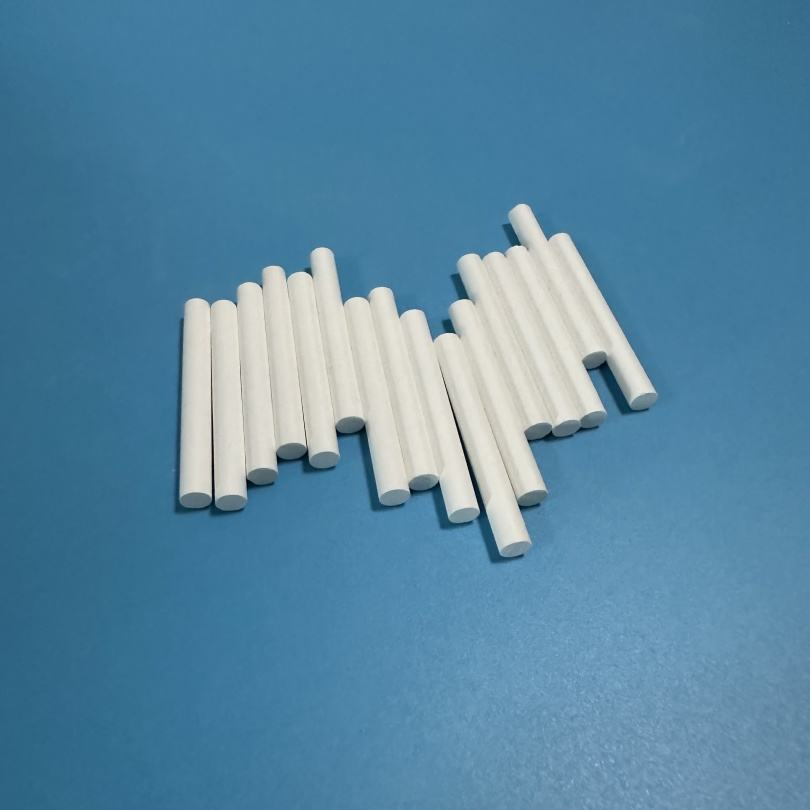
The core advantage of boron nitride rods lies in their unique thermal management capabilities. It has excellent thermal conductivity maintained at 30-60 W/m·K, and oriented-grade materials can achieve even higher thermal conduction efficiency. The material can rapidly absorb, conduct and disperse concentrated heat from the heat source area, effectively avoiding device burnout, performance degradation and operational failure caused by local overheating and long-term heat accumulation. With modern electronic and semiconductor equipment developing toward high power density and miniaturization, internal heat flux continues to rise, making efficient and stable heat dissipation an indispensable core requirement for high-end industrial equipment.
1.2 High Temperature Insulation Stability
Different from most thermally conductive materials that lose dielectric properties at high temperatures, boron nitride rods serve as excellent electrical insulators and maintain stable insulation performance under continuous high-temperature working conditions. The perfect combination of "high thermal conductivity" and "high insulation" solves the long-standing technical contradiction between heat dissipation and electrical isolation. It is widely used in high-power density electronic devices such as IGBTs and industrial lasers, as well as core components of semiconductor manufacturing equipment including electrostatic chucks and heater bases. By applying boron nitride rods as heat dissipation brackets and insulating heat transfer elements, equipment power density, operational stability and overall service life can be significantly improved.
2 High Temperature Resistance and Thermal Shock Resistance
2.1 Ultra-High Temperature Service Stability
Boron nitride rods feature outstanding ultra-high temperature resistance, capable of long-term stable operation in inert or reducing atmospheres at temperatures above 1800 ℃. In conventional atmospheric environments, they can continuously withstand working temperatures of approximately 1200 ℃. Although the oxidation initiation temperature is850 ℃, a dense and compact boron oxide protective film will form on the material surface after high-temperature oxidation, providing effective short-term anti-oxidation protection and preventing further structural erosion and performance attenuation in high-temperature air environments.
2.2 Excellent Thermal Shock Resistance
The material possesses an extremely low, isotropic coefficient of thermal expansion, granting it unparalleled thermal shock resistance superior to alumina and silicon carbide ceramics. It can effectively resist huge thermal stress caused by drastic temperature gradients during rapid high-temperature heating and instantaneous quenching cooling, avoiding structural defects such as cracking, chipping and surface peeling. This high stability ensures long-term reliability in frequent temperature cycling processes, including metal melting, crystal growth and powder sintering, making it an ideal durable material for high-temperature crucibles, support frames and flow channel components.
3 Self-Lubricating Performance and Chemical Stability
3.1 Inherent Low Friction and Self-Lubricating Property
Benefiting from its graphite-like hexagonal layered crystal structure, boron nitride rods have an extremely low coefficient of friction ranging from 0.2 to 0.4, serving as high-performance inorganic solid lubricant material. The inherent self-lubricating property maintains stable friction reduction under extreme working conditions where liquid lubricants fail, including high temperature, heavy load and high vacuum environments. It is widely applied to high-temperature kiln bearings, guide rails and sealing rings, effectively reducing mechanical wear, lowering operational resistance and extending the service life of moving parts.
3.2 Strong Chemical Inertness and Corrosion Resistance
Boron nitride rods exhibit extremely strong chemical inertness with excellent resistance to various harsh corrosive media. They are stable against molten metals such as aluminum, copper and molten steel, as well as molten salts, glass melts, strong acids and strong alkalis, and will not undergo chemical reactions, dissolution or corrosion. This superior chemical stability enables the rods to maintain complete structural integrity and functional stability for long-term service in metallurgy, chemical engineering and glass manufacturing fields, especially for molten medium contact components including pouring ports, thermocouple protection tubes and stirring rods.
4 Precise Machinability and Customization Flexibility
4.1 Superior Easy-Machining Characteristics
Compared with hard and difficult-to-process high-performance ceramics such as alumina and silicon carbide, boron nitride rods feature low hardness with a Mohs hardness of only about 2. The material can be directly processed with standard cemented carbide or diamond tools to complete precision processes including turning, milling, drilling, planing and grinding. No complicated, high-cost and time-consuming post-sintering treatment is required, which greatly simplifies the production process, reduces manufacturing costs and shortens production cycles.
4.2 Flexible Customization for Complex Parts
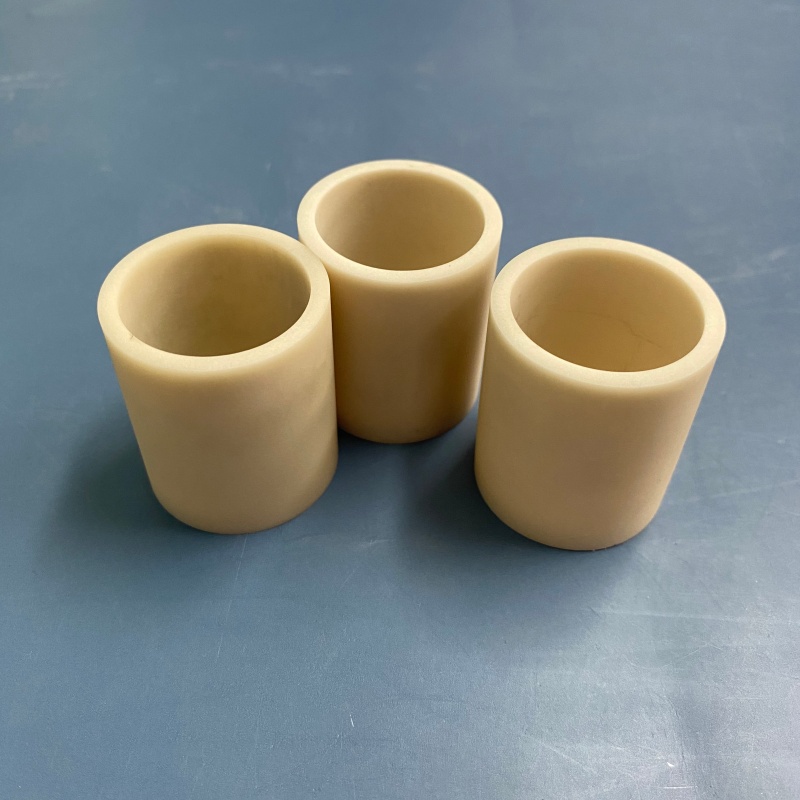
This processing advantage makes boron nitride rods highly suitable for small-batch, multi-variety and complex-shaped irregular part production. Engineers can flexibly machine the material into precision components of various sizes and structures, such as thin-walled tubes, complex fixtures and threaded parts. It fully meets diversified customized requirements in high-precision scenarios ranging from semiconductor manufacturing equipment to laboratory scientific research experiments.
5 Diversified High-End Application Fields
5.1 Semiconductor and Vacuum Industry Applications
Boron nitride rods are indispensable key materials in the semiconductor industry, widely used for manufacturing crucibles for GaAs and GaN compound semiconductor crystal growth, as well as heating structural components for molecular beam epitaxy (MBE) systems. In vacuum technology, they act as professional insulation and support components for the hot zone of high-temperature vacuum furnaces, ensuring stable heat insulation and structural support in high-temperature vacuum environments.
5.2 Industrial Furnace, Aerospace and Scientific Research Applications
In high-temperature industrial furnace manufacturing, the material is adopted as sintering fixtures, push plates and guide rails due to its non-adhesive, high-temperature resistant and thermal shock resistant properties. In aerospace and nuclear energy fields, it is used for extreme-temperature resistant structural components and neutron absorbing parts. Furthermore, boron nitride rods serve as core materials for scientific research equipment, special metallurgy and high-performance composite molding molds, providing a solid material foundation for the innovation and upgrading of modern high-end industrial technology.



 EN
EN