Product Details
1. Product Overview
1.1 Early Research & Initial Application
The professional research and industrial development of beryllium oxide ceramic plates originated in foreign countries as early as the 1930s. In the initial stage, beryllium oxide materials were not independently applied as structural or functional ceramics, but were mostly mixed with other auxiliary materials and mainly used as a special phosphorescent functional substance. High-purity beryllium oxide ceramic finished products were successfully manufactured for the first time during World War II, marking the initial breakthrough of BeO ceramic industrialization. In 1946, researchers accidentally discovered its ultra-high thermal conductivity performance far exceeding most ceramic materials, and since then, it has been firstly and exclusively applied in the manufacturing and research of precision nuclear devices, opening the special application field of BeO ceramics.
1.2 Rapid Development & Market Growth
The rapid development stage spanned from the late 1950s to the late 1970s, when BeO ceramics were gradually promoted and applied in electronics, precision instruments, communication equipment and aerospace technologies. Driven by high-end technological demands, its industrial output has grown steadily, with U.S. production increasing by 8%–12% annually in recent years.
2. Core Material Characteristics & Production Features
2.1 Physical & Functional Properties
Beryllium oxide ceramic is a high-performance special electronic ceramic with high-purity beryllium oxide as the core raw component, possessing unique and irreplaceable comprehensive properties compared with traditional ceramic materials. Its most prominent core advantage is excellent ultra-high thermal conductivity, which is basically equivalent to metallic aluminum material and 6-10 times higher than common alumina ceramics. It is a rare dielectric material that integrates excellent thermal, electrical and mechanical properties. The material has an extreme melting temperature of 2530°C ~ 2570°C and a theoretical density of 3.02 g/cm³, with outstanding high-temperature resistance. It can operate stably for a long time at 1800°C in vacuum environment and 2000°C in inert gas atmosphere, adapting to extreme high-temperature working conditions.
2.2 Production Difficulties & Industry Barriers
Notably, BeO materials have toxic characteristics and enhanced volatility in high-temperature humid environments, starting to volatilize at 1000°C and intensifying with rising temperature. Strict protective measures are required for production, resulting in very few global qualified manufacturers and high product prices, yet market demand remains robust.
3. Core Application Fields
3.1 Electronic, Military & Aerospace Applications
Benefiting from its core advantages ofultra-high thermal conductivity, excellent high insulation, ultra-low dielectric loss and superior thermal shock resistance, BeO ceramics are widely used in high-end military and civil precision manufacturing fields. In the microelectronics industry, it is an indispensable key material, specially used for manufacturing high-precision integrated circuit substrates and high-power transistor heat sink housings. In the aerospace and military fields, it is extensively applied in satellite communication systems, aircraft electronic assembly brackets, aircraft propulsion device control components and jet aircraft detonators, and has become the preferred core ceramic material for military high-power MCMs (multi-chip modules) in various countries.
3.2 Laser & High-End Precision Equipment Applications
In addition, BeO ceramics show outstanding advantages in laser equipment, nuclear technology and microwave vacuum devices. BeO laser equipment features higher efficiency and output power than traditional quartz lasers, with irreplaceable application value in high-end precision equipment.
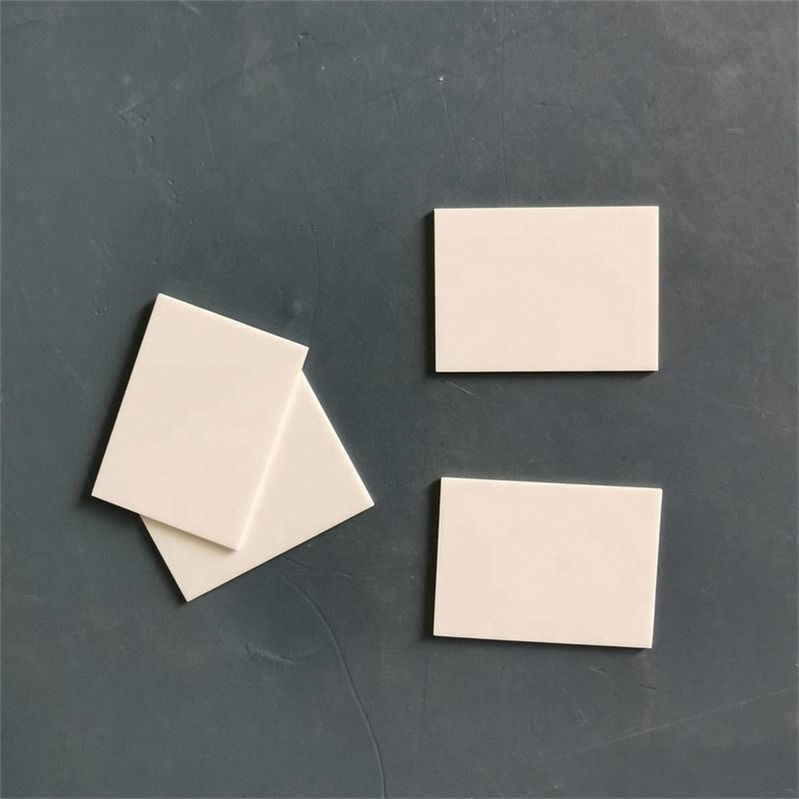
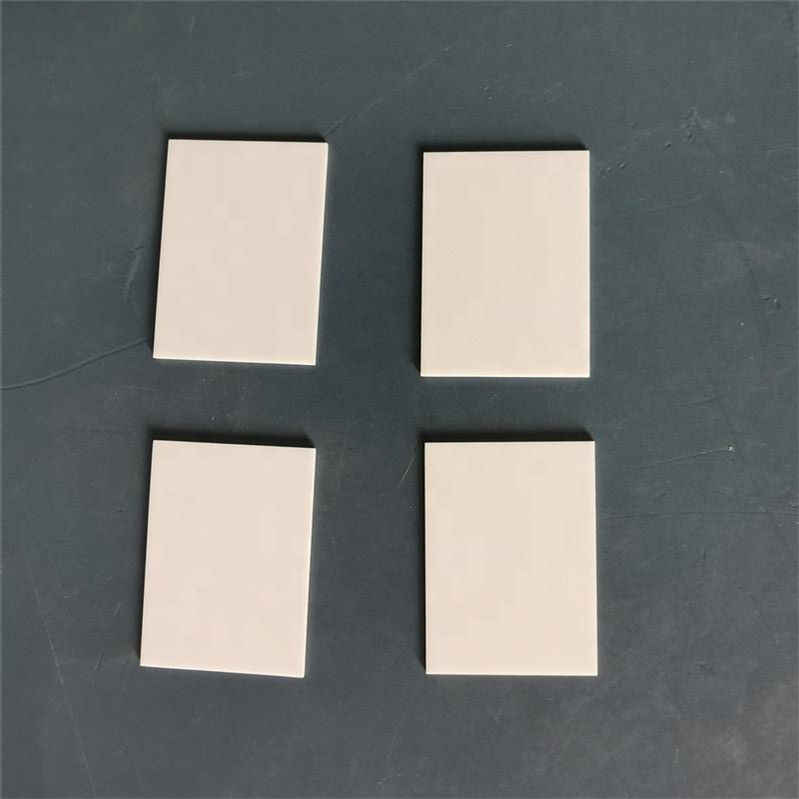
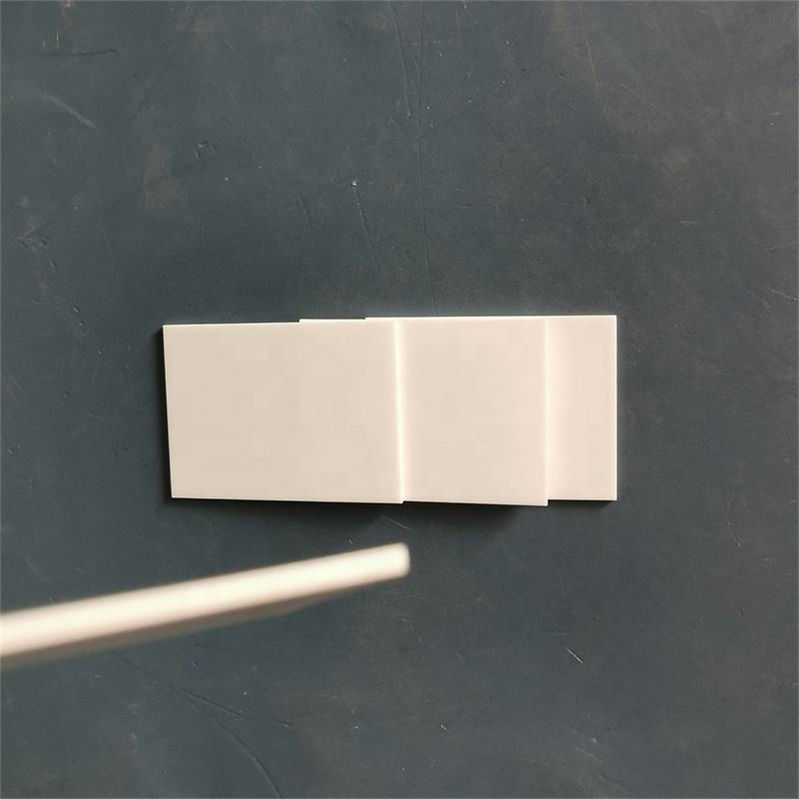
4. Material Advantage & Market Prospect
4.1 Unique Material Advantages
Different from ordinary alumina, zirconia and other electronic ceramics, beryllium oxide ceramics perfectly integrateexcellent thermal conductivity, stable electrical insulation and reliable mechanical properties. It has both high-temperature resistance and low-loss dielectric properties, and can adapt to complex and changeable extreme working environments. Although its production process is complex, technical threshold is high and product cost is expensive, its comprehensive and balanced superior performance cannot be copied or replaced by any other single or composite dielectric materials in the current market.
4.2 Industry Development Prospect
With the rapid development of high-power semiconductors, aerospace electronics and nuclear industry, the global market demand for high-performance BeO ceramics increases year by year, becoming the preferred key material for high-end thermal conductivity and insulation components.
Main Material :
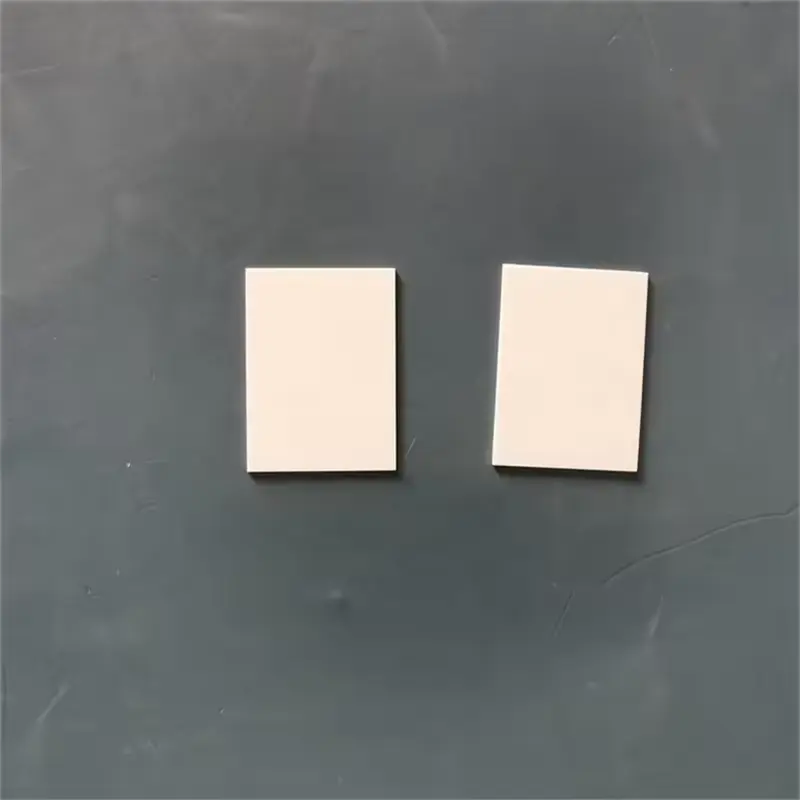
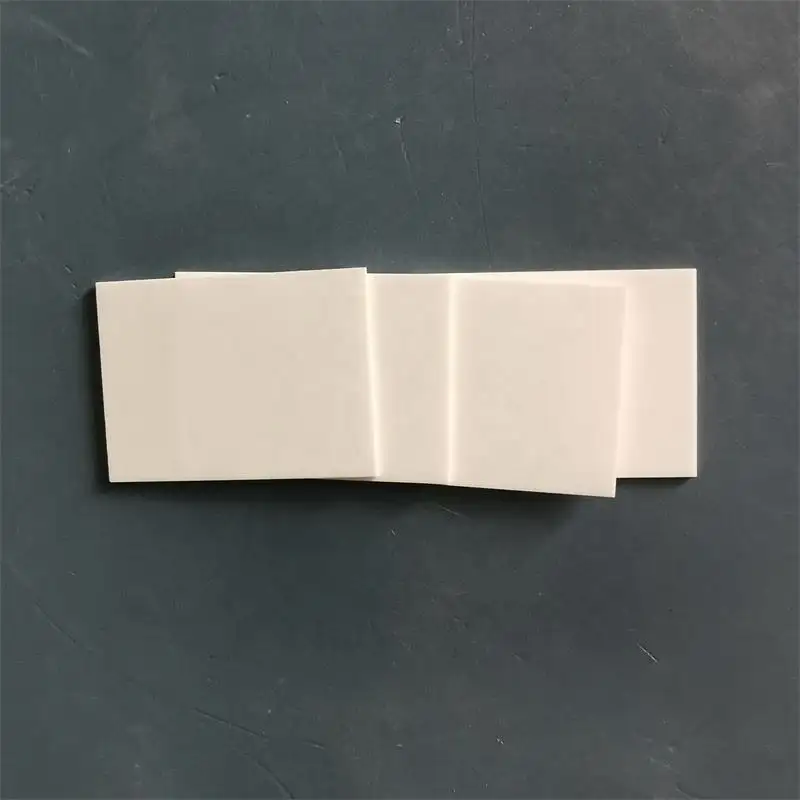
High-purity Beryllium Oxide (BeO) Ceramic
Maximum Resistant Temperature:
1800°C ~ 1850°C
Parameter
|
Property
性能
|
Units
单位
|
Index
指标
|
|
Physical
物理性能
|
Color
颜色
|
|
Jade green, white
青玉色、白色
|
|
Density
密度
|
g/cm3 |
≥2.85 |
|
Grain Size
晶粒度
|
micron |
10~20 |
|
Hardness
硬度
|
Rockwell 45N |
60 |
|
Gas Impenetrability
气体不透性
|
cc/sec He |
10-8 |
|
Water Absorption
吸水率
|
Percentage % |
0% |
|
Thermal
热性能
|
Thermal Conductivity
导热系数
|
W/m•K (at RT) |
≥250 |
|
Coefficient of Thermal Expansion
热膨胀系数
|
10-6/°C (RT to 1000°C) |
7.5~8.5 |
|
Specific Heat
比热
|
cal/g°C |
0.25 |
|
Mechanical
机械性能
|
Flexural Strength (MOR)
弯曲强度(MOR)
|
MPa |
≥200 |
|
Elastic Modulus
弹性模量
|
GPa |
345 |
|
Tensile Strength
抗拉强度
|
MPa |
152 |
|
Compressive Strength
抗压强度
|
MPa |
1,551 |
|
Poisson’s Ratio
泊松比
|
|
0.26 |
|
Fracture Toughness (KIc)
断裂韧性
|
MPa√m |
3.5 |
|
Electrical
电气性能
|
Dielectric Constant
介电常数
|
1 MHz (at RT) |
6.6±0.2 |
|
Dielectric Constant
介电常数
|
10 GHz (at RT) |
6.9±0.2 |
|
Dissipation Factor
耗散系数
|
1 MHz (at RT)
|
≤4X 10⁻⁴
|
|
Dissipation Factor
耗散系数
|
10 GHz (at RT) |
≤6X 10⁻⁴ |
|
Volume Resistivity
体积电阻率
|
Ω-cm (at RT) |
≥1014 |
|
AC Dielectric Strength
交流介电强度
|
V/mil (6.35mm) |
230 |
Development History 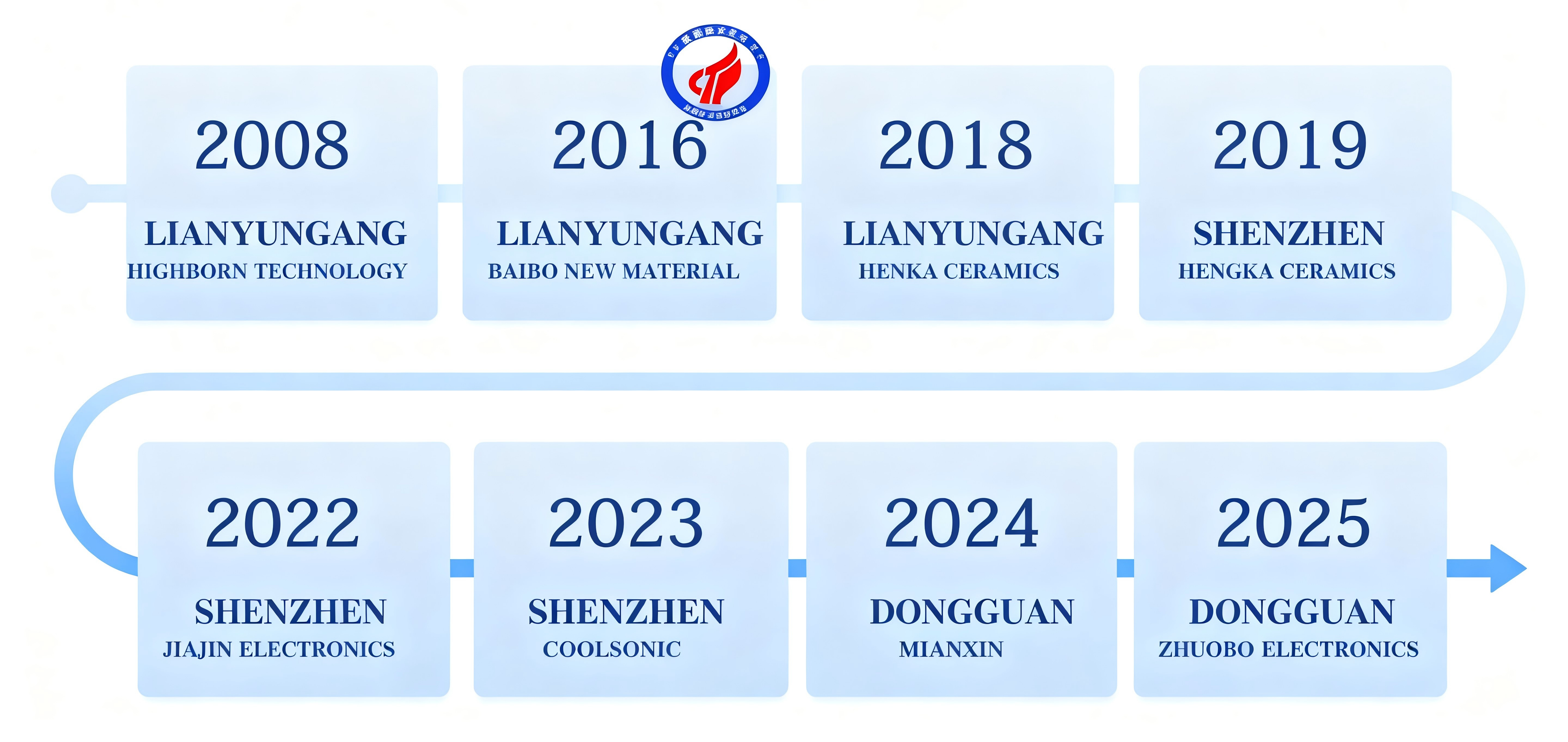
Patents and certification
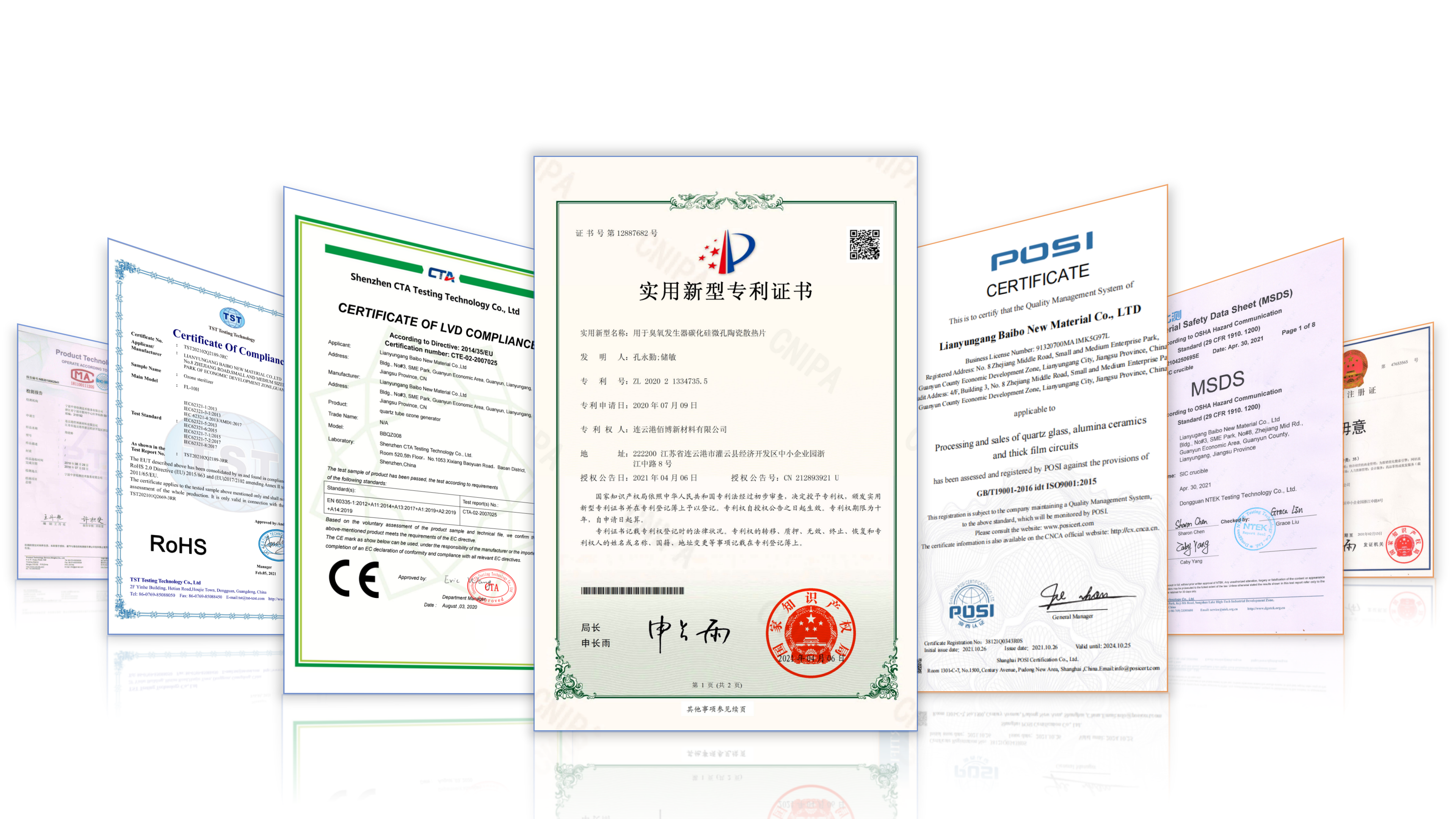
We’ve obtained various global certifications including CE, EMC, LVD, RoHS, FDA, MSDS, ISO 9001, SGS and TUV. We also own eight registered trademarks and forty technical patents to support independent R&D.
Our proprietary core technologies run through all product lines: porous ceramics, industrial ceramic components, special glass, metallized ceramics, liquid absorption cotton, ozone generators and silicone goods. All products are manufactured in strict accordance with international quality standards, delivering reliable and high-performance solutions that have gained wide recognition and market trust worldwide.
Package
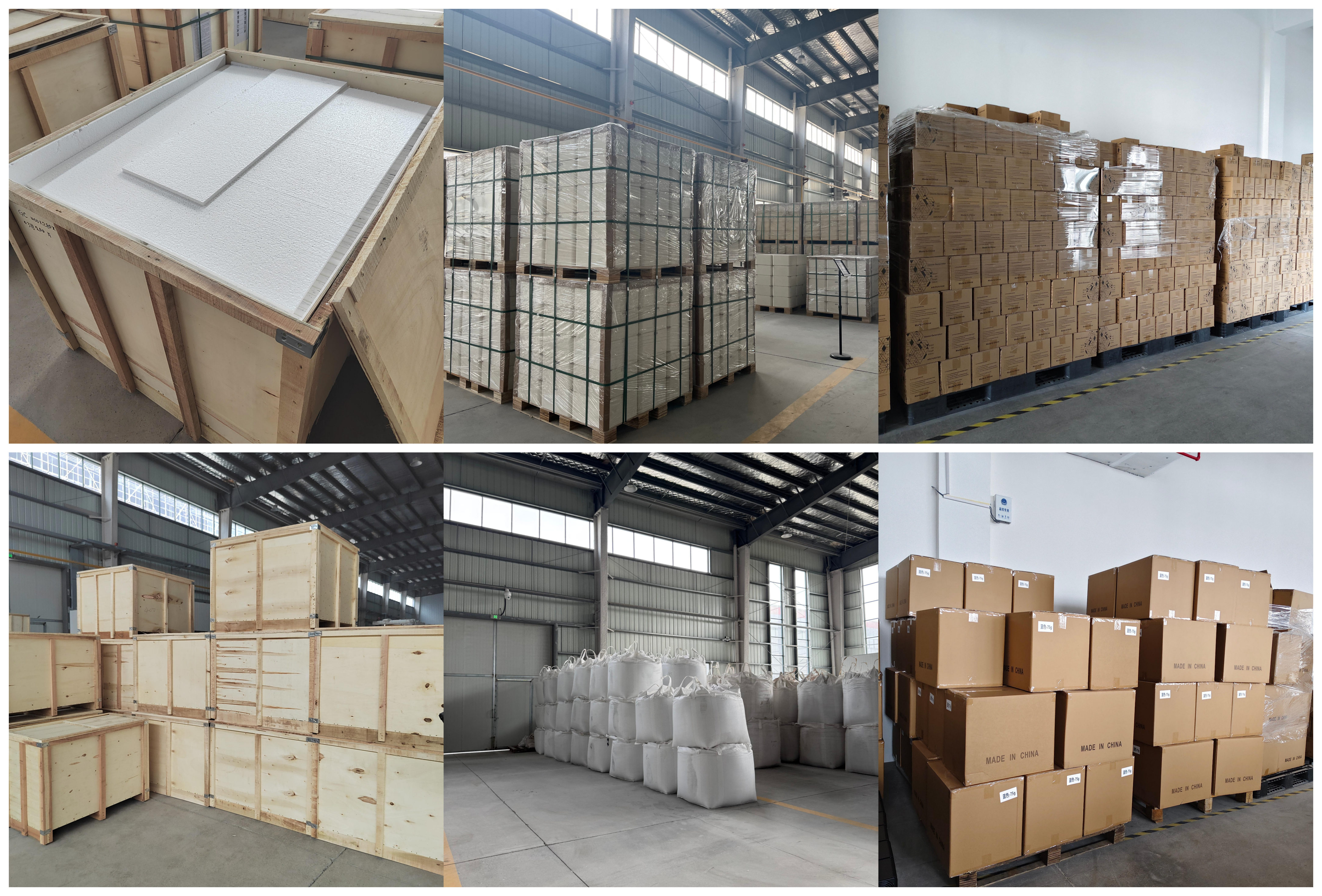
We adopt scientific and standardized packaging solutions tailored to product characteristics to effectively prevent collision, extrusion, dust and moisture damage. With mature global transportation system and strict shipment inspection procedures, we ensure all products remain intact and stable during long-distance delivery, providing customers with safe, efficient and reliable one-stop logistics service.
Services
Inquiry & Customization
We provide fast and accurate quotation response for all your inquiries. Flexible OEM & ODM customization solutions are available to meet your unique product design, packaging and branding requirements.
Order Quality Control
We keep clients updated with full production progress throughout the whole order cycle. Our QC team carries out strict comprehensive pre-shipment inspection to guarantee all goods comply with your quality standards before delivery.
Customs Document Support
We prepare a full set of standard export documents including commercial invoice, packing list, certificate of origin and other certification papers, to ensure smooth global customs clearance for shipments to all destinations worldwide.
One-Stop Logistics
Multiple shipping methods including sea freight, air freight and express delivery are offered to match your schedule and budget. We supply real-time cargo tracking service so you can monitor shipment status anytime.
Flexible Payment
We support a wide range of secure international payment terms such as T/T, L/C, Western Union and other mainstream cross-border settlement methods to reduce your cross-border transaction risks.
After-Sales Support
Our professional after-sales team offers timely technical and business support all year round. We maintain steady long-term stable supply capacity to fully back up your continuous market sales and project demands.
FAQ
01
Question: Can you produce based on customers’ drawings or physical samples?
Answer: Absolutely yes. We accept technical drawings in all mainstream file formats as well as actual physical samples. Before formal production, our engineering team will provide a full professional DFM feasibility evaluation for your reference.
02
Question: How long is the production lead time for custom orders?
Answer: Sample lead time: 3–7 working days. Custom mold lead time: 5–10 working days (we will confirm the cycle separately with you for complex molds). Mass production lead time: 7–20 working days, depending on product structure complexity and order quantity.
03
Question: What’s your minimum order quantity for custom products?
Answer: We provide flexible MOQ solutions for all customized items. We will try our best to set a low minimum order volume to support your small-batch trial orders, meanwhile we can handle stable mass production to satisfy your long-term bulk demands.
04
Question: What customization services can you provide?
Answer: We support comprehensive one-stop customization, including product size, shape, appearance, precision tolerance, surface treatment, hole grooving, bending, cutting and adjustable high-temperature resistant parameters. Custom engraved LOGO and exclusive customized packaging are also available as extra personalized options upon request.
05
Question: Do you accept third-party inspection of finished products?
Answer: Yes, we fully cooperate with all mainstream authorized third-party testing institutions. Well-known organizations such as SGS, BV and other internationally recognized inspection bodies are all acceptable. We can supply complete official inspection reports and material certification documents as you require.
06
Question: Can you customize raw material options for products?
Answer: Sure. We can select and match appropriate raw materials according to your application scenarios, working conditions and performance requirements, including alumina, zirconia, quartz, silicone and other special engineering materials, and adjust related performance parameters to meet your usage standards.



 EN
EN