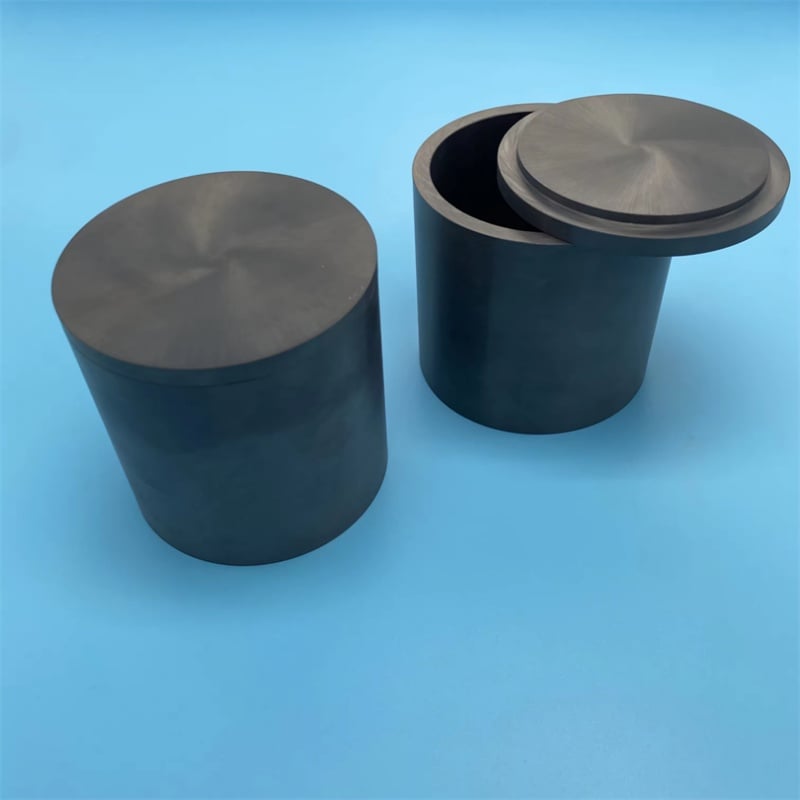
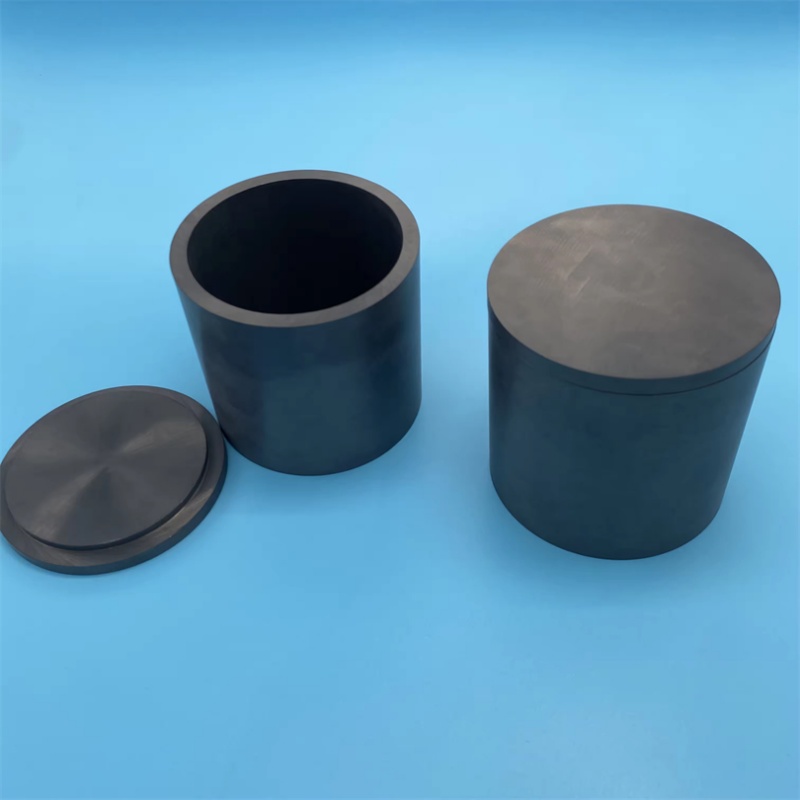
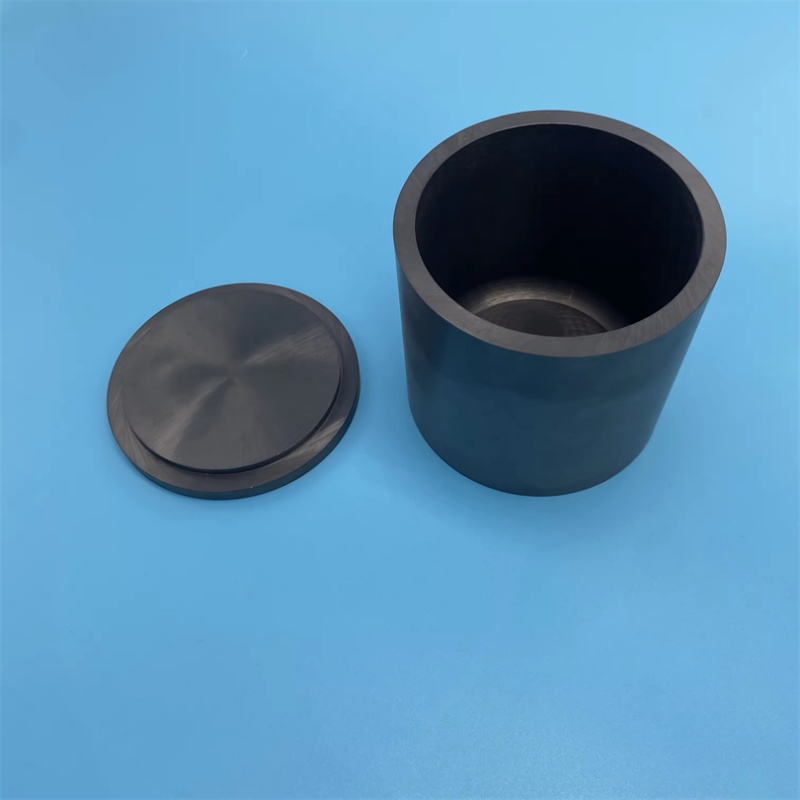
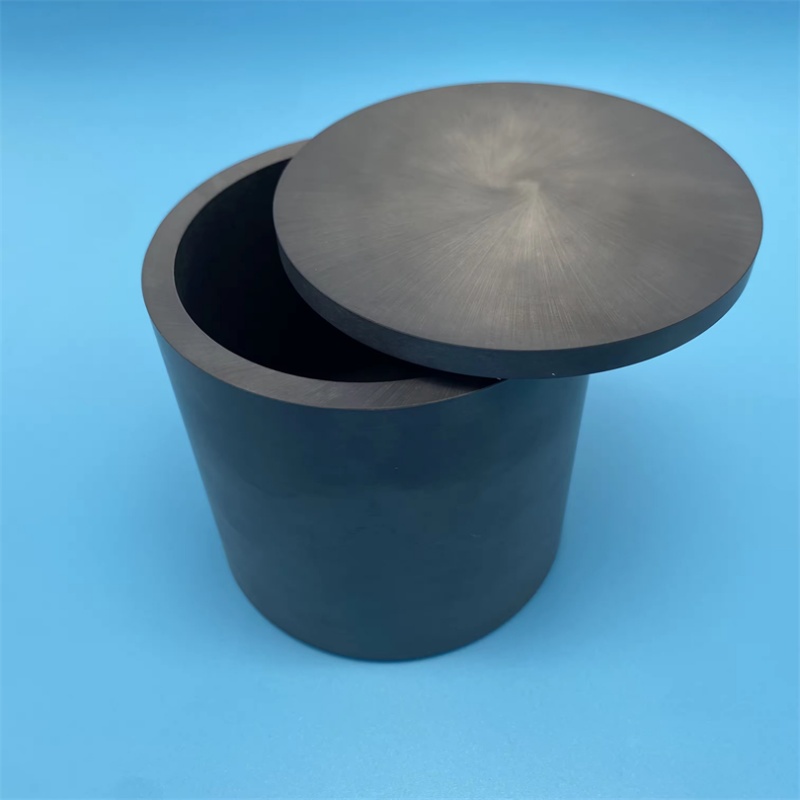
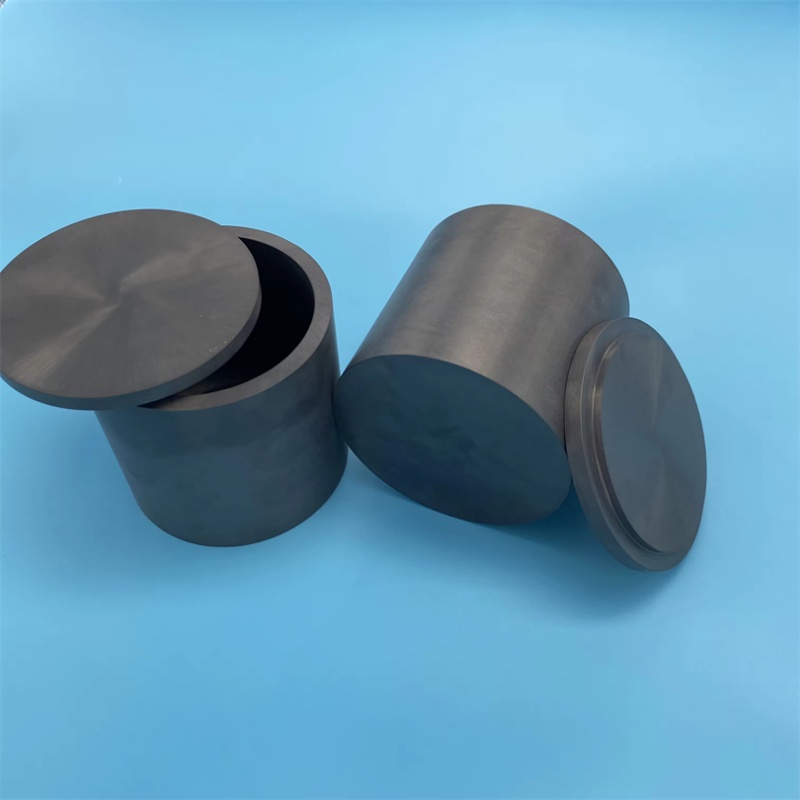
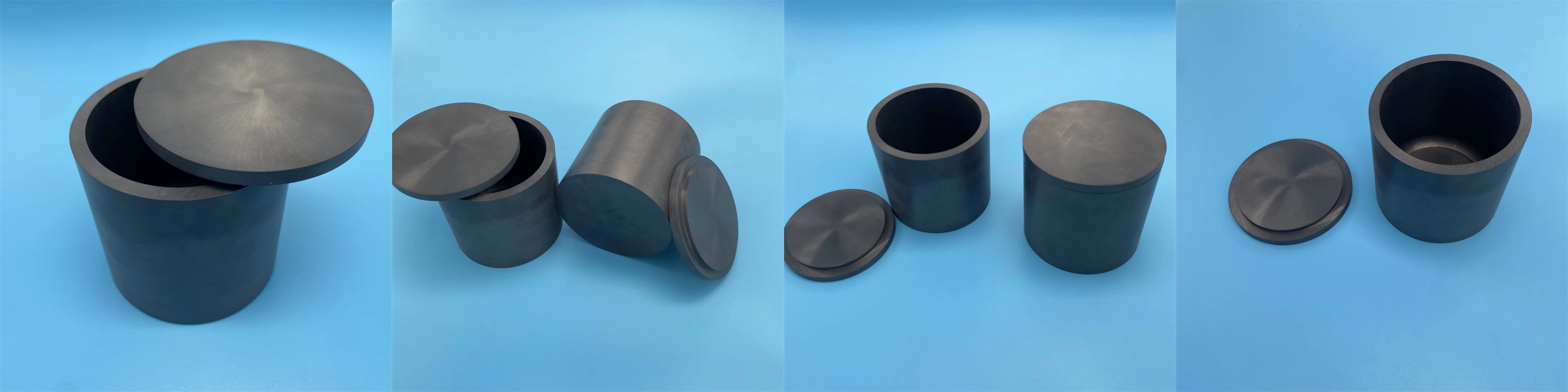
Standard: Cylindrical crucible (with matching Si3N4 lid), tapered pouring crucible
Custom: Rectangular, T-shape, special pouring spout, stepped inner cavity, multi-hole crucible
5mL–20L: Micro lab crucible (5/10/20/50mL), small jewelry pot (100–1000mL), industrial large melting pot (2L–20L)
Custom inner/outer diameter, wall thickness, height, lip height, threaded holes, positioning steps per customer drawing
High-gloss mirror polishing (for maximum non-stick effect)
CVD SiC coating (for continuous mass production, further extend lifespan)
Matte fine grinding (for low-cost lab use)
Product Details
Silicon nitride crucible is a high-performance structural ceramic vessel sintered from high-purity silicon nitride powder (Si3N4). Small amounts of rare earth oxide sintering aids are added during production to achieve full densification, high toughness and excellent thermal stability. Different from ordinary alumina, quartz and graphite crucibles, Si3N4 ceramic features a covalent bond crystal structure, bringing unique high-temperature, mechanical and chemical resistance advantages, widely adopted in high-standard melting, sintering and analytical testing industries.
Silicon nitride has an ultra-low thermal expansion coefficient. It can withstand drastic temperature swings from high temperature furnace to cooling platform without cracking, solving the biggest defect of alumina and zirconia crucibles which break easily after repeated heating and cooling cycles. Long-term service temperature: up to 1400°C in air; up to 1600°C under vacuum or inert gas. It fully covers the melting points of gold, silver, platinum, palladium and most high-temperature alloys.
High flexural strength and fracture toughness, not easy to chip, crack or deform under molten metal scouring and pouring impact. Dense pore-free structure prevents molten metal from penetrating into the crucible wall, avoiding material loss and cross-contamination.
Si₃N₄ hardly reacts with molten precious metals, non-ferrous metals, most molten salts and common acids (nitric acid, hydrochloric acid, aqua regia).
No carbon pollution compared to graphite crucibles;
No chemical reaction with platinum group metals unlike high-purity alumina crucibles;
Resists oxidation under high temperature far better than graphite.
Mirror-polished inner surface repels liquid gold, silver, platinum and other precious metals. Almost no metal residue sticks to the wall after pouring, greatly improving metal recovery rate and reducing production loss.
2.5 Thermal stability
Low thermal expansion coefficient (~3.2×10⁻⁶/K), withstand rapid hot-cold alternation without cracking. Continuous working temperature: 1000°C in air, up to 1400°C under inert atmosphere. Ideal for custom high-temperature furnace and molten metal accessories.
2.6 Electrical insulation
High volume resistivity, anti-high voltage breakdown, suitable for custom insulating structural parts in power electronics and semiconductor equipment.
Straigt cylindrical crucibles (with optional matching lids)
Tapered crucibles with pouring spouts for easy ingot casting
Special-shaped pots: rectangular, stepped inner cavity, multi-cavity combined crucibles
Capacity range: 5 mL tiny lab crucibles ~ 20 L industrial large melting pots; Custom inner diameter, outer diameter, wall thickness, height, positioning steps and mounting holes based on customer drawings; Surface options: matte grinding, high-gloss mirror polishing, anti-corrosion SiC coating for extended service life.
Si3N4 is chemically inert against all precious metals and their alloys; no silicon/nitrogen element dissolves into molten gold/silver/platinum.
No carbon pollution (vs graphite crucible: graphite dissolves carbon into precious metal, downgrades purity)
No almina impurity infiltration (vs 99% alumina crucible: reacts with high-temperature platinum alloys)
Resists aqua regia, nitric acid, hydrochloric acid during precious metal refining & acid leaching
Service cycle is 5–8 times longer than zirconia crucibles, 4–6 times longer than graphite crucibles. Withstands hundreds of rapid heating-cooling cycles daily for jewelry casting, bullion smelting, lab assay sampling without cracking.
Traditional quartz crucibles crack easily with sudden temperature changes; alumina crucibles chip under metal impact. Si₃N₄ can be moved directly from high-temp furnace to cooling bench without fracture.
Non-sticky polished inner surface leaves almost no residual gold/silver inside the pot after pouring; precious metal loss rate drops below 0.01% per melting batch.
Gold (Au), Silver (Ag), Platinum (Pt), Palladium (Pd), Rhodium (Rh), Iridium (Ir), gold-platinum alloys, karat gold alloys, sterling silver, platinum jewelry master alloys.
Jewelry factory: Vacuum induction melting for gold/platinum casting blanks
Bullion refinery: Large-batch smelting of precious metal ingots
Precious metal recycling: Melting waste jewelry, electronic scrap gold & silver
Laboratory assay: Fire assay, high-purity precious metal sample preparation
Dental alloy melting: Platinum-palladium dental casting alloys
6.1 Dry pressing / isostatic pressing to form blank bodies with uniform density
6.2 High-temperature gas pressure sintering under nitrogen atmosphere at 1700–1900°C
6.3 Precision CNC machining, inner and outer wall polishing for smooth non-stick surface
6.4 Custom shaping, hole opening and coating treatment as required
7.1 Silicon nitride is ultra-hard, all precision machining requires diamond tools, so complex deep internal thread or ultra-thin ultra-large structures need technical evaluation in advance
7.2 Long-term service above 1100°C in air will cause slow oxidation; anti-oxidation coating customization is recommended for such working environments
7.3 Provide detailed technical parameters when placing custom orders: Working temperature, load, medium environment, dimensional drawings, tolerance and surface requirements
Heating rate: Ramp temperature ≤10℃/min for first 3 uses to stabilize microstructure
Avoid direct contact with HF hydrofluoric acid (only chemical that corrodes Si3N4)
After melting, cool naturally first before water quenching to further extend service life
Clean inner wall with dilute nitric acid to remove tiny residual precious metal particles
Store n dry environment to avoid long-term damp erosion
Parameter
| Item | gas pressure sintering | hot pressing sintering | reactive sintering | pressureless sintering |
| Rockwell hardness (HRA) | ≥75 | - | > 80 | 91-92 |
| volume density(g/cm3) | 3.25 | > 3.25 | 1.8-2.7 | 3.0-3.2 |
| Dielectric constant (εr20℃, 1MHz) | - | 8.0(1MHz) | - | - |
| electric volume resistivity(Ω.cm) | 10¹⁴ | 10⁸ | - | - |
| breaking tenacity (Mpa m1/2) | 6-9 | 6-8 | 2.8 | 5-6 |
| Elasticity modulus (GPa) | 300-320 | 300-320 | 160-200 | 290-320 |
| thermal expansivity (m/K *10⁻⁶/℃) | 3.1-3.3 | 3.4 | 2.53 | 600 |
| thermal conductivity (W/MK) | 15-20 | 34 | 15 | - |
| weibull modulus (m) | 12-15 | 15-20 | 15-20 | 10-18 |
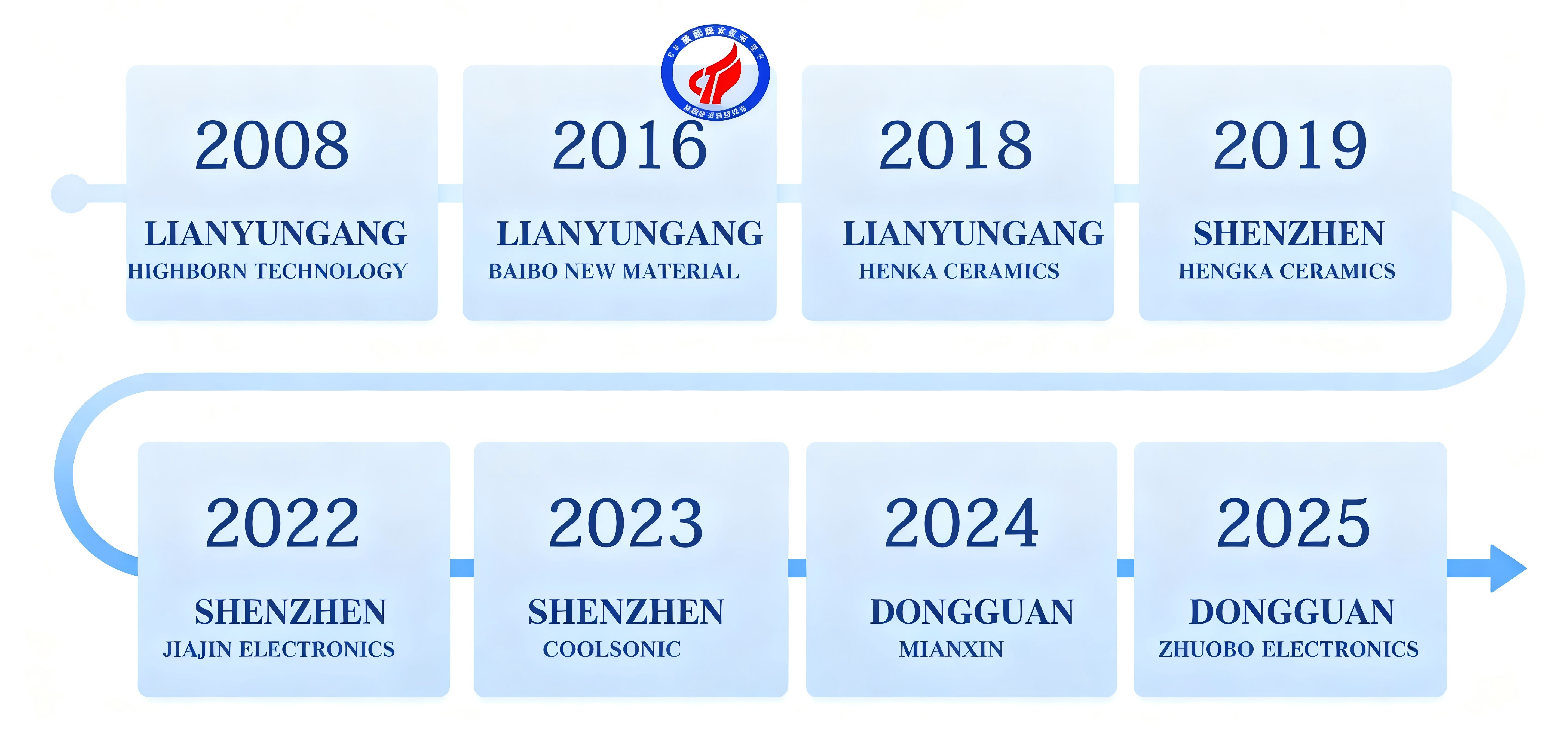
Development History
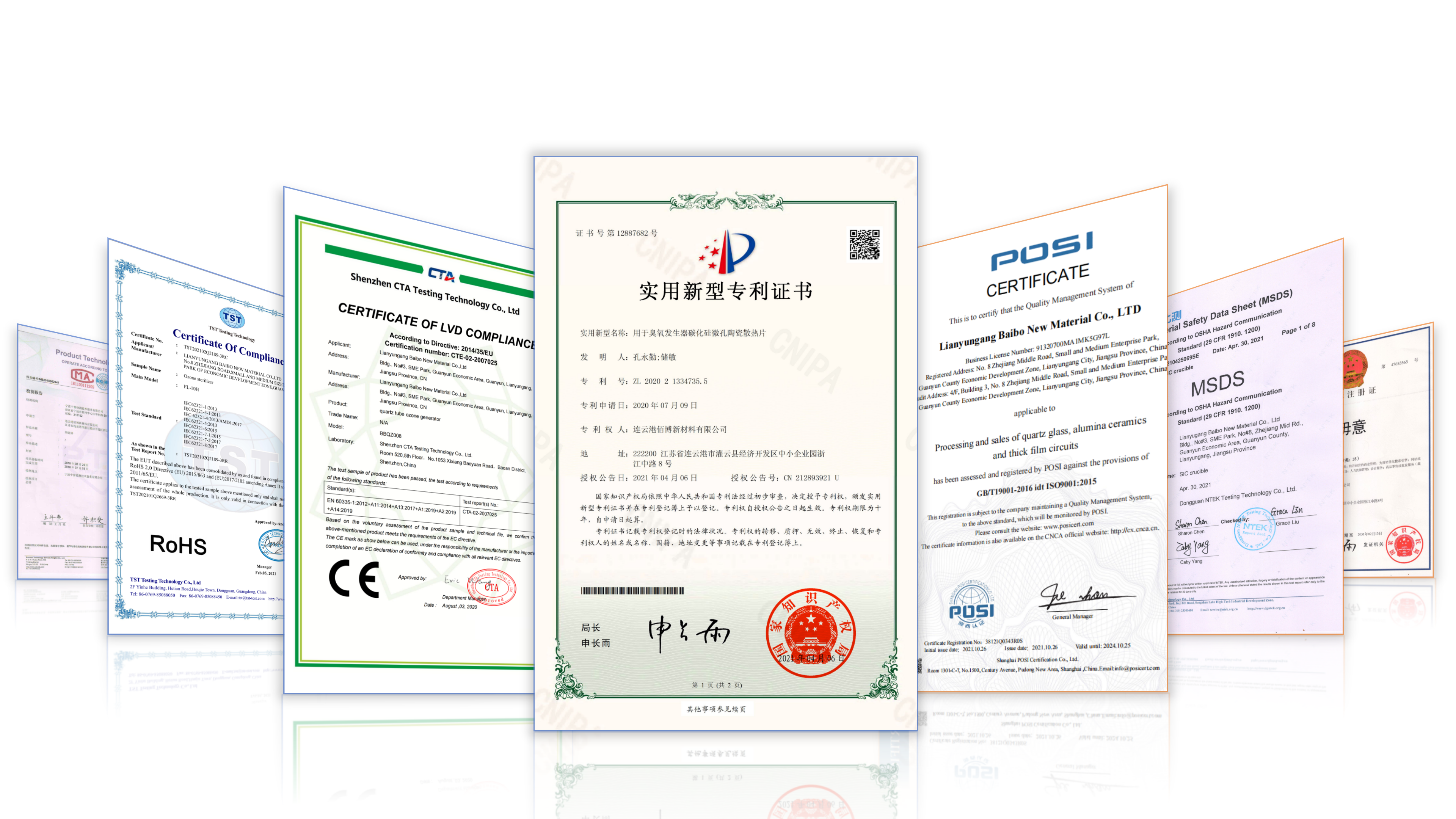
Patents and certification
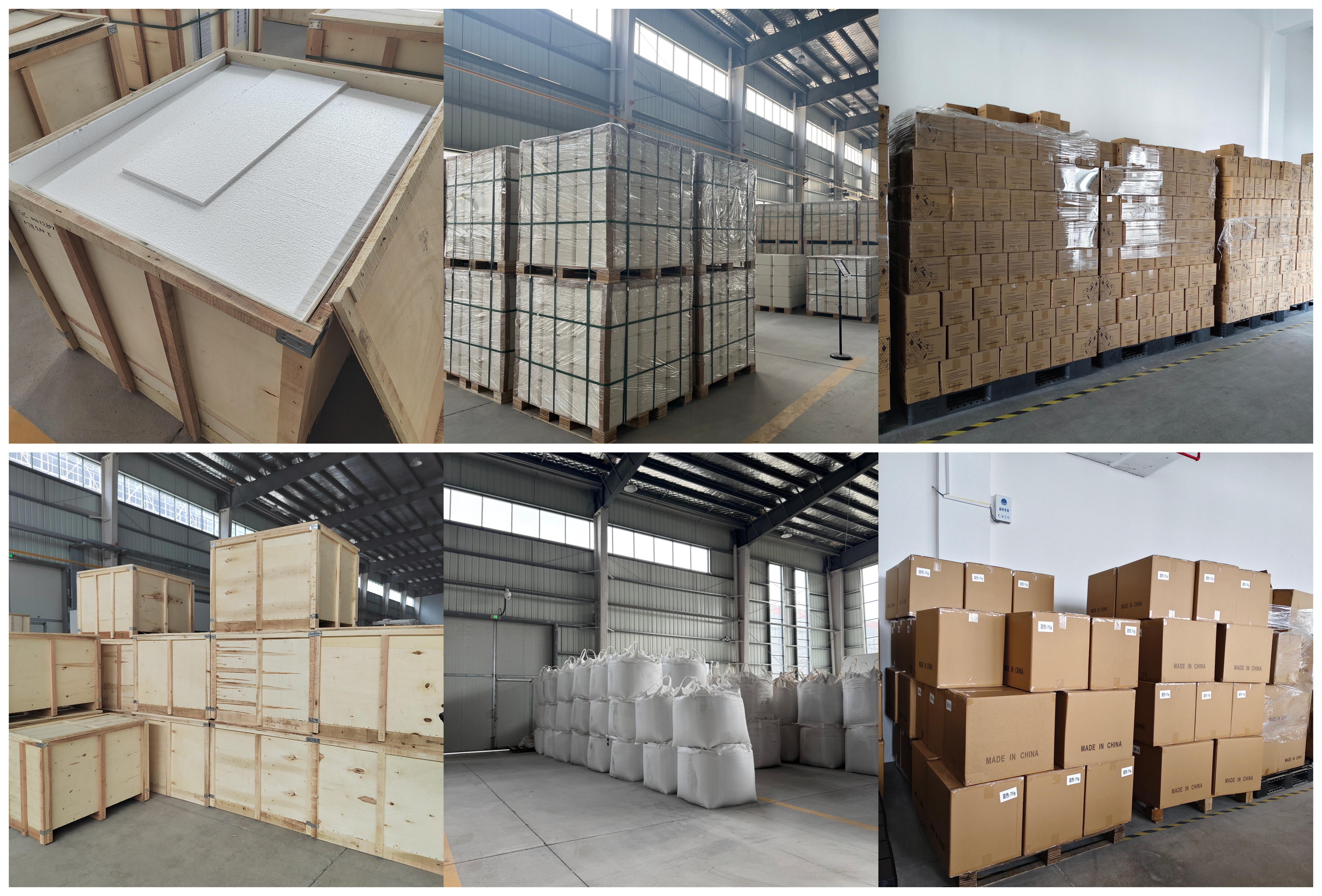
Package
Services
FAQ
Microporous ceramic filter tube 40% porosity for boiler dust removal wastewater
Thermal Conductivity Heat Sink Aln Aluminum Nitride Ceramic Substrate Sheet
Ozone Ceramic Plate Blue Film Covered Ozonizer Ceramic Plate Air Sterilization Purification Parts
Customized PET Rod Fiber Cotton Wicks for Aromatherapy Essential Oils


 EN
EN